

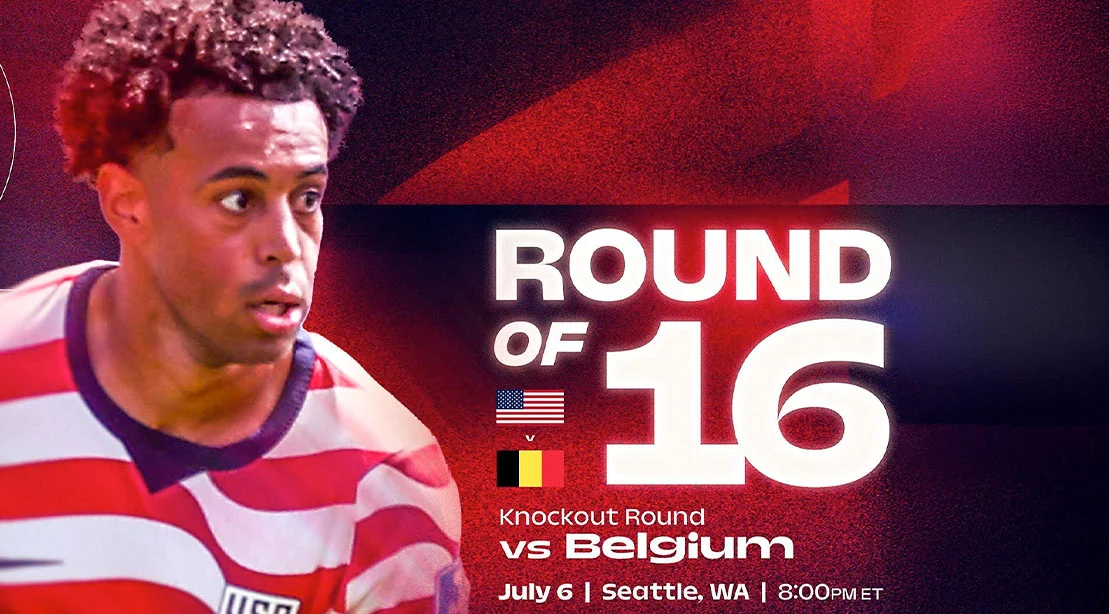
The atmosphere at Seattle’s Lumen Field is reaching a fever pitch. On July 6, 2026, the United States Men’s National Team (USMNT) will step onto the pitch for a match that carries the weight of history, expectation, and the collective hope of a host nation. Facing off against a formidable Belgian side in the Round of 16, the Americans are not merely playing for a spot in the quarter-finals; they are playing to redefine the trajectory of soccer in North America.
The Main Event: A Historic Crossroad
The stakes for this encounter could not be higher. For the USMNT, a victory would represent the most significant achievement in the program’s modern era, marking their first quarter-final appearance since the storied 2002 World Cup campaign in South Korea and Japan.
The path to this moment has been anything but conventional. Following a hard-fought 2-0 victory over Bosnia and Herzegovina in the group stages—a match defined by both defensive discipline and controversy—the squad finds itself bolstered by a major personnel boost. Folarin Balogun, the team’s talismanic striker, was initially issued a red card during that fixture, threatening his participation in the knockout phase. However, a successful appeal and subsequent suspension of his one-match ban mean that Balogun will be available to lead the line against the Red Devils, providing the USMNT with their most potent attacking threat.
Chronology: From the 1930 Origins to 2026 Ambitions
To understand the gravity of this match, one must look at the historical tension between these two nations. The rivalry, while sporadic, is deeply rooted in the annals of World Cup history.
The 1930 Foundation
The relationship began in the inaugural 1930 FIFA World Cup in Uruguay. In a display of tactical dominance that remains a point of pride for American soccer historians, the U.S. defeated Belgium 3-0. It was a simpler era of the game, yet it remains the benchmark for American success against the Belgians on the global stage.
The 2014 Heartbreak
Fast forward to the 2014 World Cup in Brazil, and the narrative shifted to one of heroic resilience in the face of defeat. In a Round of 16 match that became an instant classic, the U.S. pushed Belgium to the absolute limit. Despite a 2-1 loss after extra time, the match is best remembered for the superhuman performance of goalkeeper Tim Howard, who recorded an unprecedented 16 saves. It was a performance that captured the imagination of the American public and proved that the U.S. could compete with the world’s elite.
The 2026 Reality Check
In the lead-up to this year’s tournament, the two teams met earlier in the spring, with Belgium securing a comprehensive 5-2 victory. While that match was a friendly, it served as a stark reminder of the technical prowess possessed by the Belgian golden generation. However, the energy of a home crowd at Lumen Field, coupled with the pressure of a knockout environment, creates a different set of variables.
Supporting Data: Tactical Analysis and Market Hysteria
The statistical disparity between the two sides has been a talking point for pundits, yet the "home-field advantage" factor is statistically significant in international tournaments.
The Ticket Economy
The fervor surrounding this match has reached unprecedented levels. Data from ticket exchanges indicates that the average seat at Lumen Field for this encounter is trading at approximately $2,500. This places the match among the most expensive tickets in the history of the sport in the United States, reflecting both the scarcity of seats and the cultural significance of the game.
Tactical Versatility
Under manager Mauricio Pochettino, the USMNT has shifted toward a more proactive, high-pressing style of play. Pochettino’s philosophy relies on quick transitions and defensive compactness—the same principles that served the U.S. well during their qualifying campaign. The challenge lies in neutralizing Belgium’s midfield creativity, which has historically exploited gaps in the American defensive line.
Official Responses and Managerial Strategy
The psychological preparation for such a high-stakes match is as crucial as the physical training. Mauricio Pochettino, known for his intense motivational techniques, has drawn from the annals of sports cinema to focus his squad.
The "Miracle" Mentality
In recent press conferences, Pochettino has been vocal about the "opportunity" that lies before his players. Invoking the spirit of Herb Brooks, the legendary coach who led the 1980 U.S. Olympic hockey team to a "Miracle on Ice," Pochettino stated, "Great moments are born from great opportunity." His message to the squad is clear: they are not just competing; they are crafting a legacy.
"We are not here to participate; we are here to define a generation," Pochettino noted. "The Belgian side is full of world-class talent, but they are playing against eleven men and the heart of a nation."
The Belgian Perspective
On the other side of the tunnel, the Belgian camp has maintained a respectful but confident tone. Their management has acknowledged the difficulty of playing against a host nation, citing the intensity of the crowd as a potential factor. However, their core focus remains on maintaining possession and forcing the U.S. to chase the game, hoping to tire out the American side before the final whistle.
The Implications: What a Win Means for U.S. Soccer
A victory in Seattle would be more than just a win; it would be a catalyst for the sport’s development in the United States.
Cementing the Pochettino Legacy
Mauricio Pochettino was brought in to elevate the USMNT from a regional competitor to a global contender. A victory here would cement his status as one of the most successful managers in the history of the national program. It would validate the tactical overhaul he has implemented and justify the high expectations placed upon him by the U.S. Soccer Federation.
Long-term Growth and Development
For 24 years, the U.S. has been stuck in a cycle of "what could have been." Reaching the quarter-finals would provide a massive injection of funding, interest, and morale into the U.S. soccer pipeline. It would likely lead to increased investment in youth academies, infrastructure, and potentially higher TV ratings for domestic leagues, as the casual fan is drawn into the sport through the success of the national team.
The Road Ahead
Should the U.S. overcome the hurdle of Belgium, they will face the winner of the other half of the bracket, moving into the final eight. The path remains difficult, but the belief within the squad is palpable.
As the sun sets over Seattle, the players are focusing on the basics: the tactical discipline, the fitness, and the collective unity required to overcome a world-class opponent. Whether or not they succeed, the match on July 6 has already achieved one thing: it has brought the nation together in a shared, breath-holding moment of anticipation.
In the words of the squad, the time for talk is over. The "great moment" is here. All that remains is the ninety minutes that will decide whether the U.S. continues its march toward the final, or whether the dream is deferred for another four years.
Conclusion
The upcoming clash between the United States and Belgium is a defining moment for soccer in America. With a blend of historical context, intense managerial focus, and a fan base ready to break records, the atmosphere at Lumen Field will be electric. Regardless of the outcome, the 2026 World Cup has already proven that the U.S. is ready to stand on the global stage. As the referee blows the opening whistle, the world will be watching, and for ninety minutes, the dreams of a nation will rest on the shoulders of the men in red, white, and blue.
 Lina Hope
 rifanmuazin
 Laily UPN
