

In the high-stakes arena of international relations, public attention is almost exclusively captured by the roar of jet engines, the movement of armored columns, and the stark images of humanitarian crises. Yet, some of the United Nations’ most profound successes are defined by what the public never sees: the crises that were averted, the borders that remained peaceful, and the civil wars that never ignited.
These achievements are the work of United Nations Special Political Missions (SPMs)—a constellation of civilian-led initiatives that operate in the shadows of global diplomacy. Armed not with rifles or tanks, but with the tools of mediation, negotiation, and quiet dialogue, these missions have served as the silent bedrock of international stability for nearly eight decades. As the UN marks the publication of a comprehensive historical overview spanning 1948 to 2025, the world is being reminded that while peacekeeping may grab the headlines, it is the invisible, painstaking work of political diplomacy that often keeps the world from tipping into chaos.
The Core Mandate: Diplomacy as a Scalpel
Unlike their counterparts in traditional peacekeeping—which often involve large, visible deployments of uniformed personnel tasked with monitoring ceasefires—Special Political Missions are characterized by their flexibility and civilian focus. These missions act as a diplomatic scalpel, inserted into complex, often volatile political environments to excise the roots of conflict before they can spread.
The scope of their work is intentionally broad. SPMs facilitate high-level peace negotiations, monitor the implementation of ceasefire agreements, provide technical support for border demarcations, investigate human rights violations, and assist in the intricate, often fragile processes of constitutional and political reform. According to Rosemary DiCarlo, the UN Under-Secretary-General for Political and Peacebuilding Affairs, the defining feature of these missions is their adaptability. "Flexibility has always been their strength," she noted at the launch of the mission’s historical overview. "The same instrument that helped broker a ceasefire can also demarcate a border or support the dismantling of a chemical weapons program. Few multilateral instruments are as adaptable."
A Historical Chronology: From Palestine to Modernity
The lineage of the Special Political Mission traces back to the very infancy of the United Nations. In May 1948, mere months after the organization’s founding, the need for a non-military, diplomatic intervention became clear. Swedish diplomat Count Folke Bernadotte was appointed as the UN Mediator in Palestine, marking the first time the global body deployed a special envoy to resolve an armed conflict.
The Era of Decolonization (1940s–1960s)
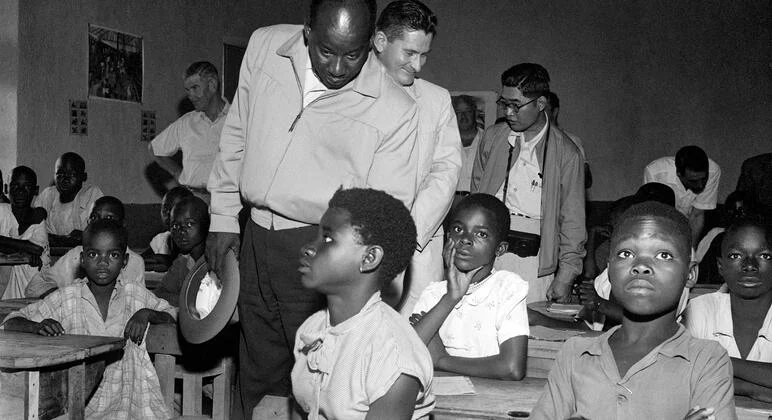
In the wake of the Second World War, the UN’s role shifted toward facilitating statehood for nations emerging from colonial rule. Libya stands as a landmark example of this early success. In the late 1940s, Libya was a fractured territory, having been governed by an Italian colonial administration followed by various post-war administrative systems. A UN commission was deployed to bridge deep-seated political divides. The mission provided technical assistance, helped draft a constitution, unified the financial system, and trained the civil servants who would eventually lead the nation. By 1951, Libya became the first country to achieve independence through a UN-sponsored process. This template was soon replicated across Africa and the Middle East, with UN representatives organizing plebiscites and referendums in territories such as Cameroon, Equatorial Guinea, Togoland, and Bahrain.
Cold War Constraints and Creative Diplomacy (1970s–1980s)
The Cold War era presented a unique challenge: the Security Council was frequently paralyzed by the ideological rivalry between the superpowers. Recognizing that the Council’s traditional mechanisms were often gridlocked, the UN increasingly turned to the Secretary-General’s special representatives to maintain lines of communication.
The 1980s proved that diplomacy could function even in the absence of great-power consensus. The Secretary-General’s Personal Representative successfully navigated years of fraught negotiations regarding the conflict in Afghanistan, culminating in the 1988 Geneva Accords. Simultaneously, diplomatic efforts were sustained to manage the brutal, protracted war between Iran and Iraq. As DiCarlo emphasized, these decades proved that "geopolitical division is not an excuse for inaction."
Post-Cold War Expansion and Institutional Building (1990s–2010s)
The collapse of the bipolar world order in the early 1990s unleashed pent-up ethnic and nationalist tensions, leading to a surge in the number of political missions. During this period, the mandate of SPMs evolved to encompass "nation-building" tasks. Missions were deployed to help countries organize elections, draft modern constitutions, and reform state institutions.
A quintessential success story of this era is Tajikistan. Following the 1997 peace agreement, a UN political mission provided the necessary support to ensure the deal held, facilitating a transition from the ashes of civil war to a functioning, if imperfect, peace. Similar missions were deployed to El Salvador, Guatemala, Burundi, Somalia, and Angola, proving that international presence could act as a stabilizer during the most precarious moments of political transition.
Supporting Data: The Anatomy of Success
By the end of 2025, the United Nations oversaw 40 distinct Special Political Missions worldwide. While their specific goals vary—ranging from investigating human rights abuses to overseeing complex electoral cycles—the underlying data suggests a consistent pattern: countries engaged with UN diplomatic missions are significantly less likely to relapse into full-scale war compared to those attempting to navigate transitions in total isolation.
The "success" of these missions is not always binary. As DiCarlo candidly observed, their record is "sometimes modest, sometimes historic." The efficiency of these missions is derived from their lean structure. By operating through confidential channels, they avoid the optics of foreign interference, allowing local stakeholders to retain "ownership" of their own peace processes. This is supported by the work of independent bodies like the Security Council Report, which notes that these missions have become an indispensable, low-cost investment in long-term global security.
Official Responses and the "Trust" Paradigm
The effectiveness of a Special Political Mission rests on a singular, intangible commodity: trust. Carlos Ruiz Massieu, the head of the UN Integrated Office in Haiti (BINUH), argues that the mission’s ability to promote political dialogue in an environment of extreme institutional fragility is entirely dependent on the confidence of the local population.
In Haiti, BINUH does not possess the capacity to enforce peace through strength. Instead, it acts as a coordinator for international efforts, a mediator between warring political factions, and a guarantor of democratic integrity. Massieu describes the trust placed in the UN as an asset that must be "recognized, cherished, and strengthened." When local populations believe that the UN is an honest broker rather than a tool of geopolitical interests, the mission’s chances of achieving a breakthrough rise exponentially.
Implications for the Future
The publication of the historical overview comes at a time when the multilateral system is under significant strain. Critics argue that the UN is increasingly ineffective in the face of modern, multipolar conflicts. However, the history of SPMs provides a counter-narrative: that diplomacy is not a static instrument, but a living one.
As we look beyond 2025, the challenges facing these missions are shifting. We are seeing a rise in "targeted political tasks"—missions focused specifically on regional diplomacy, climate-related security, and the prevention of digital misinformation in electoral processes. The evolution of the SPM is a testament to the UN’s ability to learn from the past.
The overarching lesson remains: conflict is rarely solved by force alone. As Shamala Kandiah Thompson noted, while peacekeeping operations are often more visible due to their logistics and personnel, they are no more essential than the quiet work of a mediator in a back room.
The legacy of these missions, from the sands of post-colonial Libya to the complex political transitions of contemporary Haiti, serves as a vital reminder for the international community. Diplomacy is not the absence of conflict; it is the management of it. In a world characterized by increasing polarization and instability, the UN’s invisible peacebuilders prove that even in the most difficult circumstances, patient engagement and sustained dialogue can change the course of history. The "enduring truth" cited by DiCarlo—that diplomacy works—remains the most powerful argument for continued investment in the UN’s quietest, yet most persistent, instruments of peace.
 Lina Hope
 Asro
Asro
 Layla Zulfa
