

By Bethany Allard
Reporting from VidCon 2026, Anaheim
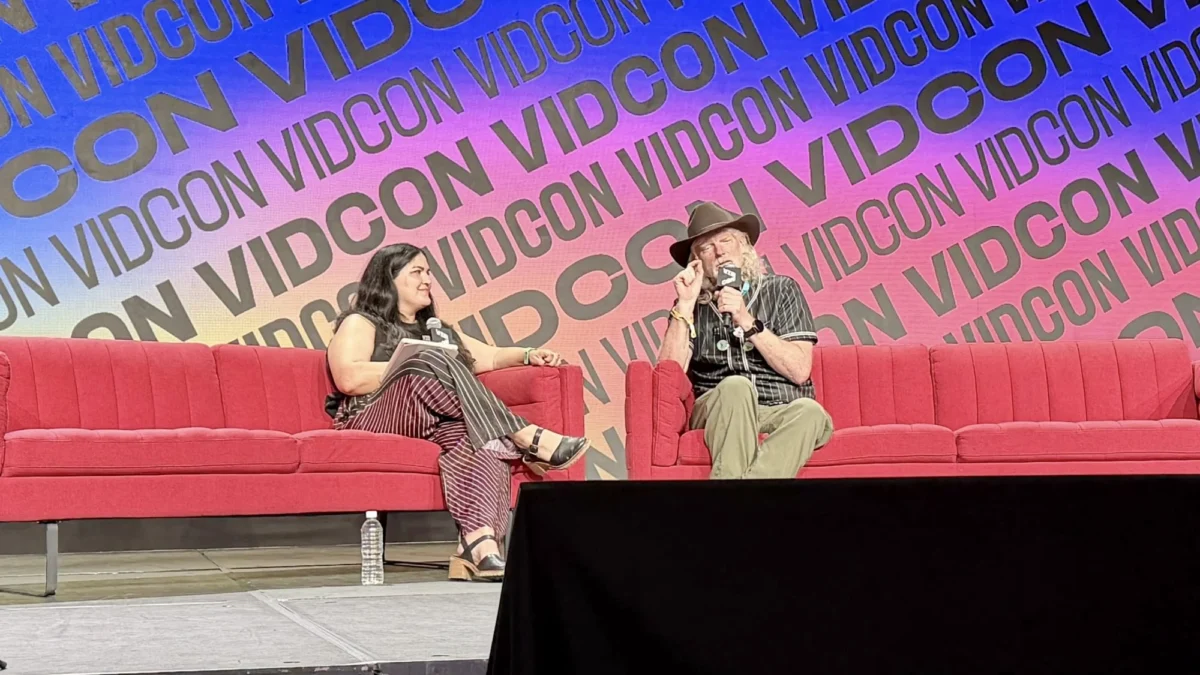
In an era defined by the rapid, algorithmic consumption of short-form video content, the digital landscape has become increasingly fragmented. While platforms like TikTok and Instagram Reels have mastered the art of keeping users swiping through endless feeds, Twitch CEO Dan Clancy is positioning his platform as the antithesis to this “anti-social” trend. Speaking at VidCon 2026, Clancy argued that the future of the creator economy does not lie in the passive, isolated consumption of 15-second clips, but in the deliberate, community-driven nature of live streaming.
As the creator economy matures, the tension between algorithmic reach and human connection has reached a boiling point. During his fireside chat, titled Why Live is the Future of Connection: From Passive Scrolling to Real Connection, Clancy painted a vision of a digital world that prioritizes depth over breadth, asserting that Twitch’s unique model is built to survive the volatility of the attention economy.
The Core Philosophy: Community Over Content
At the heart of Clancy’s argument is a fundamental critique of modern social media. "Social media, interestingly, has become anti-social," Clancy noted during the session. "It started as a technology that connected us with people, but now sitting and swiping actually leaves you a little more isolated. It doesn’t make you feel connected, and that’s why live is coming on strong now."
For the Twitch executive, the platform’s strength is not just the content being broadcast, but the "horizontal" bonds formed between viewers in the chat. He drew a parallel to the world of professional sports, where the spectacle on the field is merely a catalyst for communal experience.

"People often think sports are about watching the world’s best athletes. It’s not about that at all. It’s about community, right? It’s about shared identity," Clancy explained. "Twitch is the same thing. The affinity you’re gathering around is a streamer, but you form these bonds horizontally. The same thing that happens in stadium seating happens in the Twitch chat."
Chronology of a Shifting Landscape
Twitch, which originated as a haven for gaming enthusiasts, has spent the last few years undergoing a radical transformation.
- 2020–2022 (The Pandemic Surge): Twitch saw unprecedented growth as live streaming became a primary source of socialization during global lockdowns. This period solidified the platform’s role as a "third space."
- 2023–2024 (The Rise of Short-Form): The dominance of TikTok forced all platforms to pivot toward algorithmic discovery. Twitch struggled to reconcile its long-form, live-first ethos with the pressure to push high-frequency, short-form clips.
- 2025 (The Reckoning): Following safety controversies at events like TwitchCon, the platform faced a PR crisis that forced a re-evaluation of its relationship with its top-tier creators.
- 2026 (The Present): As seen at VidCon 2026, the focus has shifted back to sustainability, safety, and the "human" element of the platform, with Clancy emphasizing that the platform is moving beyond its gaming-exclusive roots.
The Discoverability Dilemma: A Feature, Not a Bug
One of the most persistent criticisms of Twitch is the difficulty for mid-sized and emerging creators to gain visibility. Unlike YouTube or TikTok, which use aggressive algorithms to place content in front of new audiences, Twitch’s internal mechanics are far more passive.
When asked if this represents a structural failure, Clancy was surprisingly candid. He argued that the lack of an aggressive discovery algorithm is a deliberate choice to protect the sanctity of the creator-viewer relationship.
"If I said, ‘I’m going to solve the discovery problem,’ the only way I could fully solve it is by taking viewers off your page, putting more stuff on your page to distract them, more stuff to get them away from you," Clancy said. "And that is exactly what our creators don’t want."

Instead, Clancy encouraged a "multi-platform ecosystem" approach. He advised creators to use short-form platforms for "top-of-funnel" discovery, while using Twitch’s live environment for "deep-funnel" engagement—building the emotional connection necessary to sustain a long-term career.
However, recognizing the need for internal improvement, Twitch is exploring "Recaps"—a feature designed to bring short-form content into the Twitch ecosystem in a way that doesn’t cannibalize the live experience. By allowing streamers to curate clips from their own broadcasts, Twitch hopes to keep users within their walled garden while catering to the modern viewer’s preference for bite-sized highlights.
Artificial Intelligence in the Ecosystem
The rise of generative AI has posed unique questions for a platform built on the concept of "real-time, real-human" interaction. Currently, AI-led channels exist on the periphery of the site.
Clancy remains unperturbed by the trend, noting that these channels currently lack the "stickiness" of human-led content. "They are clearly identifiable as AI, and in my opinion, not engaging enough to hold a viewer’s attention for the same amount of time as a human creator can," he said.
Where Clancy does see potential for AI is in administrative and moderation support. He highlighted that Large Language Models (LLMs) could significantly improve the AutoMod feature, which currently relies on keyword filtering. By using AI to understand the nuance and sentiment of chat messages, Twitch hopes to create a more effective, less invasive moderation system that allows streamers to maintain healthy, safe communities without spending hours managing manual bans.

Broadening the Horizon: Beyond Gaming
The demographic of the Twitch creator is changing rapidly. What was once a gaming-only site now hosts high-profile musicians, artists, and even philanthropic organizations. Clancy noted that the shift has been "night and day."
"Now, when I meet an actor or a musician, almost 70 percent of the time when they hear I’m the CEO of Twitch, they go, ‘Oh, yeah, I’ve been thinking I should do something,’" Clancy said. This diversification is critical for Twitch’s long-term viability, as it moves the platform away from the cyclical nature of gaming releases and into the realm of general entertainment.
Safety as a Foundation for Growth
Perhaps the most significant challenge facing Twitch is the safety of its community, particularly regarding physical events like TwitchCon. Following the 2025 incident involving streamer Emiru and the subsequent protest by prominent figures such as Hasan Piker and Valkyrae, the pressure on the company to provide a secure environment has never been higher.
Clancy addressed these concerns with a sense of urgency, confirming that the company has overhauled its operational procedures for large-scale events.
"We’ve updated how we do meet-and-greets so that they’re more structured. We don’t allow signups on the day of; you have to reserve a spot," Clancy explained. "It restricts it a little bit, but it restricts us in a way to protect the creators. I feel very confident about where we’re at right now in terms of our ability to make sure something like that doesn’t happen again."

Implications for the Future
The implications of Clancy’s vision are clear: Twitch is betting on the idea that the "attention recession"—where users feel burnt out by the relentless scroll—will drive audiences back to platforms that prioritize long-form, interactive engagement.
However, the challenge remains: can Twitch continue to foster this "community-first" approach while simultaneously solving the discovery issues that plague smaller creators? If the company can successfully integrate short-form discovery without compromising the live, communal experience, it may well prove that while scrolling is easy, the "real connection" is where the true value lies.
As VidCon 2026 continues, the industry is watching closely. For the millions of creators who call Twitch home, the hope is that the platform can balance the cold efficiency of algorithms with the warm, chaotic, and deeply human reality of the live stream.
 Azzam Bilal Chamdy
 Muslim
 Reynand Wu
