

By Neal Broverman
June 2, 2026
When the news of Shirley Raines’ passing broke this past January, the silence that followed in the streets of downtown Los Angeles was profound—a stark contrast to the vibrant, boisterous, and deeply compassionate life she had led for nearly a decade. At 58, Raines—known to millions as the "Angel of Skid Row"—succumbed to hypertensive heart disease, leaving behind a legacy that transcended the digital screens where she first became a household name.
Raines was more than a philanthropist; she was a cultural phenomenon who leveraged the often-superficial landscape of TikTok and Instagram to create a tangible, life-saving impact. Her nonprofit, Beauty 2 The Streetz, redefined how society interacts with the unhoused population, proving that dignity, beauty, and human connection are not luxuries, but fundamental human rights.
The Genesis of a Mission: From Grief to Grace
To understand the magnitude of Shirley Raines’ impact, one must understand the crucible from which it was forged. A native of Compton, California, Raines’ life was marked by both profound struggle and immense resilience. The defining moment of her personal history occurred in 1990 with the tragic, accidental death of her young son.

For many, such a loss might have led to a permanent withdrawal from the world. For Raines, however, the grief became the fuel for a transformative mission. She recognized that the pain of loss was a universal language, one that bridged the gap between her own suburban experience and the systemic trauma experienced by those living on the streets of Los Angeles.
In 2017, she began her outreach in Skid Row. Initially, it was a modest effort—distributing food and basic hygiene kits. But Raines quickly realized that while physical survival was essential, emotional survival required something more: the restoration of self-worth. By offering hair styling, makeup application, and salon services to those who had been forgotten by society, she was doing more than grooming; she was reminding the unhoused that they were still "kings and queens," as she affectionately called them.
A Digital Revolution in Philanthropy
As Raines expanded her operations, she turned to social media to document her work. Her approach was refreshingly raw. There were no polished marketing teams or filtered aesthetics. Instead, there was just Shirley—dancing with the residents of Skid Row, braiding hair under a canopy, and sharing deeply personal, unscripted conversations about life, addiction, and hope.
Her authenticity resonated with a global audience. Over the course of her career, she amassed over 7 million followers across TikTok and Instagram. This digital community didn’t just watch; they participated. Her followers funded her massive expansion, with one anonymous donor even purchasing an abandoned building in Las Vegas to serve as a hub for her homelessness outreach programs.

"Social media can be a very terrible place," notes TV and sports personality Joy Taylor, who became a close friend of Raines and a board member for Beauty 2 The Streetz. "And people like Shirley used it perfectly to showcase how dark the world is—and how you can bring light to it."
Chronology of Recognition
Raines’ rise from a local volunteer to a national icon was marked by significant milestones that underscored the growing recognition of her work:
- 2017: Beauty 2 The Streetz is officially founded, formalizing the grassroots outreach in Los Angeles.
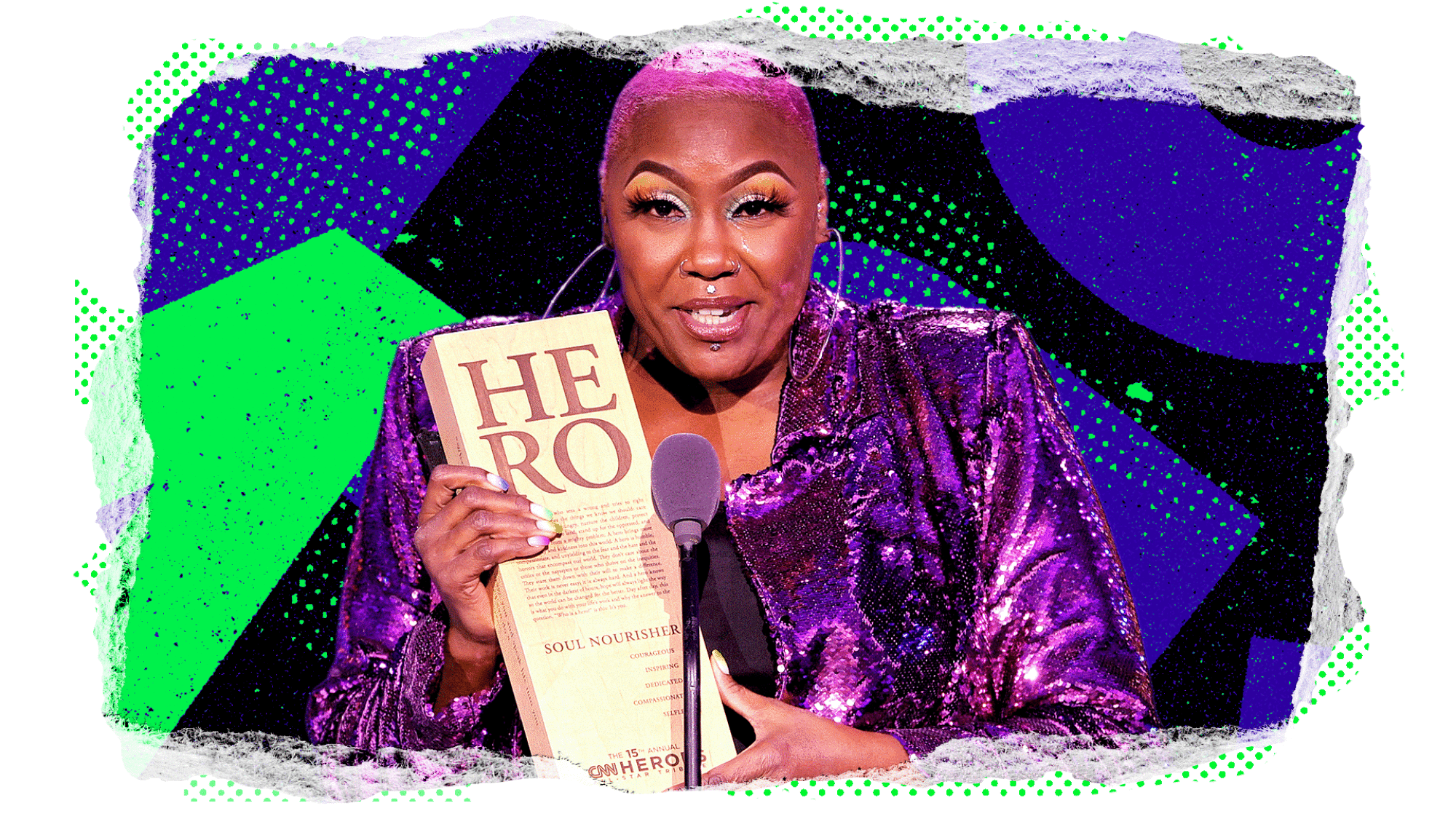
- 2021: Raines is named a "CNN Hero of the Year," bringing national attention to the intersection of beauty services and social work.
- 2025: She is honored on the Time100 Creators list, cementing her status as a pioneer in social media advocacy.
- 2025: Raines wins the "Outstanding Social Media Personality" at the NAACP Image Awards Creative Honors.
- January 2026: Raines passes away, triggering an outpouring of grief from the city of Los Angeles and her millions-strong online community.
- June 2026: LA Pride honors her as a posthumous Icon Grand Marshal, acknowledging her work as a champion for the marginalized.
The Human Element: Why "Beauty" Matters
Critics of traditional social service programs often focus solely on caloric intake and shelter beds. Raines’ philosophy, however, centered on the psychological necessity of dignity.
"You can see the light come back in people," says Taylor, reflecting on the experience of watching someone receive a haircut or a fresh outfit after months on the street. "There’s also something to human touch."

This philosophy was validated by the participants themselves. In a society that often looks through or past the unhoused, the act of being touched, styled, or treated with the same care as a paying salon customer provided a powerful shift in perspective. As Taylor notes, feeling good about one’s appearance is a catalyst for motivation—a crucial step for those trying to transition back into the workforce or navigate the complexities of social services.
Official Responses and Lasting Tributes
The institutional response to Raines’ death has been as immense as her public following. Lawrence Carroll, board president of LA Pride, described the decision to name her a Grand Marshal for the 2026 parade as a natural progression of her legacy.
"She just reminded me of family," Carroll said. "When we’re talking about being of service to a community and the world—I’m starting to get emotional about it, because Shirley embodied all of that. We need more Ms. Shirleys, right?"
The 56th annual LA Pride parade will feature her story prominently, serving as a reminder that her advocacy was inclusive and intersectional. By aligning with movements like LGBTQ+ pride, Raines highlighted the disproportionate number of queer and trans youth within the unhoused population, further amplifying the needs of the most vulnerable.

Implications for the Future of Social Media
The legacy of Shirley Raines challenges the current trajectory of digital culture. As platforms become increasingly cluttered with "empty" content and performative trends, the success of Beauty 2 The Streetz serves as a blueprint for the future of digital activism.
1. The Power of Direct Engagement
Raines proved that technology is a tool, not a replacement for human interaction. Her ability to translate a digital audience into physical volunteers—people who showed up, boots-on-the-ground, to serve the community—is the ultimate metric of success in the creator economy.
2. Radical Authenticity
In an era of highly curated digital personas, Raines’ willingness to show the grit of the streets alongside the glamor of a makeup chair made her relatable. She did not hide the pain of poverty; she made it visible, and by doing so, she made it impossible for her followers to ignore.
3. Sustainability Beyond the Founder
The greatest test of any nonprofit is its ability to survive its founder. Under the guidance of board members like Joy Taylor, Beauty 2 The Streetz continues to operate. Their recent Mother’s Day Restoration Brunch, which brought together estheticians and volunteers to serve mothers living on the streets, is proof that the infrastructure Raines built is robust enough to endure.

Conclusion: A Call to Continue the Work
Shirley Raines leaves behind a world that is, in many ways, better than she found it. She taught us that the "noise" of social media can be muted by the clarity of purpose. She taught us that beauty is not a vanity, but a restorative force.
As the city of Los Angeles prepares for the Pride festivities this June, the absence of Ms. Shirley will be felt acutely. Yet, as her supporters and friends continue to distribute food, clothing, and dignity in the heart of Skid Row, her spirit remains the engine of the operation.
"You can’t substitute human connection," says Carroll. "Getting out there like Ms. Shirley and actually being able to talk to somebody, to listen to them in real time… that’s something that a device, a phone, and social media could never do."
Shirley Raines didn’t just use the internet to inspire millions; she used it to remind us that we are all responsible for one another. That message, echoing from the streets of Los Angeles, is her enduring monument.
 Ali Ikhwan
 Raul Delapena Setiawan
 Azzam Bilal Chamdy
