

By Laura Quinones
1 July 2026 | Humanitarian Aid
The diamond at the Playa Grande baseball stadium in Venezuela’s La Guaira state was once a place of dreams, where children honed their swings and imagined future careers in the major leagues. Today, the pristine green turf is obscured by a sprawling, makeshift tapestry of blue tarpaulins, sodden blankets, and desperate families. It is a landscape of displacement, a stark physical manifestation of the tragedy that has gripped the nation since the earth violently shifted on June 24.
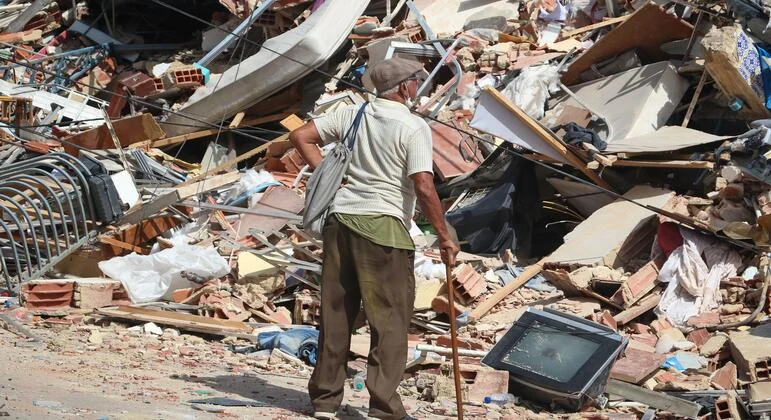
As Venezuela enters a period of seven days of national mourning, the scale of the humanitarian crisis is only beginning to come into focus. The earthquakes have left a trail of devastation that has strained the country’s infrastructure, overwhelmed its medical facilities, and displaced thousands who now find themselves living in the very spaces once reserved for recreation.
The Chronology of a Crisis: June 24 and Its Aftermath
The disaster struck on June 24, a day that began with typical coastal bustle and ended in a struggle for survival. For many, the first sign of the catastrophe was not a tremor, but the sudden, terrifying sound of structural failure.
The Initial Impact
At approximately the moment the first waves of seismic activity hit, families across La Guaira were caught in their homes. Daniela Jaramillo, a mother of five, was in the hallway of her residence when the walls began to buckle. "We grabbed the children, put them in the middle and held on to each other," she recounted, her voice still heavy with the trauma of the event. "We watched the pieces coming down, the walls. The most important thing was protecting the children."
The immediate aftermath was characterized by chaos. As families scrambled to find stable ground, secondary hazards—such as ruptured gas lines—transformed damaged neighborhoods into infernos. Jaramillo’s father, who helped the family navigate the debris, recalls the sensory overload of the escape: "Everything blew up."
The First 72 Hours
For the first two days, thousands of survivors slept rough. Without formal shelter, they huddled outside police stations or in open plazas, exposed to the elements and the psychological toll of uncertainty. It was not until the government, in coordination with international partners, began designating "transitional camps" that a semblance of order began to emerge. The Playa Grande stadium, alongside the Polideportivo Vargas and the César Nieves stadium, became the focal points for a massive humanitarian intervention.
Supporting Data: A Nation in Mourning
The statistical reality of the disaster underscores the immense pressure placed on the Venezuelan state. As of July 1, the official death toll stands at 2,295, with 11,256 individuals confirmed injured.
The Rescue Effort
Search and rescue (SAR) operations remain the highest priority. Despite the passage of a week, rescue teams continue to work around the clock, fueled by the hope of finding survivors in the pockets of air beneath the rubble. Vanessa May, head of the UN humanitarian affairs office for Venezuela, noted the tenacity of these teams: "Search and rescue teams are still working tirelessly. Up until last night they were still finding people alive."
Displacement and Vulnerability
The sheer volume of those needing assistance is staggering. In La Guaira alone, fourteen distinct camps have been established to house those who have lost their homes or those whose dwellings were deemed structurally unsound by emergency engineers. These sites now host a diverse demographic—from infants like Jaramillo’s ten-month-old child to the elderly—all facing the immediate challenge of basic survival.
Official Responses: A Multilateral Humanitarian Mission
The Venezuelan government has mobilized its resources to address the crisis, but the scale of the destruction has necessitated a robust international response. The UN system has been integrated into the emergency response framework, focusing on the three primary stadium sites to streamline aid delivery.
Coordination of Services
The humanitarian response is being segmented to ensure that core needs are met efficiently:
- Nutrition: The World Food Programme (WFP) is spearheading the establishment of communal kitchens, aiming to provide stable, hot meals to the thousands currently residing in stadiums.
- Child Protection and Sanitation: UNICEF is actively mapping out child-friendly spaces, recognizing the profound psychological impact of the disaster on the youngest survivors. Simultaneously, they are working to secure water and sanitation facilities to prevent the outbreak of disease in the crowded camps.
- Logistics and Shelter: The International Organization for Migration (IOM) is providing expertise in camp management, helping authorities plan for the transition from emergency canvas tents to more durable, semi-permanent transitional shelters.
Vanessa May emphasized that the strategy is holistic. "Coordination with authorities is under way at what officials are calling ‘transitional camps,’" she explained. "The goal is to provide healthcare, food security, nutrition, and psychosocial support in one centralized location."
The Implications: Resilience Amidst Harsh Realities
The reality of living in a stadium, while necessary, is fraught with difficulty. The tropical climate of the Venezuelan coast presents a constant challenge. Temperatures fluctuate wildly, and the recent heavy rains have served as a cruel reminder of the survivors’ vulnerability.
The "Washed Out" Reality
"We’d rigged something up with sheets, but a huge bucket of water just came down," Jaramillo explained, describing a recent storm. "The children got soaked, our things got soaked. Most people lost their belongings all over again." For many, the earthquake destroyed their homes, but the rain has destroyed the small, salvaged remnants of their former lives.
Psychological Resilience and the "Good News"
Amidst the gloom, the camp has seen moments of profound human resilience. For the Jaramillo family, the survival of their dog—who gave birth to five healthy puppies just two days after they arrived at the shelter—has become a symbol of hope. A volunteer Brazilian veterinarian’s confirmation of the puppies’ health provided a brief, vital morale boost for the families in the immediate vicinity.
However, the psychological weight remains heavy. Many survivors, like Jaramillo, feel a sense of survivor’s guilt. "Thank God we had no loss of life," she said. "It would be selfish to say a house is the most urgent thing right now. While we’re stable here, across the way there are still people trapped under rubble."
Looking Toward the Future
The implications for Venezuela are long-term. Beyond the immediate need for shelter and medical care, the country faces a gargantuan task of structural assessment and urban reconstruction. The stadium shelters are only a stopgap measure; the path forward will require years of investment and a sustained commitment to psychosocial support for a population that has witnessed the total collapse of their familiar world.
As evening falls over the Playa Grande stadium, the rows of tents stretch out across the outfield. Families huddle together, listening to the hum of rescue vehicles in the distance, waiting for the day when the ground stays still and they can finally begin to rebuild. For now, the baseball stadium remains a sanctuary—a place where the game of life continues, even when the rules have been rewritten by disaster.
 Azzam Bilal Chamdy
 Pevita Pearce
 Iffa Jayyana
