

While the world’s attention is perpetually captured by the visceral imagery of conventional warfare—tanks rolling across borders, cities reduced to rubble, and mass displacement—a parallel, equally devastating conflict is unfolding in the shadows. Global organized crime, a sprawling network of illicit enterprises, claims a death toll comparable to that of traditional armed conflicts, yet it continues to operate largely beneath the threshold of international public consciousness.
According to data from the United Nations, organized criminal groups have been linked to approximately 95,000 homicides annually since the turn of the millennium. This figure stands in stark, chilling proximity to the 92,000 annual deaths attributed to armed conflicts worldwide. As UN Secretary-General António Guterres has poignantly noted, the ramifications of this shadow war are identical to those of overt military aggression: the erosion of governance, the festering of systemic corruption, the degradation of the rule of law, and a constant, pervasive cycle of violence and destruction.
The Anatomy of a Hidden Global Toll
The distinction between war and organized crime lies not in the severity of the harm, but in the visibility of the perpetrator. War is a public event; organized crime is a private, clandestine enterprise. Criminal networks do not merely exist on the fringes of society; they are increasingly embedded within the very fabric of our communities, global financial systems, and, in some cases, the legitimate institutions of the state.
Supporting Data: The Scale of Destruction
The scope of this threat is staggering. The UN Office on Drugs and Crime (UNODC) reports that organized criminal networks are responsible for roughly one-fifth of all intentional homicides globally. In specific regions, particularly across the Western Hemisphere, this statistic balloons, with criminal groups accounting for nearly half of all homicides.
However, the casualty count is only one metric. The true cost of organized crime is multi-dimensional:
- The Opioid Crisis: Beyond direct violence, the illicit drug trade is a primary driver of public health catastrophes. The World Health Organization (WHO) estimates that approximately 600,000 lives are lost annually to opioid-related overdoses—a silent epidemic fueled by international supply chains.
- Institutional Decay: By targeting journalists, activists, and local community leaders, criminal organizations systematically dismantle the checks and balances necessary for a functioning society.
- Economic Subversion: Through money laundering and the infiltration of legal business sectors, these groups distort economies, creating parallel power structures that function as shadow governments.
The Human Cost: A Victim’s Perspective
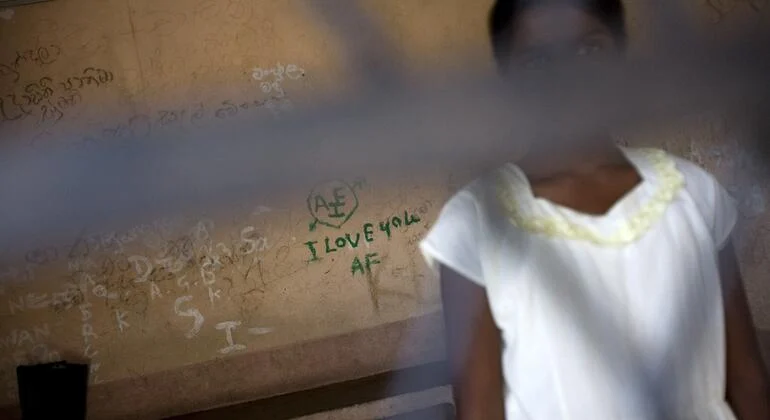
Statistics, however harrowing, often fail to capture the lived reality of those caught in the machinery of organized crime. Consider the story of "Mary," a 17-year-old from Benin City, Nigeria. Lured by the promise of a restaurant job in Europe, she was instead funneled into a labyrinthine trafficking network via Libya.
Mary’s journey—characterized by systemic coercion, sexual violence, and total isolation—serves as a microcosm of the human rights crisis facilitated by transnational syndicates. "What I’m passing through right now is so big, so serious, I see myself as a grown-up," she reflected. "I missed ever being a child." Her experience, marked by the theft of her youth and the erasure of her agency, highlights the psychological scars that persist long after the physical exploitation ends.
Chronology of a Shifting Landscape
To understand why organized crime has become so pervasive, one must look at its evolution over the past two decades.
The Early 2000s: Traditional Hierarchies
At the turn of the millennium, organized crime was often viewed through the lens of rigid, pyramid-structured hierarchies—cartels and mafias that operated with a clear chain of command. Law enforcement focused on dismantling these "heads" of the snake.
2010–2018: The Integration of Global Markets
As globalization accelerated, so did the sophistication of criminal networks. Criminal organizations began to function less like gangs and more like multinational corporations. They diversified their portfolios, moving from simple drug trafficking into human smuggling, wildlife poaching, the illicit trade of cultural artifacts, and the sale of counterfeit medicines.
2019–Present: Digital Transformation and Decentralization
The current era is defined by two major shifts:
- Technological Ubiquity: Criminal groups have weaponized the internet. Cyber-enabled crime—including massive online fraud and extortion—has become a cornerstone of their revenue. In East and Southeast Asia alone, online scam networks generated losses estimated between $18 billion and $37 billion in 2023.
- Decentralization: Modern syndicates have moved away from central authority. By operating as fluid, decentralized systems, they are nearly impossible to track, let alone dismantle. They use professional service providers—accountants, lawyers, and logistics experts—to cloak their activities in the legitimacy of the formal economy.
Official Responses and the "Governance Gap"
The international response to organized crime has been hampered by a fundamental misdiagnosis of the problem. For too long, the issue has been treated solely as a matter of law enforcement—a police problem to be solved with arrests and seizures.
However, the UNODC has increasingly advocated for a broader approach. In regions like Haiti, the gravity of the threat is undeniable: by 2024, gangs had seized control of an estimated 85 percent of Port-au-Prince. These groups do not just traffic goods; they provide "services," enforce "laws," and collect "taxes," effectively replacing the state. This is not mere crime; it is the formation of a parallel, illegitimate governing structure.
Secretary-General Guterres and other world leaders have urged a shift in policy, emphasizing that:
- Legitimacy must be restored: Strengthening state institutions is the only way to prevent criminal groups from filling the vacuum of authority.
- Awareness is a weapon: As victims like Mary have suggested, public education—starting in schools—is essential to prevent recruitment and exploitation.
- Following the money: Because the financial backbone of these groups is so vast—with billions of dollars flowing through the Balkan and Mediterranean routes alone—international financial cooperation is just as important as tactical policing.
Implications: The Long-Term Challenge
The implications of failing to address organized crime as a global security priority are profound. When criminals can influence the state, distort the market, and exploit the vulnerable with relative impunity, the social contract itself begins to fray.
Unlike the finite nature of war, organized crime is persistent. It thrives on the quiet desperation of the marginalized and the systemic weaknesses of the powerful. The lack of media coverage, compared to the spectacle of war, has created a "visibility gap" that allows these networks to operate under the radar.
To bridge this gap, the international community must move beyond the narrow lens of criminal justice. We must begin to view organized crime as a systemic threat to global development, public health, and human dignity. If we fail to recognize the shadow war for what it is, we are not only leaving millions of victims like Mary in the darkness—we are allowing the very foundations of global stability to be hollowed out from within.
The future of global security depends on our ability to illuminate the shadows, to recognize that the most dangerous threats are often those that hide in plain sight, masquerading as the mundane functions of the modern world. Only by confronting the systemic nature of these criminal networks can we hope to restore the safety and sovereignty that should be the right of every citizen.
 Lina Hope
 Asro
Asro
 Layla Zulfa
