

The world of international football is rarely defined by sentimentality. It is a ruthless meritocracy of tactical schemes, physical conditioning, and the cold, hard logic of the scoreboard. Yet, as England prepares to face Norway in the World Cup quarterfinals at Miami Stadium this Saturday, July 11, the global discourse has veered sharply into the realm of narrative fiction.
The match, which promises to be the centerpiece of the tournament, features a clash of two of the planet’s most transcendent talents: England’s midfield conductor, Jude Bellingham, and Norway’s mechanical goal-scoring titan, Erling Haaland. While the stakes—a coveted spot in the World Cup semifinals—are objectively massive, the internet has collectively decided that this isn’t just a sporting contest. It is the season finale of an HBO-caliber sports drama, a collision of lore, friendship, and the heavy burden of superstardom.
The Path to Miami: A Clash of Titans
The journey to the quarterfinal stage has been nothing short of cinematic for both nations. England’s path was solidified in a nail-biting Round of 16 encounter against Mexico. In that match, Bellingham once again proved why he is considered the heartbeat of the Three Lions, netting a crucial brace in quick succession to dismantle the Mexican defense. With Harry Kane putting the finishing touches on the victory with a clinical second-half penalty, England emerged as the tournament favorites.
Norway, meanwhile, has been the tournament’s "Cinderella" story—if a team led by a genetic marvel like Haaland can ever be called an underdog. Their path to the final eight was paved by a stunning 2-1 upset over Brazil, a result that sent shockwaves through the footballing world. Haaland, playing with a mix of predatory instinct and surgical precision, scored both goals for the Norwegians, effectively ending Brazil’s campaign and cementing his status as the tournament’s primary antagonist to established hierarchies.
A Shared History: The Dortmund Crucible
To understand the intensity of the upcoming matchup, one must look back to the hallowed halls of Signal Iduna Park. Before the glitz of Real Madrid and the industrial might of Manchester City, Jude Bellingham and Erling Haaland were the twin engines of Borussia Dortmund.
Bellingham arrived at the German club in 2020, a raw, precocious teenager from Birmingham City who quickly shattered records to become the club’s youngest-ever goalscorer. Simultaneously, Haaland was redefining what it meant to be a striker in the modern era. Their time together in the Bundesliga was a masterclass in chemistry. Bellingham provided the creative infrastructure—the vision, the driving runs, and the rhythmic control—while Haaland provided the terrifying inevitability of a man who seemed to view the goalpost as a personal target.
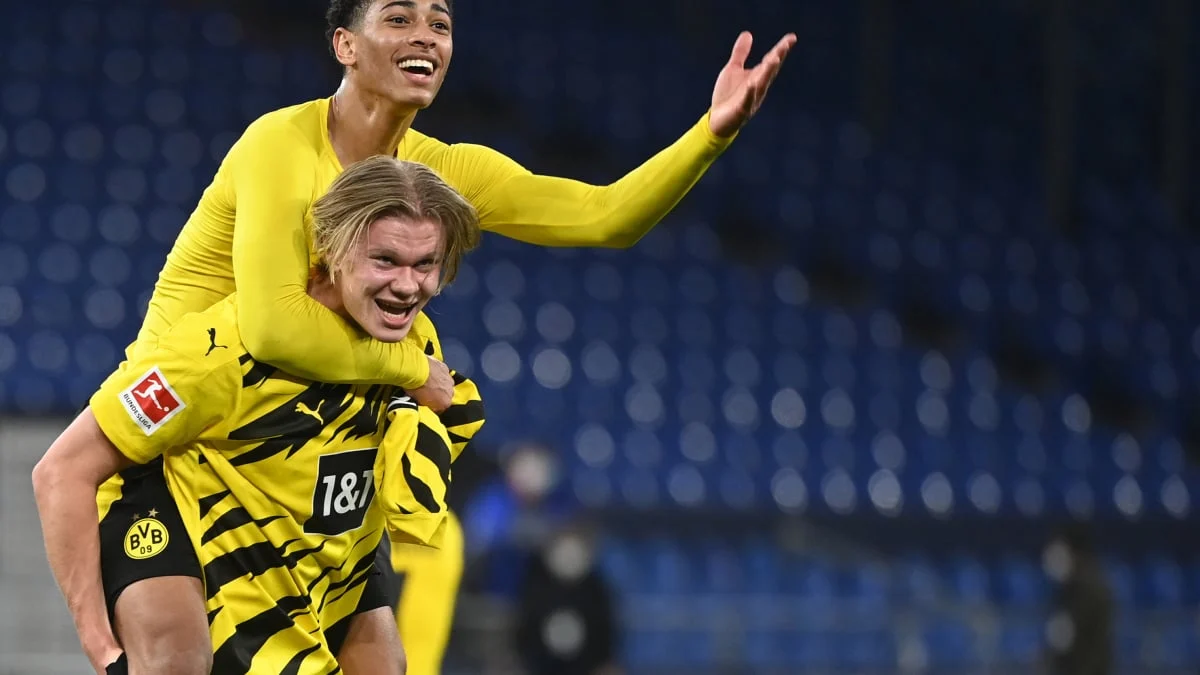
The two didn’t just share a pitch; they developed a genuine, off-field camaraderie that has become the bedrock of the current online obsession. Fans have spent the days leading up to the Miami showdown excavating old footage of the duo—training ground laughs, post-match celebrations, and candid moments that highlight a bond forged in the high-pressure cooker of elite professional development.
The "Heated Rivalry" Narrative
The fervor surrounding this match has reached such heights that social media users have begun comparing the impending conflict to the themes found in the late-2025 literary sensation Heated Rivalry. The series, which explores the complex, blurred lines between professional competition and deep personal affection, has become a lens through which fans are viewing the Bellingham-Haaland dynamic.
For many, the narrative is irresistible: two brothers-in-arms, separated by the massive capital flows of the modern game, forced to extinguish the other’s World Cup dream. The "lore" is undeniable. They are no longer teammates; they are symbols of their respective nations. Yet, the history remains. Even after Haaland moved to Manchester City in 2022 and Bellingham transitioned to Real Madrid in 2023, the connection has persisted.
In past interviews, particularly during the 2022 World Cup cycle, Bellingham candidly discussed their ongoing communication. Haaland would routinely send "good luck" messages before major fixtures and "well done" notes afterward. They exist in a sphere of mutual respect that transcends the kits they wear. This human element has turned a standard quarterfinal into a morality play: Can one truly defeat a friend with such history without leaving a piece of their own spirit behind?
Professionalism vs. The Digital Gaze
While the narrative thrives on social media, the players themselves remain consummate professionals. Haaland has spent this tournament oscillating between his role as a "final boss" on the pitch—a figure of physical intimidation—and a surprisingly active social media presence. He is a master of the "content creator" era, using the tournament as a stage to build his own legend.
Bellingham, by contrast, carries the "Hey Jude" aura—a polished, composed, and superstar-level focus. He approaches the match with the demeanor of a veteran, seemingly unfazed by the hyperbole surrounding his reunion with his former colleague.
However, the implications of this game go beyond the individual relationship. For England, a win would validate their status as a global powerhouse, capable of navigating the immense pressure of their fans’ expectations. For Norway, it represents a historic opportunity to etch their name into the annals of football history, led by a generational talent who has already conquered the club game and now seeks to conquer the international one.
The Tactical Landscape: Miami Heat and Technical Precision
Beyond the sentimentality lies a tactical battle that will be decided in the sweltering heat of Miami. The July climate will be a significant factor, testing the conditioning of both squads.
England’s midfield, anchored by Bellingham, relies on transition speed and the ability to break lines. They will need to account for the unique positioning of the Norwegian defense, which has shown a surprising ability to absorb pressure and launch lethal counters through Haaland. The Norwegian striker’s ability to find space—even when he appears to be completely marked—will be the primary concern for the English backline.
Conversely, England’s offensive versatility, spearheaded by Kane and energized by Bellingham’s late-arriving runs, will test the discipline of the Norwegian midfield. This is not just a battle of individuals; it is a clash of philosophies. England’s methodical, possession-based approach will collide with Norway’s direct, vertical efficiency.
Implications for the Future of the Sport
The outcome of this quarterfinal will undoubtedly shape the trajectory of both players’ careers. Victory in Miami would cement the winner as the favorite for the Golden Ball, the individual accolade for the tournament’s best player.
Furthermore, the game serves as a microcosm of the modern football landscape. The players are global brands, their lives documented in real-time, their friendships turned into content, and their professional rivalries commodified for global consumption. When Bellingham and Haaland step onto the turf in Miami, they will be playing for their countries, for their teammates, and for the fans in the stands—but they will also be playing for the digital narratives that have been constructed around them.
Conclusion
As the world turns its eyes to Miami, the "Dortmund Reunion" represents the pinnacle of what makes the World Cup a global phenomenon. It is a rare instance where the personal stories of the participants align perfectly with the grand scale of the event.
Whether the match ends in a defensive stalemate or a goal-scoring masterclass, the legacy of the Bellingham-Haaland dynamic is already secured. They are the faces of a new generation, players who have managed to retain a sense of humanity in a sport that often demands they be machines. On Saturday, they will shake hands, embrace, and then—for ninety minutes—they will do everything in their power to destroy the dreams of their best friend. It is, in the truest sense, the drama that only the World Cup can provide.
 Ali Ikhwan
 Raul Delapena Setiawan
 Azzam Bilal Chamdy
