

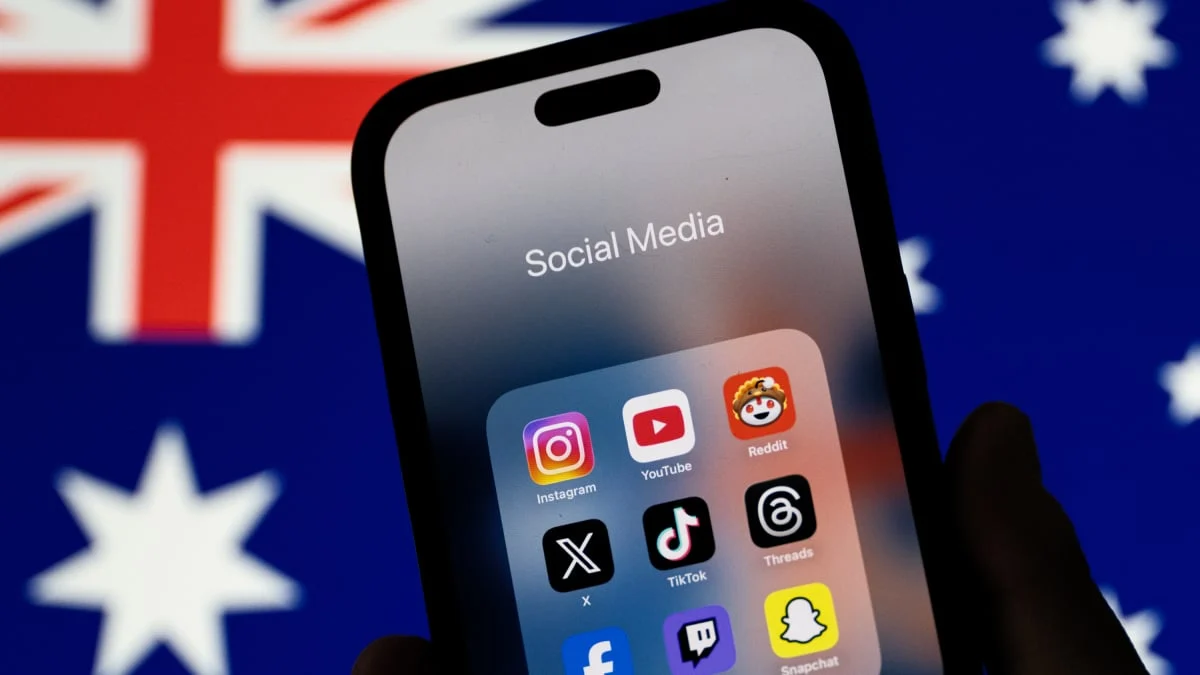
In a bold, albeit contentious, legislative move to curb the digital exposure of minors, Australia enacted a landmark social media ban in December 2025. The policy, which mandates that platforms such as Instagram, TikTok, and YouTube take "reasonable steps" to prevent children under 16 from creating accounts, was touted as a world-leading protective measure. However, as the initial dust settles, a sobering reality has emerged: the “Great Digital Wall” of Australia is proving to be, at least for now, a paper tiger.
Recent testing by a team of software experts commissioned as advisers to the Australian government suggests that the ban is currently ineffective. In a series of controlled test environments, major social media platforms consistently failed to trigger age-verification protocols, allowing researchers to bypass the law with ease. As other nations, including Canada, Indonesia, and the United Kingdom, look toward Australia as a pilot study for their own restrictive policies, the findings raise urgent questions about the feasibility of legislating age-gating in an era of sophisticated algorithmic bypasses.
A Chronology of Conflict: From Policy to Impotence
The journey toward Australia’s social media ban was marked by high-stakes rhetoric and escalating financial threats. When the legislation was introduced, it was framed as a necessary intervention to protect the mental health and safety of Australian youth.
- December 2025: The ban officially goes into effect. Platforms are legally required to implement "reasonable steps" to restrict access for users under 16. The initial penalty for noncompliance is set at a staggering $AUD 49.5 million ($US 33 million).
- June 2026: Recognizing the lukewarm response from tech giants, Prime Minister Anthony Albanese announces a drastic doubling of the maximum fine to $AUD 99 million ($US 68.2 million). Minister for Communications Anika Wells labels the platforms’ efforts as "tricks straight out of the big tech playbook," accusing them of doing the "bare minimum."
- July 2026: A study conducted by software testing firm KJR reveals that the law has failed its first major hurdle. In a series of 50 dummy account registrations, researchers report that not a single platform requested proof of age, despite the law’s clear directive.
The Testing Data: Where the System Fails
The failure of the current regime lies in the reliance on "age inference"—a process where platforms estimate a user’s age based on their online behavior, content preferences, and engagement patterns rather than formal identification.
Andrew Hammond, Director at KJR, provided a damning assessment of the testing process. “You should be asked to demonstrate how old you are, and not once have we been asked to verify our age or use age-assurance measures,” Hammond stated to Reuters.
The testing involved creating 50 dummy accounts across major platforms, including Instagram, Snapchat, YouTube, and X (formerly Twitter). In every instance where the accounts claimed to be 16, the platforms’ internal algorithms—which are ostensibly designed to catch underage users—failed to flag them for further scrutiny. The implications of this are not just bureaucratic; they are potentially dangerous. In one instance, a dummy account created on X, which self-identified as 16, was immediately served with pornographic content, highlighting the inadequacy of current safety filters when the underlying age verification is flawed.
The Industry Response: Deflection and Denial
The reaction from the tech sector has been a mix of silence, deflection, and, in one notable instance, an admission of technical limitations.
Google (YouTube), Snap, and TikTok declined to offer substantive comments on the findings. X, which faced the most severe criticism regarding the exposure of the test account to inappropriate content, did not respond to requests for comment entirely.
Meta, the parent company of Instagram and Facebook, offered a defense based on the nuances of the government’s own guidelines. A spokesperson argued that the tests conducted by KJR did not necessarily mirror the "behavioral indicators" that would trigger a formal age verification process. The spokesperson suggested that a "true" under-16 user might behave differently than a dummy account, implying that the platforms’ systems are tuned to look for specific patterns of activity—or inactivity—that a passive test account might not replicate.
Conversely, the Australian streaming platform Kick took a different approach. Recognizing that its platform is relatively new and lacks the deep historical data required for accurate "age inference," Kick blocked the researchers from creating accounts without proof of age. This highlights a critical divide: established giants rely on data-heavy inference, while smaller or more honest platforms acknowledge that without direct ID verification, the gatekeeping is effectively non-existent.
The Ethical and Practical Implications
The failure of the Australian ban brings to the forefront a debate that has simmered for years: Is it actually possible to enforce a digital age limit without compromising the fundamental rights of all users?
The Privacy vs. Protection Paradox
One of the primary criticisms of mandatory age verification is the requirement for users to upload government IDs or biometric data. Privacy advocates argue that this creates massive databases of sensitive information that are ripe for data breaches. If the government forces platforms to collect this data, they are essentially creating a digital identity tracking system, which poses its own set of threats to civil liberties.
The Erosion of Free Speech
Critics of the legislation, including digital rights groups, have long argued that such bans infringe upon the right to information and expression. By creating a "walled garden" for those under 16, the government risks isolating young people from educational resources and supportive communities, while simultaneously setting a dangerous precedent for government control over online access.
The "Global Copycat" Effect
The failure in Australia is particularly significant because it serves as a warning to other nations. Canada, Indonesia, and the UK are currently in various stages of proposing or implementing similar under-16 bans. If Australia—a country with a highly sophisticated regulatory environment and a strong track record of digital oversight—cannot force the world’s largest tech companies to comply, it raises the question of whether these laws are performative politics rather than viable public policy.
The Path Forward: What Comes Next?
For the Australian government, the path forward is fraught with difficulty. They are currently faced with a choice: double down on regulation by forcing mandatory, strict ID verification for all users, or admit that the current "reasonable steps" standard is insufficient and move toward a different model of child protection.
If the government chooses the former, they will likely face immense public backlash regarding privacy. If they choose the latter, they will have to contend with the reality that "age inference" is a flawed technology that may never be precise enough to satisfy the requirements of a national law.
As the findings from the KJR study continue to circulate, the conversation is shifting from "should we ban children from social media?" to "can we actually do it?" The technological gap between legislative intent and the realities of global tech platforms remains a chasm. Unless governments and tech companies can agree on a standardized, privacy-respecting, and technically robust form of age assurance, the "under-16 ban" may remain a headline-grabbing policy with little impact on the actual screen time of the nation’s youth.
The Australian government’s next move will be closely watched by international regulators. Whether they choose to impose the record-breaking $99 million fines or seek a collaborative technological solution with the platforms will determine the future of digital age-gating. For now, the "Great Digital Wall" remains, but it appears to have plenty of unlocked doors.
 Suro Senen
 Nana Wu
 Neng Nana
