

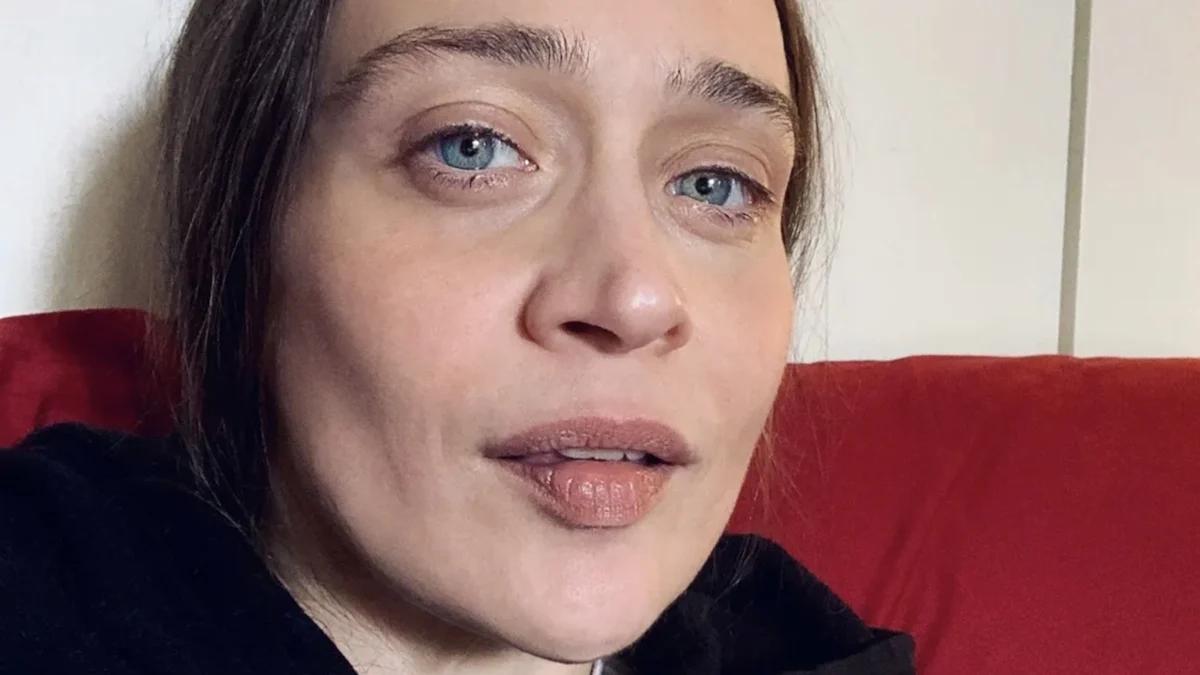
In a landscape where the global news cycle often feels like an unrelenting, high-definition assault on the senses, Fiona Apple has stepped forward to offer a rare, raw glimpse into the internal friction that defines the modern artist. In a candid video posted to social media this past Friday, the Grammy-winning songwriter addressed her fan base with an admission of profound creative struggle, detailing the near-impossible task of translating the "endless barrage of horrors" currently unfolding globally into meaningful art.
The video, shared via the Instagram account of her friend and roommate, Zelda Hallman, serves as both a confession and a plea for patience. For an artist long defined by her uncompromising sincerity and the visceral, often autobiographical nature of her songwriting, Apple’s latest update highlights a fundamental shift in the relationship between personal expression and the collective trauma of the modern era.
The Chronology of Silence and Struggle
Fiona Apple’s career has been characterized by long, deliberate gaps between projects, a practice that has historically allowed her to cultivate a body of work that feels timeless rather than reactive. However, the current moment presents a different challenge.
The timeline of her recent creative output suggests an artist who is actively searching for a way to engage with sociopolitical issues. In 2025, she broke a five-year hiatus with the release of "Pretrial (Let Her Go Home)," a searing indictment of the cash-bail system and its disproportionate impact on Black mothers and women. That track served as a bridge between her established confessional style and a more outward-facing, activist-driven creative agenda. More recently, in June 2026, she co-wrote the track "Need It" for Cara Delevingne, signaling a continued, if sporadic, presence in the music industry.
Yet, despite these creative flickers, the artist has remained largely out of the spotlight. In the new video, Apple revealed that she has spent recent nights attempting to capture the zeitgeist of 2026, only to find herself paralyzed. "I wonder if you’re wondering if I’m even trying to write about what’s going on in the world right now," she posited, before admitting that while the intent is there, the execution has been plagued by a deep-seated, analytical resistance.
The Creative Friction: "The Authority of Self" vs. The Weight of the World
To understand Apple’s struggle, one must understand her process. Throughout her storied career, Apple has been the undisputed architect of her own narrative. Her magnum opus, Fetch the Bolt Cutters (2020), was a triumph of interiority, proving that when an artist writes from the well of their own trauma and triumph, they are the final arbiter of truth.
"You’re the authority," she explained in the video, noting that personal writing carries a different weight because it requires no external validation. When the subject matter is one’s own life, the songwriter is immune to the charge of misrepresentation. However, when the subject shifts to the systemic collapse of civil liberties, the humanitarian crises in Gaza and Sudan, or the erosion of fundamental human rights, the stakes shift.
Apple’s hesitation stems from a fear of trivialization. "Maybe I’m letting perfect get in the way of good," she mused. The artist is currently grappling with a crisis of accountability; she feels the pressure to perform as a cultural commentator, yet she is paralyzed by the enormity of the atrocities she wishes to chronicle. She is not merely experiencing "writer’s block" in the traditional sense; she is experiencing a moral crisis of representation.
Supporting Data: The Context of the Silence
While Apple’s video was vague regarding the specific geopolitical triggers behind her paralysis, Zelda Hallman’s caption provided the necessary context to understand the scope of the artist’s distress. Hallman cataloged a list of systemic failures that currently inform Apple’s headspace:
- Global Humanitarian Crises: Specifically citing the ongoing horrors in Gaza and Sudan.
- Targeted Cruelty: The legislative and social assaults on the trans community, particularly trans youth.
- Bodily Autonomy: The systemic erosion of reproductive rights and the legal threats against women’s health.
- Civil Rights Erosion: The targeting of immigrants, the degradation of voting rights, and the systemic silence regarding the disappearance of Indigenous and Black children.
This list functions as a map of the "endless barrage of horrors" Apple alluded to. It suggests that her struggle is not a lack of empathy, but rather an overabundance of it. For an artist who has spent decades refining her craft to be a precise instrument of emotion, the prospect of failing to do justice to these issues is not just a professional concern—it is a spiritual one.
The Fear of Apathy: A Call to Truth
Perhaps the most poignant aspect of Apple’s message was her preemptive strike against the assumption of apathy. In an age where digital silence is often interpreted as complicity or disinterest, Apple was deeply concerned that her retreat into the creative process might be mistaken for indifference.
"I just didn’t want you to think that I was turning a blind eye," she insisted. She made it clear that her current inactivity is not a lack of care, but rather a manifestation of it. She is performing the "work" of processing, which, in a digital age that demands immediate reactions, looks suspiciously like doing nothing.
She was refreshingly honest about her own disappointment in herself. "I’m letting myself down right now, I know that, as an artist," she admitted, acknowledging the high expectations she sets for her own role as a chronicler of the human condition.
Implications for the Future of Artistic Activism
The broader implication of Fiona Apple’s video is a question that many artists of her stature are currently asking: What is the role of the musician in an era of constant, documented catastrophe?
Apple’s resolution is one of dogged persistence. She clarified that she is active in other arenas, doing "what she can elsewhere," but she maintains that songcraft remains her primary vocation for processing the world. Her conclusion was one of quiet, weary defiance: "It’s my job to show what’s going on. That’s what I want to try to do. I’m going to keep trying."
This statement signals a departure from the "activist musician" archetype that often demands quick, performative content. Instead, Apple is advocating for a slower, more deliberate, and perhaps more painful form of engagement. She is refusing to produce content that feels "good enough" if it does not meet the standard of truth required by the events she is documenting.
Conclusion: The Artist as a Mirror
Fiona Apple’s struggle is a mirror held up to her audience. In a world where we are all bombarded by the same daily news feeds, the paralysis she feels is a collective experience. Her inability to "write the song" mirrors our own collective inability to process the pace of change.
By coming forward, Apple has stripped away the myth of the effortless creator. She has highlighted that for some, the act of creation is not an escape from reality, but a direct confrontation with it—and sometimes, the weight of that confrontation is enough to bring the pen to a halt. As she continues her work, the fans who have followed her through her various transformations will likely continue to wait, not just for the next melody or lyric, but for the next honest iteration of an artist who refuses to lie about how hard it is to live in the present.
The struggle, in this case, is not just the process—it is the point.
 Ammar Sabilarrohman
 Lina Irawan
 Nana Muazin
