

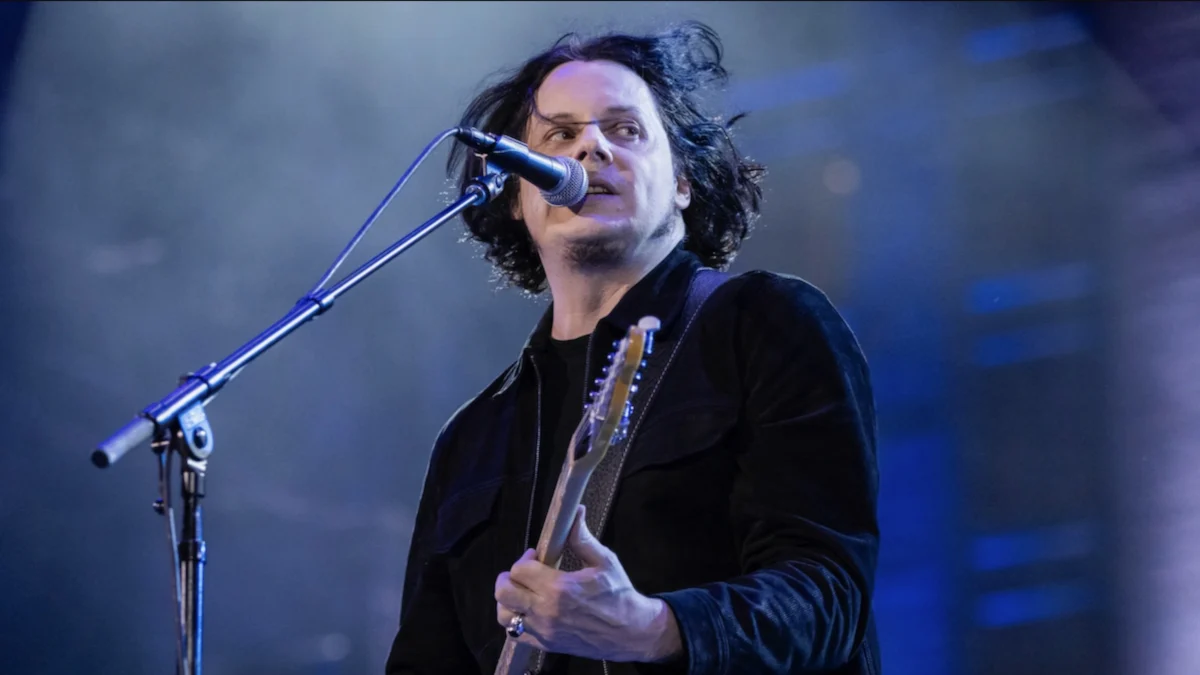
Rock icon Jack White, known as much for his guitar virtuosity as his enigmatic public persona, has found himself at the center of a fresh cultural firestorm. The controversy, sparked by his decision to invite the self-described “Satanic doo-wop” duo Twin Temple to serve as an opening act for his upcoming performance at the Hollywood Palladium, has reignited long-standing debates regarding the intersection of rock music, personal faith, and artistic autonomy.
As White continues his 2026 North American tour in support of his latest studio album, Frozen Charlotte, he has taken a firm, unapologetic stance against those questioning his religious allegiances. In a candid series of social media exchanges, the former White Stripes frontman dismantled the assumptions of fans who viewed his booking choices as a betrayal of his Catholic upbringing, marking a definitive shift in how he wants his personal philosophy to be perceived.
The Genesis of the Conflict
The friction began when White announced that Twin Temple would join him for his September show in Los Angeles. The duo, known for their provocative, occult-themed aesthetic and retro-musical stylings, has become a polarizing force in the touring circuit.
The backlash was immediate, driven largely by segments of his fanbase who recalled White’s deep roots in the Catholic Church. One social media user publicly challenged the artist, writing: “As a practicing Catholic, how do you see promoting a band associated with satanic imagery fitting with your faith? It seems at odds with values Catholicism teaches.”
White’s response was characteristically blunt and uncompromising. “I’m not scared of Satan or any bullshit imagery man made up to live in fear of,” he declared, effectively shutting down the theological interrogation. He further clarified his current relationship with organized religion, stating, “I never claimed to be a practicing Catholic or Christian, you assumed that.”
A Chronology of the Divide
To understand the weight of these comments, one must look back at White’s formative years and his long history with religious symbolism.
- Early Life: Raised in a devout Catholic household in Detroit, White’s youth was deeply intertwined with the Church. His parents were employees of the local diocese, and he was an altar boy who famously met Pope John Paul II as a child. He once admitted in a 2010 interview that he had seriously contemplated joining the priesthood before ultimately deciding to pursue music.
- 2005: The release of The White Stripes’ iconic album, Get Behind Me Satan. While the title was derived from biblical verse, it became a cornerstone of White’s mystique. For decades, fans interpreted the title as a testament to his spiritual struggles, a narrative White has now essentially debunked.
- March 2026: Country musician Charley Crockett ignites a separate industry conversation by removing Twin Temple from his “Age of the Ram” tour. Crockett’s rejection was stark, telling Rolling Stone, “I thought they were like Black Sabbath, but they ain’t. Not today, Satan.”
- July 2026: Jack White kicks off his Frozen Charlotte tour at The Anthem in Washington, D.C. Amidst the tour launch, he doubles down on his support for Twin Temple, choosing to confront the backlash head-on rather than retreat from the booking.
Analyzing the “Not Today, Satan” Sentiment
The divergence between Charley Crockett’s decision to drop Twin Temple and Jack White’s insistence on supporting them highlights a deeper split in the modern music industry.
Crockett’s stance is one of cultural and personal rejection—a refusal to platform imagery he finds incompatible with his own brand or values. In a viral social media post, Crockett wrote, “FUCK TRUMP FUCK EPSTEIN BUT HAIL SATAN? NOT ME JACK.” This reaction encapsulates the “moral gatekeeping” that often occurs when artists use occult motifs as a marketing or aesthetic device.
Conversely, White’s philosophy is rooted in a critique of fear-based control. In his rebuttal to fans, White urged his audience to “commune with god on your own terms and communicate with god and find your own path, not some path somebody made up to make you afraid and make money off of you.” For White, the imagery associated with bands like Twin Temple is essentially theatrical, and his refusal to be “scared” by it is an act of intellectual liberation.
The Artistic Implications: Frozen Charlotte and Beyond
The timing of this debate coincides with the release of Frozen Charlotte, an album that critics have noted possesses a dark, introspective, and at times, cynical outlook on the human condition.
During his two-hour set at The Anthem, White performed a selection of tracks that mirror his recent social media rhetoric. Songs like “G.O.D And the Broken Ribs” and “Archbishop Harold Holmes” suggest that White has been processing these thoughts for years. The latter, which deals with a traveling religious figure exploiting a town for financial gain, serves as a sharp, lyrical indictment of organized institutional power.
By weaving these themes into his live performance, White is moving the conversation away from the “Satanic panic” of his critics and toward a critique of the commodification of faith. He is essentially asking the audience to listen to his work through the lens of individual agency rather than through the binary of “good” versus “evil” religious dogma.
Official Responses and Industry Context
While representatives for the venues hosting the tour have not commented on the controversy, the industry at large is watching closely. Booking artists with controversial stage personas has always been a risk, but in an era of social media-driven boycotts, it is a risk that requires a high degree of confidence from the headlining artist.
White’s refusal to back down is consistent with his history of creative control. Whether he is shunning modern recording technology for analog tape or demanding phone-free experiences at his shows, White consistently prioritizes his artistic vision over the convenience or comfort of the mainstream. By standing by Twin Temple, he is signaling to his audience that his concerts are spaces for musical exploration, not moral arbitration.
The Road Ahead: 2026 Tour Outlook
As the Frozen Charlotte tour moves through major markets—including upcoming dates in Brooklyn, Toronto, Chicago, and a sprawling fall leg that concludes in Atlanta—the “Twin Temple issue” serves as a litmus test for White’s relationship with his fanbase.
The tour itinerary is extensive, demonstrating that White’s drawing power remains undiminished by the online discourse. For the majority of his fans, the music—a blend of blues-rock, experimental fuzz, and classic White Stripes nostalgia—is the primary draw. The controversy, while loud, appears to be a secondary concern to the actual experience of witnessing a guitar virtuoso at the height of his powers.
Summary of Upcoming Key Dates:
- July 11–12: Brooklyn Paramount, Brooklyn, NY
- July 23–24: Radius/Salt Shed, Chicago, IL
- September 28–29: Hollywood Palladium, Los Angeles, CA
- October 9: The Truth, Nashville, TN
- November 20–21: Coca-Cola Roxy, Atlanta, GA
Conclusion: A New Era of Authenticity
Jack White’s recent defiance is not merely about a band opening a show; it is a declaration of independence from the expectations of his past. By stripping away the label of “practicing Catholic” and rejecting the fear of occult imagery, White is attempting to redefine himself on his own terms.
He posits that religion, if it exists, is an individual journey, one that should not be dictated by institutions or societal taboos. As he continues his tour, the question is no longer whether Jack White is a good Catholic, but rather, whether he can lead his audience toward a more nuanced understanding of how art, faith, and fear interact in the 21st century. Whether his fans follow him into this philosophical territory remains to be seen, but one thing is certain: Jack White has no intention of looking back, and he certainly has no intention of being told who he can and cannot invite to the stage.
 Asro
Asro
 Lina Irawan
 rifanmuazin
