

For decades, the Walt Disney Company has leveraged its deep vault of animated classics to dominate the global box office. By transforming hand-drawn fairy tales into "live-action" spectacles, the studio successfully bridged the gap between generations, turning nostalgia into a multi-billion-dollar engine. However, as the industry landscape shifts, the once-reliable formula is beginning to show cracks. The recent, lackluster debut of the live-action Moana suggests that Disney’s strategy of plundering its own IP is facing diminishing returns, prompting a period of deep introspection and strategic stalling in Burbank.
The State of the Union: Choppy Waters for Moana
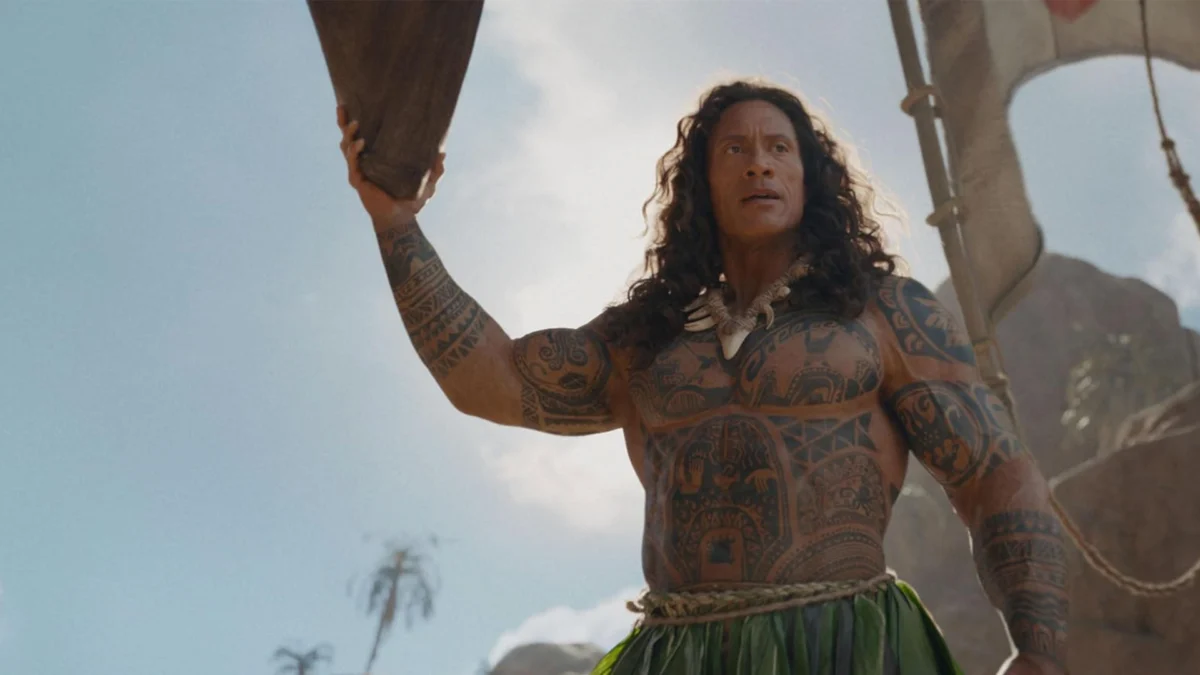
The week’s release of the live-action Moana, directed by Thomas Kail and starring Dwayne Johnson reprising his role as the demigod Maui alongside newcomer Catherine Laga’aia, has hit the industry like a stalled engine. Arriving a mere decade after the original animated sensation, the remake has been met with tepid critical reception and significant box office turbulence.
Initial projections suggest the film may struggle to match the performance of the already disappointing Snow White (2025). As critics point to a lack of narrative necessity and an over-reliance on digital effects, the film serves as a sobering case study for studio executives. With its critical standing currently hovering at a 37% approval rating on Rotten Tomatoes, the film’s inability to capture the "magic" of the original suggests that audiences are experiencing acute franchise fatigue.
A Chronology of the Reimagining Era
Disney’s foray into live-action re-dos is not a modern phenomenon, though its intensity has escalated dramatically in the 21st century. The strategy began in earnest during the 1990s, but it shifted from live-action adaptations of source material (like 1994’s The Jungle Book) to direct, shot-for-shot photorealistic recreations of their animated library.
Below is a breakdown of the notable milestones in this creative trajectory:

- 1994: Rudyard Kipling’s The Jungle Book – A departure from the 1967 toon, this remains a standalone adventure.
- 1996: 101 Dalmatians – A star-vehicle for Glenn Close that proved the financial viability of remakes.
- 2010: Alice in Wonderland – Tim Burton’s billion-dollar gamble that signaled a new, darker aesthetic direction for the studio.
- 2015-2017: The "Golden Age" of the trend, including Cinderella (2015), The Jungle Book (2016), and Beauty and the Beast (2017). These films proved that audiences were hungry for high-fidelity updates of their childhood favorites.
- 2019-2023: The "Disney+ Era," featuring releases like Lady and the Tramp and Pinocchio, which prioritized streaming volume over theatrical prestige.
- 2025-2026: The current downturn, marked by the divisive reception of Snow White and the struggles of Moana.
Data-Driven Disappointment: Why the Strategy is Stalling
The metrics paint a concerning picture. While films like The Lion King (2019) and Aladdin (2019) crossed the $1 billion threshold, more recent entries have struggled to justify their massive production budgets.
For instance, 2025’s Snow White carried a budget estimated between $240 million and $270 million—an astronomical figure for a film that ultimately failed to ignite the box office. When factoring in marketing and distribution costs, the threshold for profitability becomes increasingly difficult to reach.
Furthermore, the quality gap is widening. While Jon Favreau’s 2016 The Jungle Book (94% Rotten Tomatoes) is widely cited as the benchmark for excellence, subsequent entries have often been criticized for "soulless" CGI and a lack of creative evolution. The failure of Pinocchio (27% on RT) to recapture the heart of the 1940 original stands as a testament to the fact that visual proficiency is no substitute for narrative soul.
Official Responses and Strategic Shifts
In light of these performance metrics, Disney is reportedly hitting the brakes. Insiders indicate that the studio is currently re-evaluating its pipeline. The most notable casualty of this "new caution" is the live-action remake of Tangled, which has been placed on indefinite hold.
Other projects in various stages of development have similarly been hit with a "pause" button as the studio seeks to determine whether the market has reached a saturation point. The prevailing sentiment is that Disney must move away from the "copy-paste" model and toward projects that offer genuine artistic justification for existing.

The Broader Implications for Hollywood
The struggle of these remakes has significant implications for the broader film industry:
- Originality vs. IP: The failure of Moana may force Disney to reinvest in original IP, potentially ushering in a new era of risk-taking for the studio.
- The "Uncanny Valley" Problem: Audiences are increasingly vocal about the "uncanny" nature of hyper-realistic CGI animals and environments. As seen in the critical backlash against the CGI dwarfs in Snow White, audiences are demanding more tangible, practical filmmaking.
- Cultural Sensitivity and Evolution: The controversy surrounding Snow White and the adjustments made to Peter Pan & Wendy highlight the difficulty of updating dated source material. Disney is finding that it is nearly impossible to satisfy the modern audience’s desire for progressive updates while simultaneously catering to the nostalgia of traditionalist fans.
- Streaming Strategy: With the decline of theatrical returns, Disney is forced to decide whether these films are better suited as low-budget streaming content or if the "event film" status is fundamentally broken for established titles.
Final Verdict: Is There a Way Forward?
The success of 2016’s The Jungle Book remains the high-water mark for the studio—a film that managed to feel both modern and faithful, using technology to enhance the story rather than replace the performers. However, the path ahead is narrow.
If Disney hopes to regain its footing, it must recognize that nostalgia is a finite resource. When a studio spends nearly $300 million to recreate a film that is only a decade old—as is the case with Moana—it risks not only its capital but its brand equity. The era of the "guaranteed hit" remake appears to be over. Going forward, the Mouse House will need to decide if it wants to continue looking into the rearview mirror or if it is finally time to start telling new stories.
Ranking the Disney Live-Action Remakes (Selected Highlights)
| Rank | Title | Year | Critical Consensus |
|---|---|---|---|
| 1 | The Jungle Book | 2016 | A visual masterpiece that sets the gold standard. |
| 2 | Beauty and the Beast | 2017 | Faithful, musical, and commercially dominant. |
| 3 | Aladdin | 2019 | A crowd-pleaser despite the high bar set by the original. |
| 10 | Lilo & Stitch | 2025 | Charming, but suffers from unnecessary deviations. |
| 14 | Moana | 2026 | Saved only by its soundtrack; visually uninspired. |
| 15 | Snow White | 2025 | A costly experiment that failed to connect. |
| 17 | Pinocchio | 2022 | Technically impressive but hollow at its core. |
Note: This list excludes prequels, spinoffs, and non-live-action photorealistic "animated" features like 2019’s The Lion King, which the studio classifies differently.
 Ammar Sabilarrohman
 Siti Muinah
 Iffa Jayyana
