

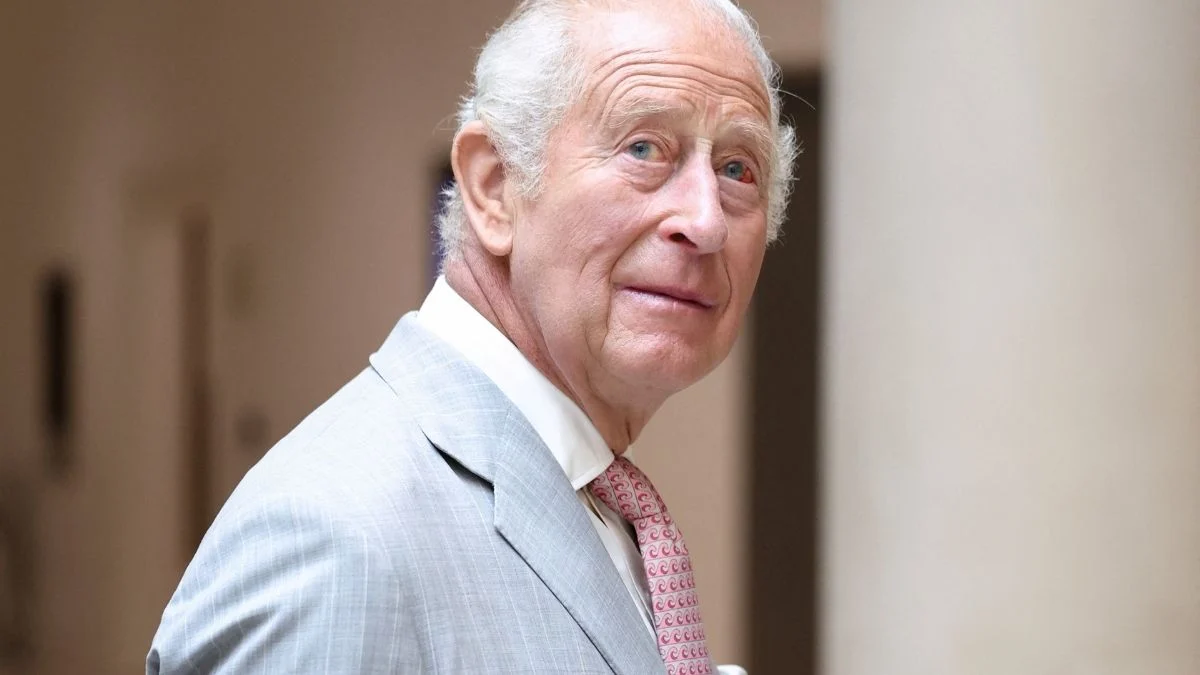
In a touching display of empathy and shared resilience, King Charles III recently shared an intimate, heartwarming moment with a centenarian World War II veteran during a royal visit to the Isle of Man. The meeting, which took place at the "Heroes on the Water" charity, brought together the British monarch and 104-year-old James Fenton, a decorated bombardier whose wartime service and subsequent longevity have made him a symbol of the "Greatest Generation."
The encounter served as a poignant reminder of the enduring connection between the British Crown and those who served in the armed forces, while simultaneously highlighting the King’s own journey through his highly publicized health challenges.
The Meeting: A Shared Moment of Vulnerability and Respect
The scene unfolded at the headquarters of Heroes on the Water, an organization dedicated to supporting military veterans and emergency service personnel through therapeutic outdoor activities, including kayaking. As the King toured the facility, he was surprised to encounter a familiar face.
The two men had previously crossed paths during the 80th anniversary of VJ Day (Victory over Japan Day) in London in 2025. Upon seeing Fenton, who served as a bombardier with the 178th Field Regiment, Royal Artillery, and is a recipient of the prestigious Burma Star, the King immediately moved to greet him, taking the veteran’s hands in his own.
"I wasn’t expecting to find you here," the King remarked, a genuine smile breaking across his face. Fenton, clearly moved by the reunion, replied, "I’ve been waiting for this for quite some time; I hope you’re all well, sir."
The dialogue that followed transcended typical royal protocol. When the King settled into a chair to converse with the veteran, he humbly remarked on his own stamina, noting, "Not too bad, thank you very much, but I don’t know how you do it. It’s bad enough at my age."
Fenton’s response—that one must simply "keep going"—resonated deeply with the monarch. In a moment of quiet candor, the veteran admitted that he had been "always concerned" for the King’s health throughout the monarch’s well-documented battle with cancer. The King, clearly touched by the sentiment, replied, "Thank God you’re still there," before complimenting Fenton on his iconic slouch hat, adding, "It’s a very special moment for me."
Chronology: From VJ Day to the Isle of Man
To understand the weight of this meeting, one must look at the timeline of the King’s recent engagements and the veteran’s long life of service.
- 1940s: James Fenton serves with the 178th Field Regiment, Royal Artillery, contributing to the Allied effort in the Burma Campaign.
- February 2024: Buckingham Palace officially announces that King Charles III has been diagnosed with a form of cancer, sparking global concern and a period of reduced public-facing duties.
- August 2025: The King and James Fenton meet for the first time during the 80th anniversary of VJ Day in London, establishing a bond based on mutual respect for service.
- Late 2025: The Palace issues optimistic updates regarding the King’s treatment, noting his positive response and the transition toward a "precautionary phase."
- 2026: The King confirms that his medical regimen will be adjusted, signaling a positive trajectory in his recovery.
- Present Day: The King visits the Isle of Man, leading to the heartwarming, unexpected reunion with Fenton at the Heroes on the Water charity.
Supporting Data: The Impact of "Heroes on the Water"
The venue for this meeting, Heroes on the Water, is more than just a backdrop; it represents a vital lifeline for veterans. Founded on the principle that the serenity of the water combined with the camaraderie of fellow veterans can alleviate the symptoms of PTSD and physical injury, the charity provides a unique rehabilitative environment.
For veterans like James Fenton, the charity serves as a community hub. At 104 years old, Fenton is a testament to the resilience of those who fought in the most grueling theaters of the Second World War. The Burma Campaign, in which Fenton participated, was one of the longest and most difficult campaigns of the war, often referred to as the "Forgotten War." His survival and vitality into his second century underscore the importance of the support structures that organizations like Heroes on the Water provide to aging veterans.
Official Responses: Navigating the King’s Health
The King’s health has remained a subject of intense public interest since his diagnosis in early 2024. The Royal Family has adopted a strategy of transparent, yet measured, updates.
Following the success of his treatment, a royal spokesperson stated: "His Majesty has responded exceptionally well to treatment, and his doctors advise that ongoing measures will now move into a precautionary phase. This position will be continuously monitored and reviewed to protect and prioritize his continued recovery."
The decision to scale back medicinal intervention in 2026 suggests a high level of confidence from the King’s medical team. By continuing to engage in public duties, including his trip to the Isle of Man, the King has signaled his commitment to "carrying on," a philosophy that clearly mirrors the spirit of veterans like James Fenton. The King’s ability to sit down and hold a conversation—rather than simply performing a "walkabout"—demonstrates a desire to prioritize human connection over the rigid formalities of royal life.
Implications: The Role of the Monarchy in Modern Society
The interaction between King Charles and James Fenton carries several profound implications for the role of the monarchy in the 21st century.
1. The Power of Personal Connection
In an age of digital media and distant political figures, the King’s ability to create a "special moment" with a private citizen highlights the unique function of the monarchy. By showing vulnerability, the King humanizes the institution. His admission that he, too, finds the burdens of his station and his age to be significant helps bridge the gap between the sovereign and his subjects.
2. A Legacy of Service
The King’s clear reverence for Fenton—a man who represents the generation that preserved the freedoms of the modern world—reinforces the monarch’s role as the Commander-in-Chief of the Armed Forces. It demonstrates that the Crown does not take the sacrifice of its veterans for granted. For Fenton, the meeting was a validation of his long life and service; for the King, it was a moment of reflection on duty and mortality.
3. Normalizing Health Conversations
By speaking openly about his age and his health, King Charles is effectively normalizing the challenges of aging and illness. When he said, "I don’t know how you do it," he was acknowledging that even a monarch is subject to the limitations of biology. This honesty has been largely praised, as it encourages others to be open about their own health struggles and the importance of resilience.
4. The Future of the Monarchy
As the King continues his "precautionary" recovery phase, his choice of engagements reflects a focus on causes that are deeply personal to him. His support for military charities and veteran welfare is a long-standing commitment that remains a priority. This, combined with his willingness to prioritize one-on-one interactions over grand, impersonal ceremonies, suggests a future for the monarchy that is perhaps more intimate and empathetic.
Conclusion: A Moment for the History Books
The meeting between King Charles III and James Fenton was not merely a royal photo opportunity; it was a profound exchange between two men who have both navigated immense challenges in their respective roles. One, a veteran who survived the horrors of the Burma Campaign; the other, a monarch steering his nation through personal and political shifts.
As the King continues his recovery and Fenton continues to embody the spirit of the veterans he represents, this moment serves as a touchstone for the public. It reminds us that behind the titles, the medals, and the headlines, there are human beings striving to do their best in the face of time, illness, and duty.
When Fenton expressed his hope that the King was "all well," he was speaking for a nation that has watched the King’s health journey with deep concern. The King’s reply—"Thank God you’re still there"—offered a rare, unfiltered glimpse into the gratitude of a monarch for the people who make up the fabric of his kingdom. It was, as the King himself noted, a truly "special moment," one that will undoubtedly remain a highlight of his reign.
 Neng Nana
 Azzam Bilal Chamdy
 Nana
Nana
