

NEW YORK — As the geopolitical landscape of the Middle East teeters on the brink of total collapse, the United Nations Secretary-General has issued a desperate plea for a renewed diplomatic offensive. The call comes in the wake of a catastrophic surge in military hostilities between the United States and Iran, marked by devastating strikes on civilian infrastructure that have left the Gulf region in a state of paralysis.
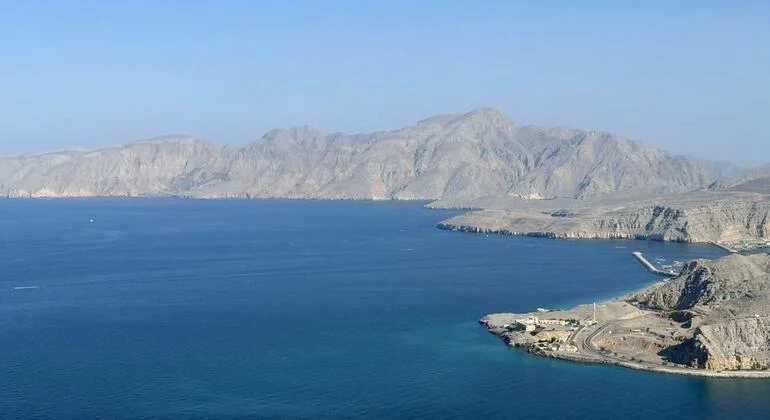
The violence, which has effectively shattered a fragile, month-old Memorandum of Understanding (MoU), has once again brought the global economy to a standstill. With the Strait of Hormuz—the world’s most critical maritime chokepoint—shuttered by renewed military posturing and kinetic action, the international community faces its most significant security crisis of the decade.
The Core Conflict: A Cycle of Retaliation
The latest escalation marks a grim departure from the relative, albeit tense, stability observed in June. The conflict, which traces its recent origins to a heavy-handed aerial campaign launched by the United States and Israel in late February, has evolved into a war of attrition.
On Friday, UN Deputy Spokesperson Farhan Haq delivered a sharp rebuke of the current state of affairs, noting that the Secretary-General remains "deeply concerned" by the ongoing military escalation. "He is particularly concerned about attacks on civilian infrastructure in Iran and across the region," Haq stated. "Such attacks are unacceptable."
The situation reached a breaking point this week when Kuwaiti authorities confirmed that Iranian counterstrikes had successfully incapacitated a vital power and desalination plant. The attack represents a shift in tactics; while initial exchanges focused on military targets, the current phase of the war increasingly mirrors a strategy of "societal strangulation," where the objective is to render regions uninhabitable or economically non-functional.
Chronology of the 2026 Crisis
To understand the current impasse, one must look back at the rapid deterioration of regional order over the last six months:
- Late February 2026: A coordinated bombing campaign by the United States and Israel targets Iranian military installations, citing regional security threats.
- March–May 2026: The conflict spreads. Iran responds with asymmetrical strikes against US-aligned bases in the Gulf States. The Strait of Hormuz becomes a primary theatre of tension as commercial shipping is targeted.
- June 2026: A brief window of optimism emerges as Tehran and Washington sign a Memorandum of Understanding. The deal aims for a ceasefire and the reopening of the Strait, which facilitates the passage of approximately 20% of the world’s oil and gas.
- Late June 2026: The MoU unravels. Tehran interprets the agreement as granting it jurisdictional control over the Strait, including the right to levy tolls. Washington and its allies characterize this as an illegal violation of international maritime law.
- July 2026 (The Current Week): Escalation resumes. The US intensifies strikes against Iranian infrastructure, including critical bridges and power grids. In response, Iran targets regional civilian infrastructure, further shuttering maritime traffic.
The Strait of Hormuz: An Economic Chokepoint
The closure of the Strait of Hormuz is not merely a regional security issue; it is a global economic catastrophe. As the most vital artery for energy exports, its closure has sent shockwaves through global energy markets.
The disagreement over the waterway is fundamentally one of sovereignty versus international right-of-way. Tehran argues that its proximity to the channel and the regional security burden it carries justify its oversight, including the implementation of fees for "safe passage." Conversely, the United States, backed by a coalition of maritime nations, maintains that the Strait is an international waterway governed by the principle of Freedom of Navigation (FON).
The UN’s stance remains clear: any durable settlement must include the absolute restoration of international navigational rights. Without this, the global supply chain, already strained by the conflict, faces an indefinite period of volatility.
Official Responses and Diplomatic Impasse
The United Nations
The UN’s position is defined by the firm conviction that "there is no military solution to this conflict." Secretary-General António Guterres has urged both parties to step back from the brink, emphasizing that every strike on civilian infrastructure—whether it be a bridge in Iran or a desalination plant in Kuwait—serves only to deepen the humanitarian crisis and harden positions for future negotiations.
Washington and Tehran
The rhetoric emanating from both capitals remains intransigent. US officials have signaled that the strikes are a necessary response to Iranian aggression and an attempt to prevent the "weaponization of global energy corridors." Tehran, meanwhile, continues to frame its actions as a legitimate defense of its sovereign territory, accusing the US of "economic terrorism" through the implementation of sanctions and military encirclement.
Implications of a Protracted War
Humanitarian Impact
The destruction of civilian infrastructure—power plants, water facilities, and transportation networks—carries a long-term humanitarian cost. The "scorched earth" nature of the current attacks suggests that, even if a ceasefire were signed tomorrow, the physical recovery of the region would take years. The displacement of populations, the lack of clean water, and the collapse of the local power grids have created a looming public health crisis that the UN is currently ill-equipped to address while active hostilities continue.
Global Energy Markets
The uncertainty surrounding the Strait of Hormuz acts as a multiplier for inflation. With energy prices fluctuating wildly based on daily reports of military activity, global markets are retreating from long-term investment in the region. This "risk premium" is being felt at gas pumps and manufacturing hubs worldwide, effectively exporting the regional conflict into the living rooms of citizens across the globe.
Geopolitical Realignment
The conflict is forcing other regional powers to pick sides, risking a broader regional conflagration. Nations that previously maintained a neutral stance are finding it increasingly difficult to navigate the pressure from both the US and Iran. The longer the conflict persists, the higher the likelihood of a formal, multi-nation alignment that could transform this bilateral clash into a full-scale regional war.
The Path Toward a Durable Settlement
The UN has proposed a framework for de-escalation that moves beyond the failed June MoU. Key components of this proposed roadmap include:
- An Immediate Cessation of Hostilities: A total, verified freeze on all military strikes, including those targeting infrastructure.
- Neutral Oversight of the Strait: The establishment of an international maritime monitoring body to ensure freedom of navigation, potentially under UN auspices, to decouple the waterway from direct US-Iran control.
- Infrastructure Restoration Fund: An international effort to fund the repair of civilian infrastructure damaged by the recent strikes, ensuring that the burden does not fall solely on the affected populations.
- Renewed Diplomatic Channels: Establishing a permanent, high-level diplomatic "hotline" between Washington and Tehran to address grievances before they manifest as kinetic military action.
"The time for bellicose rhetoric has passed," noted a senior UN analyst. "The current trajectory is unsustainable. If the parties do not return to the negotiating table with a willingness to compromise on the status of the Strait and the definition of sovereignty, the region faces a period of dark uncertainty that will be defined by poverty, isolation, and persistent violence."
As the world watches, the international community waits to see if the rhetoric of the UN will be met with action from the combatants. For now, the people of the Gulf region are left to navigate the wreckage of a conflict that shows no signs of abating, serving as a sobering reminder of the fragile balance upon which global peace rests.
For ongoing updates on this developing crisis, readers are encouraged to subscribe to the UN News daily digest or download the official UN News mobile application, available on all major platforms.
 Lina Hope
 Asro
Asro
 Layla Zulfa
