

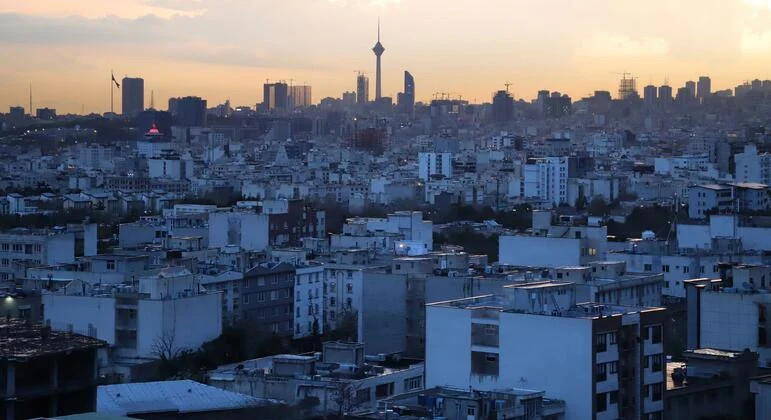
The Middle East is once again gripped by a volatile cycle of violence as renewed military strikes between the United States and Iran threaten to unravel a fragile, months-old diplomatic thaw. Following the collapse of a June Memorandum of Understanding intended to stabilize regional tensions, the specter of full-scale conflict has returned, leaving civilian populations vulnerable, critical infrastructure shattered, and global supply chains in a state of high-stakes uncertainty.
As the international community watches with growing alarm, the United Nations has issued an urgent plea for de-escalation, warning that the current trajectory poses an existential threat not only to the security of the Gulf but to the stability of the global economy.
The Resurgence of Conflict: A Chronological Overview
To understand the current precarious state of the region, one must look back at the rapid deterioration of security arrangements that were, until recently, viewed as a pathway to stability.
- February: Tensions reached a boiling point when a series of coordinated strikes—attributed to a joint US-Israeli operation—targeted facilities within Iran. Tehran responded with a swift and widespread retaliatory campaign, striking targets across various Gulf states and Jordan.
- June: A glimmer of hope emerged when Washington and Tehran signed a Memorandum of Understanding (MoU), designed to curb the cycle of retaliatory fire and secure the vital Strait of Hormuz. For a brief period, the agreement held, fostering cautious optimism among regional stakeholders.
- Late Summer/Autumn: The peace proved ephemeral. Breaches of the agreement, coupled with renewed skirmishes, saw the diplomatic framework collapse. The conflict has since escalated from targeted military maneuvers to broad-spectrum strikes that increasingly impact civilian zones and essential utility grids.
- Present Day: The conflict has expanded in scope, drawing in non-state actors such as Houthi rebels in Yemen and creating a multi-front crisis that complicates international efforts to mediate a ceasefire.
Humanitarian Crisis: The Human Cost of Escalation
The strategic military objectives of the combatants have increasingly clashed with the reality of civilian life. According to data provided by the World Health Organization (WHO), the human toll is mounting with alarming speed.
The View from Tehran
Dr. Hanan Balkhy, the WHO Regional Director, reported that within the last month alone, Iranian authorities have documented at least 50 fatalities and over 500 injuries. The demographic impact is particularly harrowing, with women and children forming a significant portion of the casualty list.
Beyond the immediate loss of life, the systematic targeting of infrastructure has crippled essential services. A critical strike on a water desalination plant in the Hormozgan province has cut off access to safe drinking water for thousands, raising the specter of waterborne diseases and secondary health crises. Furthermore, the vulnerability of the healthcare sector was laid bare last week when the Baqaei Reference Hospital was forced to evacuate its pediatric oncology unit following nearby explosions, abruptly interrupting life-saving cancer treatments.
Collateral Damage in the Gulf
The instability is not confined to the direct combatants. In Qatar, civilian populations have been caught in the fallout, with reports of shrapnel injuries. Kuwait has similarly borne the brunt of the regional volatility; strikes on oil facilities there have not only caused physical injuries but have also triggered the deactivation of power generation units, leading to localized blackouts and further straining emergency response capabilities.
Strategic Implications: The Red Sea and Global Trade
A significant component of the UN’s concern is the potential for the conflict to choke off critical maritime chokepoints. UN Spokesperson Stéphane Dujarric has highlighted the dual threat posed by both the ongoing volatility near the Strait of Hormuz and the emerging menace in the Red Sea.
The Houthi Factor
The resurgence of threats from Houthi rebels in Yemen—specifically directed at Saudi Arabia and freedom of navigation in the Red Sea—marks a dangerous expansion of the theater of war. These shipping lanes are the lifeblood of international commerce, and any obstruction could have cascading effects on global energy prices and the availability of essential goods.
Economic Fallout
The UN has explicitly warned that the current state of "choked" transit routes is unsustainable. "It will, of course, impact the flow of UN goods that are shipped, notably humanitarian goods and elements for peacekeeping," Dujarric noted. "But much more worryingly, it will again have a negative impact on global commerce, on the trade in energy, and just commerce as a whole."
The global economy, still recovering from the economic aftershocks of the past several years, is particularly sensitive to disruptions in the energy trade. With the Strait of Hormuz already operating under near-closure conditions, the risk of a global inflationary surge is becoming a primary concern for international financial institutions.
Nuclear Security Concerns
The conflict has also brought international attention to the security of nuclear facilities. On Sunday, the International Atomic Energy Agency (IAEA) confirmed it was investigating reports of an overnight attack on the Darkhovin nuclear power plant site in Iran.
While the IAEA stated that the facility is in the early stages of construction and contained no nuclear material at the time of the incident—posing no immediate radiological risk—the move has sparked international condemnation. IAEA Chief Rafael Mariano Grossi issued a stern warning, calling for absolute military restraint around all nuclear-related sites. The incident highlights the "gray zone" of this conflict, where even non-operational nuclear sites become potential targets, raising the stakes for catastrophic accidents.
Official Responses and the Call for Diplomacy
The international community, led by the United Nations, is mounting a final diplomatic push to prevent the region from descending into a full-scale conflagration.
The UN Stance
Stéphane Dujarric emphasized that all parties are bound by the tenets of international humanitarian law. "As in any conflict, the protection of civilians and civilian objects is critical," he stated, reminding combatants that hospitals, power plants, and water infrastructure are protected entities. He urged all parties to adhere to the principles of:
- Distinction: Differentiating between military targets and civilian infrastructure.
- Proportionality: Ensuring that military gains do not come at the cost of excessive civilian harm.
- Precaution: Taking all possible measures to minimize collateral damage.
The WHO Perspective
Dr. Hanan Balkhy echoed these sentiments, noting that the health systems of the involved nations are reaching a breaking point. "These incidents are placing civilians and environmental health at growing risk, while putting sustained pressure on emergency responders and health services," she stated. The WHO has called for an immediate humanitarian pause to allow for the repair of essential utilities and the treatment of the wounded.
Conclusion: A Path Forward or a Deepening Abyss?
The current situation in the Middle East is a sobering reminder of how quickly diplomatic progress can be erased by military ambition. As the US and Iran continue to exchange fire, the primary victims remain the civilians who find their hospitals, water supplies, and homes caught in the crossfire.
The path forward requires more than just military restraint; it requires a return to the dialogue that facilitated the June agreement. With the global economy on edge and humanitarian organizations struggling to maintain supply lines, the window for a peaceful resolution is narrowing. The international community, through the United Nations and other diplomatic channels, remains steadfast in its position: the only viable solution to the current impasse is a commitment to de-escalation and a renewed adherence to the rule of law.
Without a decisive shift toward diplomacy, the region risks a protracted conflict that will leave a legacy of destruction, economic instability, and human suffering for generations to come. The message from New York and the regional capitals is unified: the time for restraint is now.
 Azzam Bilal Chamdy
 Pevita Pearce
 Iffa Jayyana
