

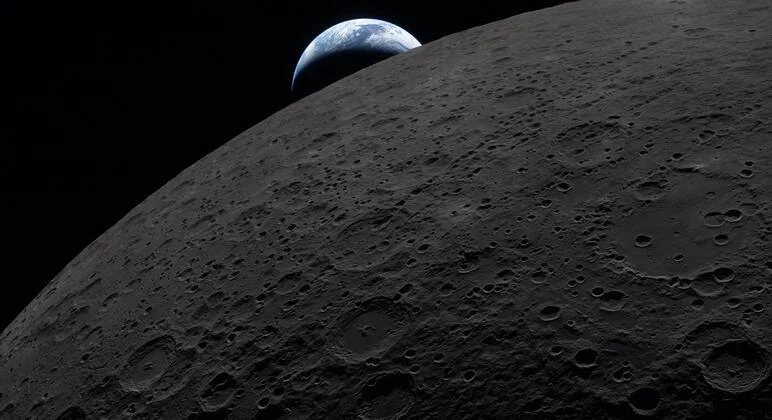
As humanity stands on the precipice of a new lunar era, our gaze is shifting from the terrestrial to the celestial. On July 20, the world marks International Moon Day—a celebration of our historical and scientific relationship with our closest celestial neighbor. Yet, as the global community prepares for a sustained human presence on the lunar surface, a sobering reality is casting a shadow over these ambitions: the escalating environmental crisis of space debris.
What was once an infinite frontier is rapidly becoming a congested, polluted, and hazardous environment. From orbital collisions to the chemical alteration of our upper atmosphere, the “environmental footprint” of space exploration has become a central challenge for international space governance in the 21st century.
The Magnitude of the Orbital Crisis: Main Facts
The narrative of space exploration has historically focused on discovery, but the current reality is defined by accumulation. According to the United Nations Office for Outer Space Affairs (UNOOSA), there are currently an estimated 140 million pieces of debris larger than one millimeter orbiting the Earth. While these fragments may seem small, their orbital velocities—often exceeding 28,000 kilometers per hour—render them devastating projectiles capable of destroying critical satellites, spacecraft, and international research infrastructure.
The debris is not merely a collection of abandoned hardware. It is a complex mixture of:
- Defunct Satellites: Aging orbital assets that have reached the end of their operational lives.
- Rocket Bodies: Spent stages from launch vehicles that remain in orbit, often susceptible to fragmentation.
- Mission-Related Objects: A myriad of “space litter,” including bolts, lens caps, and protective covers discarded during deployment.
- Micro-particles: The result of repeated collisions and explosions, which now contribute to an artificial “glow” in the night sky, further complicating ground-based astronomical observations.
A Chronology of Exploration and Accumulation
To understand how we arrived at this critical juncture, one must look at the timeline of human expansion into the vacuum.
- 1957–1970s (The Dawn of the Space Age): The launch of Sputnik in 1957 initiated the space race. During these early decades, little thought was given to the long-term impact of debris. The 1972 UN Liability Convention was one of the first attempts to codify responsibility for damage caused by space objects, establishing that launching nations remain liable for their hardware, even after it has reached orbit.
- 1980s–2000s (The Era of Commercialization): As satellites became essential for telecommunications, weather forecasting, and GPS, the number of launches surged. This period saw the first formal scientific warnings regarding the “Kessler Syndrome”—a theoretical scenario where the density of objects in low-Earth orbit (LEO) is high enough that collisions between objects cause a cascade, creating further debris and rendering the orbit unusable.
- 2010s–Present (The New Space Race): The emergence of private spaceflight and “mega-constellations” (thousands of small satellites providing global internet coverage) has exponentially increased the volume of traffic in LEO. Simultaneously, NASA’s Artemis program and missions by China, India, and Japan have reignited interest in the Moon, shifting the focus of potential contamination from Earth’s orbit to the lunar surface and its surrounding space.
Supporting Data: The Environmental Toll
The concerns raised by the UN Environment Programme (UNEP) extend far beyond the immediate risk of collisions. As defunct satellites and rocket stages reach the end of their life cycles, they re-enter Earth’s atmosphere. While most burn up, this process is not without consequence.
Atmospheric Chemistry and the Ozone Layer
Scientists are currently investigating the chemical signatures left by re-entering hardware. As spacecraft disintegrate, they release metals including aluminum, lithium, and copper into the mesosphere and stratosphere. Emerging research suggests these metallic particles may act as catalysts for chemical reactions that could disrupt the ozone layer, alter cloud formation patterns, and influence the overall chemistry of the upper atmosphere.
The Scale of Re-entry
Hundreds of tonnes of spacecraft and rocket bodies re-enter the atmosphere every year. With the planned launch of tens of thousands of satellites in the coming decade, this mass is projected to increase significantly. While much of this debris is incinerated, larger, heat-resistant components—such as titanium fuel tanks or reinforced structural supports—can survive the descent. These fragments pose a tangible, if intermittent, threat to human infrastructure, marine life, and public safety on the ground.
Official Responses: Governance and Sustainability
Recognizing the gravity of the situation, the international community has begun to shift its policy framework toward "Space Sustainability."
Jason Jabbour, Senior Officer at the UN Environment Programme, emphasizes that the impact of space activity is often misunderstood until it is too late. "Decades of rapidly expanding space activity have shown that each launch leaves an environmental footprint," Jabbour stated. "This is why it is so crucial to consider the sustainability of these programmes early on."
Policy Guidelines and Mitigation
UN Member States have adopted a series of guidelines designed to mitigate the growth of debris. These include:
- Reducing Unnecessary Waste: Encouraging manufacturers to design satellites with minimal detached components.
- Preventing Explosions: Implementing mandatory “passivation” procedures, where remaining fuel in rocket stages is vented to prevent accidental detonations after the mission ends.
- Active Debris Removal: Developing technologies to capture and safely de-orbit retired satellites.
- Avoiding Deliberate Destruction: Condemning anti-satellite (ASAT) tests that create massive, uncontrollable debris clouds.
The UN Office for Outer Space Affairs (UNOOSA) is now working in tandem with environmental agencies to ensure that environmental protection is no longer an afterthought but a foundational pillar of future space governance.
Implications: The Moon as a Case Study
The Moon’s role in our ecosystem is profound. From 400,000 kilometers away, its gravitational pull generates tides that oxygenate coastal waters and transport nutrients, essential for marine biodiversity like the Great Barrier Reef. Protecting the lunar environment is not merely about preserving a pristine landscape; it is about maintaining the integrity of our solar system’s history.
As humanity prepares for a sustained return to the Moon through the Artemis missions and various international efforts, we face a choice: will we repeat the mistakes made in Earth’s orbit, or will we adopt a model of stewardship?
The implications are clear:
- Scientific Loss: If we pollute the lunar environment with excessive debris, we risk contaminating the very samples that could unlock the secrets of the solar system’s origins.
- Economic Risk: The global economy is increasingly dependent on satellite-based infrastructure. A degraded orbital environment threatens the functionality of everything from banking systems to climate monitoring tools.
- Ethical Responsibility: We have a duty to ensure that the "next chapter of exploration" does not preclude future generations from accessing the benefits of space.
Conclusion
International Moon Day serves as a poignant reminder of our interconnectedness. As we look toward the Moon, we are reminded that our actions in the vacuum of space have direct, measurable consequences for the environment we inhabit on Earth.
Safeguarding space—and, by extension, the Earth—is no longer a secondary concern; it is a prerequisite for our continued advancement as a spacefaring civilization. By embedding sustainability into the launchpad, the design phase, and the international treaties of tomorrow, we can ensure that the Moon remains a beacon of inspiration rather than a monument to our own industrial oversight. The challenge is immense, but the necessity of action has never been clearer.
 Lina Hope
 Asro
Asro
