

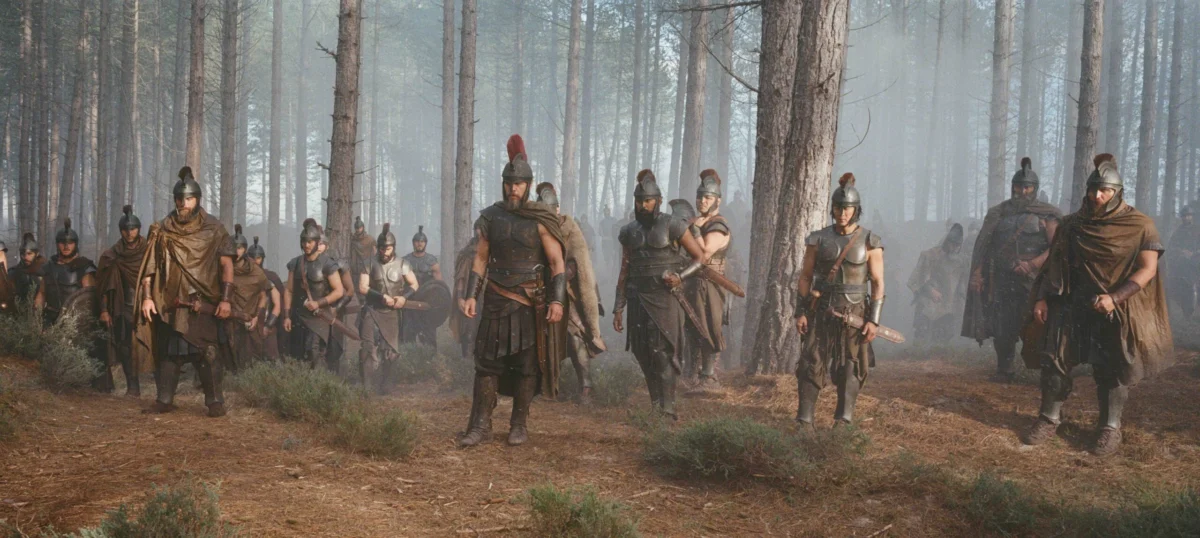
Homer’s The Odyssey has long been regarded as the ultimate travel nightmare. It is a grueling, decade-long endurance test defined by lost ships, mutinous crews, blood-sugar-induced exhaustion, and the relentless interference of vengeful deities. Yet, in Christopher Nolan’s ambitious new adaptation, this legendary trek across the ancient Mediterranean is transformed from a cautionary tale of maritime misfortune into a breathtaking visual odyssey.
While the source material is tethered to the geography of the ancient world—specifically the shores of Turkey and the scattered islands of Greece—Nolan and production designer Ruth De Jong opted for a more expansive, global approach. By blending classical Mediterranean settings with the rugged terrains of Morocco, Iceland, and Scotland, the production has created a world that feels both ancient and otherworldly.
The Geography of Myth: A Production Overview
The central challenge for the production team was avoiding the "sun-bleached" cliché often associated with period pieces set in the Mediterranean. De Jong, who meticulously scouted locations ranging from the woodlands of Japan to the beaches of Australia, sought a visual language that felt grounded in the harsh reality of survival rather than the polished aesthetics of a postcard.
"We wanted to start in the Mediterranean, and we wanted to end in the Mediterranean," De Jong explains. "But Chris and I were not interested in an entire sun-bleached sort of vibe. We needed the world to feel dangerous, vast, and emotionally resonant."
The result is a hybrid map: Greece provides the emotional anchor, Italy offers the structural majesty of Ithaca, Morocco serves as the crucible of war, and the extreme northern latitudes of Iceland and Scotland represent the surreal, often terrifying peripheries of the hero’s journey.

A Chronological Descent: From Troy to the Highlands
To understand the scope of the film, one must follow the narrative trajectory—a path that takes the audience from the ashes of conflict to the quiet, wind-battered cliffs of the unknown.
The Fires of Troy (Morocco)
Though the original text places Troy in modern-day Turkey, the film recreates the legendary city in the Moroccan village of Aït Benhaddou. Nestled in the Atlas Mountains, this location provided the scale necessary for a city under siege. De Jong’s team constructed over two acres of practical sets specifically designed to be incinerated.
"We got permission to do the fire and the burning," De Jong notes. "They were very clear: ‘No problem, you can burn your sets down, just not our village.’ The result is a visceral, tactile depiction of the fall of a city." The shores of Essaouira, meanwhile, were utilized for the departure sequences, capturing the melancholic moment Odysseus and his men set sail, unaware of the ten-year struggle that awaited them.
The Perils of Greece
Shooting in Greece required capturing the authenticity of the ancient world. For a month, the production navigated the Peloponnese, focusing on sites that resonated with the weight of history. Nestor’s Cave near Pylos served as the backdrop for the encounter with the Cyclops, while the olive groves of Messinia provided the setting for the hunt.
Perhaps most striking was the filming of Agamemnon’s homecoming at Methoni Castle and the monolithic heights of Acrocorinth. "Chris wanted to make sure it was clear how windy our entire shoot was," De Jong recalls. "So, so windy. It added a level of chaos that felt entirely appropriate for the stakes of the story."

The Ithacan Heights (Italy)
To represent Ithaca—the ultimate destination of the long-suffering Penelope (Anne Hathaway) and Telemachus (Tom Holland)—the production turned to the island of Favignana off the coast of Sicily. Perched atop the island is the 15th-century Castle of Santa Caterina, a location that offered the panoramic water views and defensive geography necessary for the film’s climax.
The logistics were formidable. Cast and crew hiked 30 minutes up a steep incline every single day to reach the filming site. While construction materials were airlifted, the actors and production team embraced the daily trek. This communal exertion, widely reported during the film’s promotional cycle, added a layer of authentic fatigue to the performances, mirroring the journey of the characters themselves.
The Supernatural Periphery: Iceland and Scotland
Nolan’s vision for the supernatural elements of the story required environments that defied traditional Mediterranean norms. Hades was filmed in Iceland, specifically on the remote black sand beaches beside the Hjöörleifshöfði mountain. Shooting in the height of the Icelandic summer, where the sun barely sets, created a surreal, liminal space for the underworld.
In a surprising twist of cinematic geography, the home of the witch Circe (Samantha Morton) was filmed on the craggy coasts of Scotland. "Odysseus would never have gone to Scotland," admits De Jong. "But that was irrelevant. It just happened to have the look that we liked." The production emulated the rugged rock formations near Cullen to create a sense of isolation that felt truly alien to the Greek hero.
Supporting Data: The Logistics of Epic Filmmaking
The production’s commitment to practical locations over CGI serves as a core pillar of the film’s aesthetic. By prioritizing "in-camera" effects, the team faced significant logistical hurdles:

- Helicopter Logistics: The reliance on the Santa Caterina castle in Italy necessitated the use of heavy-lift helicopters for all set construction, illustrating the scale of the production’s technical ambition.
- Biodiversity as Narrative: De Jong’s commitment to detail extended to the fauna. In Iceland, the team tracked down a specific breed of cattle that shared genetic markers with ancient Greek livestock, ensuring that even the background elements felt historically grounded.
- Climatic Continuity: The decision to shoot in the off-season in Favignana allowed for a "quiet" aesthetic, stripping away the tourist-heavy sheen of modern Sicily to reveal a more austere, timeless landscape.
Official Perspectives: The Director’s Vision
Christopher Nolan’s approach to the production was, as always, characterized by an obsession with light and landscape. According to De Jong, Nolan was "hell-bent" on certain visions—most notably the representation of Hades as a sun-drenched, black-sand expanse in Iceland.
The director’s insistence on "full daylight" for the underworld scenes is a departure from traditional dark, subterranean tropes. By choosing the bright, unrelenting light of an Icelandic summer, Nolan forces the audience to confront the horror of the underworld not in shadows, but in blinding, inescapable clarity. This choice reflects the film’s broader philosophy: that the epic is not found in artifice, but in the brutal, natural beauty of the world.
Implications for Tourism and Film Geography
The release of the film is expected to have a significant impact on the "film tourism" sector. Locations like Aït Benhaddou and Favignana, while already known to travelers, are likely to see an influx of visitors seeking to walk the path of the production.
However, the film also poses an interesting question regarding the future of location scouting. By ignoring the traditional geographical constraints of the Odyssey—such as filming Troy in Morocco rather than Turkey—the production asserts that the "feeling" of a location is more important than its historical coordinates. This "cinematic geography" prioritizes the viewer’s emotional experience over a strict adherence to a map.
Conclusion
Christopher Nolan’s The Odyssey is a testament to the power of location-based storytelling. By refusing to settle for the expected, the production team has crafted a visual tapestry that stretches from the North Atlantic to the African interior, proving that while the myth of Odysseus is ancient, its ability to be reinvented remains as vibrant as ever. For the viewer, the journey is no longer just a story of a man trying to get home; it is an invitation to explore the extraordinary, often harsh, beauty of the planet we inhabit.

As the credits roll, the audience is left with a lingering sense of place—a reminder that in the hands of a visionary director and a dedicated production team, even the most familiar stories can be made to feel entirely, and breathtakingly, new.
 rifanmuazin
 Layla Zulfa
