

Date: 20 July 2026
Location: United Nations Headquarters, New York
As the international community watches with bated breath, Haiti remains caught in a precarious cycle of systemic violence and severe food insecurity. However, for the first time in years, there are glimmers of potential stability. During a high-level briefing to the United Nations Security Council this Monday, the UN’s most senior representative in the Caribbean nation emphasized that the path toward a functional state is not merely a matter of policing, but a delicate synthesis of security, political engagement, and humanitarian intervention.
The Core Crisis: An Interlocking Emergency
The situation on the ground in Port-au-Prince and across the Haitian provinces remains dire. Despite international efforts to restore order, the prevalence of armed gangs continues to paralyze the economy, disrupt the delivery of basic services, and exacerbate an already critical humanitarian emergency.
At the heart of the crisis is a collapse of domestic security that has hindered the movement of food, fuel, and medical supplies. When trade routes are blockaded by illicit armed groups, the most vulnerable—particularly children—pay the highest price. Recent data from the World Food Programme (WFP) highlights that nutrition centers in the capital are seeing an uptick in children suffering from acute malnutrition, a direct consequence of the disruption to supply chains and the erosion of local purchasing power.
"Haiti’s future success depends on security, political engagement, and humanitarian action reinforcing each other," the UN envoy stated during the Security Council session. This "triple-nexus" approach is viewed by international observers as the only viable exit strategy from the current state of anarchy.
Chronology of a Nation Under Strain
To understand the current urgency, one must examine the timeline of events that have brought Haiti to this juncture:
- 2023 – Early 2024: The escalation of gang violence reaches a boiling point. Criminal syndicates take control of key infrastructure, including the main port and major arterial highways, effectively isolating the capital.
- Late 2024: The international community, led by calls from the Haitian government, begins mobilizing support to stabilize the security environment. Initial deployments of multinational support missions aim to reclaim public spaces from armed gangs.
- Early 2025: Political transitional frameworks are established. Despite significant hurdles, the process of restoring institutional legitimacy begins, aiming to set the stage for democratic elections.
- Mid-2025 to Early 2026: Periods of relative calm are interrupted by flare-ups in violence. The humanitarian crisis deepens as the cost of living skyrockets, leaving the majority of the population below the poverty line.
- July 2026: The Security Council meets to review the effectiveness of current interventions and to realign international support strategies with the realities of the ground.
Supporting Data: The Human Cost
The statistics provided by UN agencies and local partners paint a sobering picture of life in Haiti today.
Food Insecurity and Malnutrition
According to recent assessments, over 40% of the population is currently experiencing "crisis" or "emergency" levels of food insecurity. The disruption to the agricultural cycle—caused by farmers being unable to access their land due to insecurity—has led to a significant decrease in domestic food production. Consequently, Haiti has become dangerously reliant on volatile food imports.
The Displacement Crisis
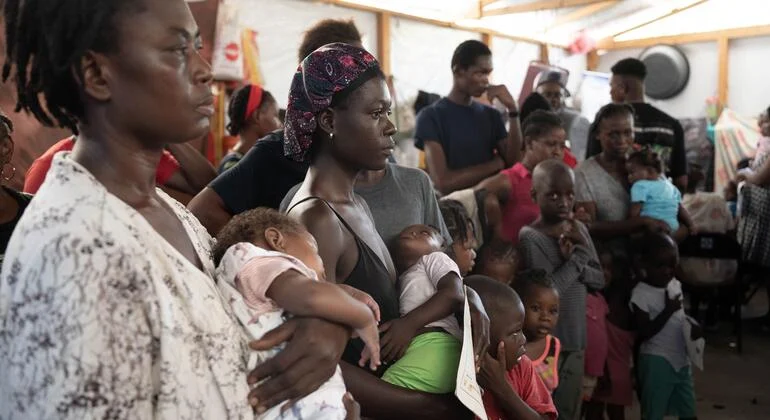
Violence has forced tens of thousands of Haitians to flee their homes. Internal displacement has become a permanent feature of the current landscape, with "tent cities" sprouting up in areas deemed marginally safer. These sites often lack clean water, sanitation, and electricity, creating the perfect environment for the spread of communicable diseases.
Economic Paralysis
The inflation rate remains stubbornly high, driven by the cost of transporting goods through gang-controlled territories. Small businesses, which are the backbone of the Haitian economy, have largely shuttered. The formal economy has been cannibalized by a shadow economy, where extortion and racketeering have replaced traditional commerce.
Official Responses and Diplomatic Strategy
During the Security Council briefing, the prevailing consensus among member states was that while security is the prerequisite for progress, it is not the solution in isolation.
The UN’s Stance
The UN representative emphasized that humanitarian aid is being delivered under extraordinary circumstances. UN agencies have had to negotiate humanitarian corridors, a practice that highlights the severity of the security vacuum. The UN is calling for increased funding for the humanitarian response plan, which remains under-resourced despite the immense scale of the need.
The Role of Regional Partners
The Caribbean Community (CARICOM) has played a pivotal role in facilitating the political transition. By acting as a mediator between disparate Haitian political factions, regional partners have helped prevent a complete collapse of governance. Their continued involvement is seen as crucial for ensuring that the transition remains inclusive and representative of the Haitian people’s aspirations.
Security Cooperation
The international security mission currently deployed in Haiti has faced logistical and tactical challenges. However, the UN envoy noted that the mission has provided the "breathing room" necessary for essential political dialogue to occur. The objective moving forward is to gradually transition these responsibilities to a strengthened and vetted Haitian National Police force.
Implications: A Future Built on Fragile Ground
The road ahead for Haiti is fraught with risks, yet the current discourse represents a shift from "containment" to "reconstruction." The implications of failing to stabilize the nation are profound, not only for the Caribbean region but for the international community’s ability to manage state fragility in the 21st century.
1. Political Legitimacy
The foremost implication is the necessity of holding credible, transparent elections. Without a government that enjoys the trust of its citizens, international aid will continue to be a stopgap rather than a solution. The transition must move toward establishing a social contract that prioritizes the delivery of services over political patronage.
2. Economic Revitalization
Long-term stability requires the revival of the agricultural and manufacturing sectors. This is only possible if the state can guarantee the rule of law. Investors and international donors are waiting for signs of structural reform—specifically regarding the judicial system and anti-corruption measures—before committing the long-term capital required for recovery.
3. The Humanitarian Imperative
In the immediate term, the international community must ensure that the "humanitarian-security" bridge does not collapse. If the population continues to suffer from extreme hunger, support for the political process will erode. Protecting the most vulnerable is not just a moral obligation; it is a strategic necessity to prevent the recruitment of disillusioned youth into criminal gangs.
Conclusion: A Call for Sustained Engagement
The message from the UN Security Council is clear: Haiti is no longer in a state of total neglect, but it is far from safety. The "hopes for a more secure future" mentioned in the session are grounded in the tangible progress of institutional recovery, yet they are tempered by the harsh reality of the daily violence that millions still endure.
For the international community, the challenge is to remain engaged without imposing solutions that lack local ownership. For the Haitian people, the challenge is to continue the arduous work of rebuilding their nation from the ground up. The events of this week mark a critical juncture; whether this leads to a lasting peace or a return to volatility will depend on the consistency of the international commitment and the resilience of the Haitian civil society in the months to come.
For ongoing updates on the situation in Haiti, citizens and members of the press are encouraged to subscribe to the official UN News newsletter and monitor daily dispatches from the UN’s humanitarian agencies operating on the ground.
 Lina Hope
 Asro
Asro
 Layla Zulfa
