

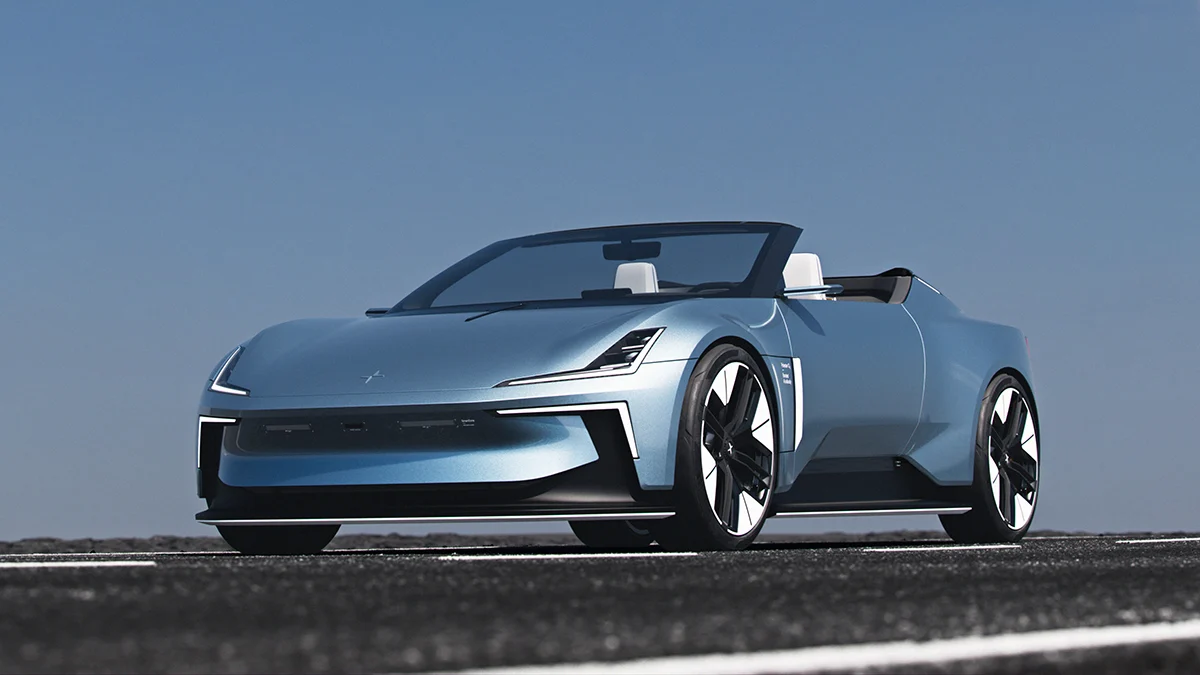
The electric vehicle landscape in the United States is undergoing a seismic shift, and for the Swedish performance marque Polestar, that shift has effectively brought its American ambitions to a permanent halt. In a move that signals a significant retrenchment for the brand, Polestar has officially decided against appealing a U.S. government ban that will prohibit the sale of its vehicles starting with the 2027 model year. This decision marks the end of a brief, high-profile chapter for the automaker in North America, forcing the company to pivot its strategic focus back to its home continent of Europe and other global markets.
The Regulatory Barrier: The U.S. Connected Vehicles Rule
The catalyst for this departure is the Department of Commerce’s recently enacted "U.S. Connected Vehicles Rule." This sweeping regulation, designed to bolster national security, imposes strict limitations on the import and sale of vehicles equipped with advanced connectivity technology—specifically those linked to "countries of concern," primarily China and Russia.
The rationale behind the policy is rooted in the ubiquity of modern automotive technology. Today’s vehicles are essentially rolling data centers, equipped with sophisticated GPS systems, high-definition cameras, and cellular connectivity that transmits vast amounts of data. The U.S. government has expressed mounting concern that such hardware, if integrated by entities under the influence of foreign adversaries, could be leveraged for espionage or, in extreme scenarios, as a tool for digital sabotage.
Because Polestar is majority-owned by China-based Geely Auto, it fell squarely under the regulatory umbrella of this new rule. While Volvo—a sibling brand also under the Geely umbrella—managed to secure authorization to continue importing and selling vehicles following "significant dialogue" with U.S. regulators, Polestar was unable to clear the same hurdles. After internal deliberation, the company concluded that an appeal would be a futile exercise against the current regulatory framework.
A Chronology of a Short-Lived American Dream
Polestar’s journey in the United States was always characterized by a blend of high design and logistical complexity.
- The Early Years (2020–2022): Polestar entered the U.S. market with significant fanfare, positioning itself as a premium, design-forward alternative to Tesla. Its initial offerings, the Polestar 2, gained moderate traction as a stylish, minimalist electric sedan.
- Expansion and Ambition (2023): The brand looked to expand its footprint with the Polestar 3 and Polestar 4, aiming to tap into the lucrative SUV and crossover market. During this time, the company’s design concepts, such as the Synergy electric supercar, garnered widespread acclaim, signaling that the brand was settling into the American luxury consciousness.
- The Regulatory Cloud (2024–2025): As geopolitical tensions between the U.S. and China intensified, the Department of Commerce began drafting the Connected Vehicles Rule. Throughout this period, Polestar operated under a cloud of uncertainty, attempting to demonstrate its independence from Chinese influence while maintaining its supply chain reliance on its parent company.
- The Final Blow (2026): In early 2026, the reality of the impending regulation became clear. After failing to receive the same regulatory exemptions as Volvo, the company faced a binary choice: overhaul its entire technical architecture or exit the market.
- The Withdrawal (2027 and Beyond): Polestar’s announcement that it will not appeal the ban signals the official winding down of its U.S. operations for future model years.
Supporting Data: The Global Perspective
While the loss of the U.S. market is a strategic blow to Polestar’s prestige, the data suggests that the company is well-positioned to survive—and perhaps even thrive—without it.

According to market analysis and internal reports from early 2026, the U.S. accounted for only a minor fraction of the brand’s global sales volume. Specifically, reports from Motor1.com indicate that approximately 94 percent of Polestar’s total sales in the first quarter of 2026 were generated outside of the United States.
This data highlights a critical reality: Polestar’s identity remains firmly tethered to Europe. With strong brand recognition in Scandinavia, Germany, and the UK, the company’s pivot is less of a desperate retreat and more of a consolidation of resources. By focusing on markets where the regulatory landscape is more favorable, Polestar can optimize its manufacturing processes, which are currently heavily integrated with Geely’s Chinese supply chain.
Official Responses and Customer Assurances
In the wake of the announcement, the primary concern for Polestar has been damage control regarding its existing customer base. The company is acutely aware that the perception of being "abandoned" by a manufacturer can decimate resale values and destroy brand loyalty.
A spokesperson for Polestar provided a statement to Robb Report, clarifying the company’s commitment to those who have already purchased or leased their vehicles:
"Supporting our customers remains our highest priority. Existing Polestar owners and lease customers will continue to receive the same level of support and access to service as they do today. All existing warranties remain in effect and will continue to be honored in accordance with their terms and conditions."
The company is working to ensure that the service network, primarily facilitated through existing partnerships and Volvo service centers, remains fully operational. The message is clear: while the sale of new vehicles will cease, the support for the current fleet is non-negotiable.

Implications: What This Means for the Industry
The exit of Polestar from the U.S. market serves as a cautionary tale for the global automotive industry. It highlights the growing intersection of national security and consumer electronics. As cars become more "connected," they are increasingly viewed by policymakers not merely as vehicles, but as critical infrastructure.
1. The Death of Future Concepts
The most immediate loss for American enthusiasts is the likely cancellation of future models, most notably the Polestar 6. The Polestar 6 roadster had been highly anticipated as a pinnacle of electric performance. Its absence from the American market leaves a void in the high-end EV segment that few other manufacturers are currently filling with the same aesthetic flair.
2. Supply Chain Decoupling
This situation will likely accelerate the "decoupling" of automotive supply chains. Manufacturers who wish to sell in both the Chinese and U.S. markets will find it increasingly difficult to use a unified technological platform. This will lead to higher R&D costs, as companies will eventually have to build "U.S.-specific" versions of their software and hardware, potentially leading to a fragmented global market.
3. The Future of Chinese-Owned Brands
Polestar’s situation sets a precedent for other brands that share similar ownership structures. Brands like Lotus (also owned by Geely) or other emerging EV startups may find themselves under the same scrutiny. The U.S. government has signaled that it will prioritize security over market competition, meaning that "foreign-linked" technology will be met with extreme skepticism at the border.
Conclusion: A Turning Point
Polestar’s withdrawal is a sobering reminder that in the modern era, market access is no longer just about pricing and product appeal—it is a byproduct of geopolitics. While the brand remains a formidable player in the European and Asian markets, its departure from the U.S. leaves a significant gap in the American EV landscape.
For the existing owners, the company’s commitment to service offers a reprieve. But for those who were waiting for the next generation of Swedish design, the news is a definitive end. As the automotive industry navigates the complexities of the 21st century, the Polestar story will undoubtedly be studied as the moment when the "global" car market began to fracture under the weight of national security interests. The road ahead for Polestar is now entirely European, leaving the American dream of a high-performance, design-centric EV from the brand firmly in the rearview mirror.
 Evan Lee Salim
 Asep Darmawan
 Laily UPN
