

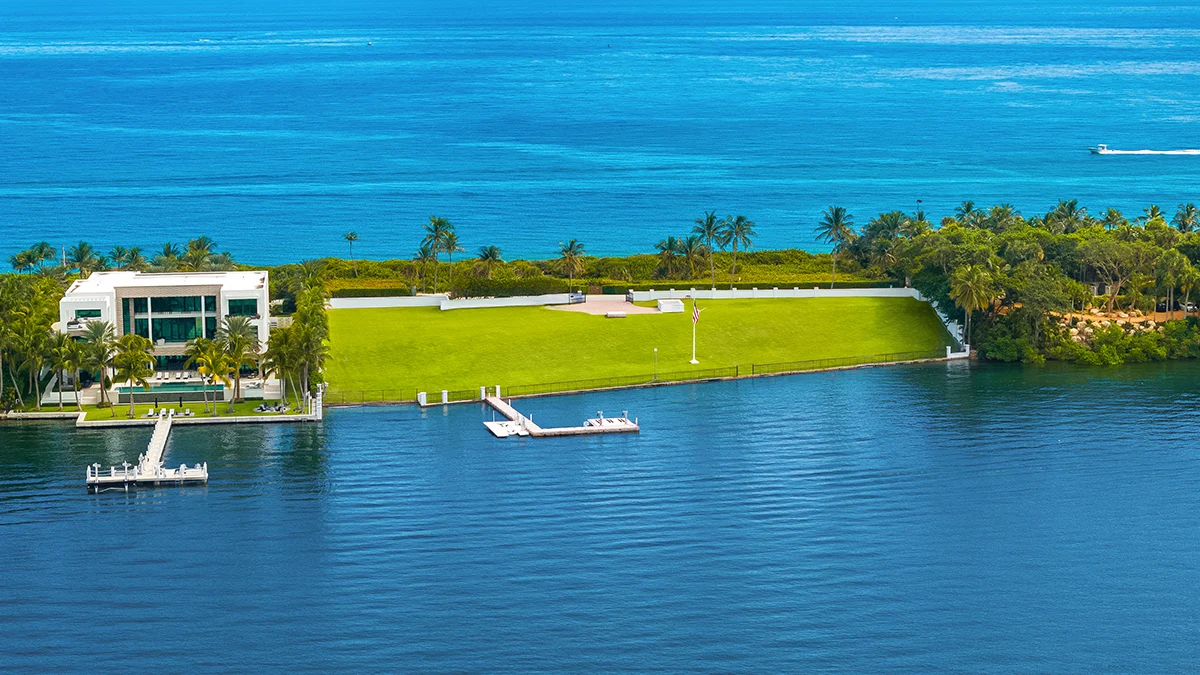
In the digital lexicon of the 2020s, "looksmaxxing" became the shorthand for an obsessive pursuit of physical optimization—a systematic approach to refining every aesthetic detail of one’s appearance. Today, the world’s most powerful individuals are applying that same granular, high-stakes methodology to a different domain: their physical environment. They are calling it "landmaxxing," and it is rapidly redefining the landscape of global luxury real estate.
At its core, landmaxxing is the strategic, often aggressive acquisition of contiguous properties to expand a primary residence into a sprawling, self-contained compound. It is a reaction to a simple, unyielding economic reality: while money can be printed and digital assets created, land is a finite resource. For the ultra-high-net-worth individual (UHNWI), the ultimate status symbol is no longer just the architectural grandeur of a home, but the sheer, undisputed control over the geography that surrounds it.
The Shift in Luxury Real Estate: From House to Horizon
For decades, the standard for luxury was defined by the house itself—its square footage, the pedigree of its architect, and the opulence of its finishes. However, as the 2026 Mid-Year Report from Coldwell Banker Global Luxury highlights, the needle has shifted. Searches for raw land have climbed 97 percent year-over-year, while interest in one-of-a-kind, expansive properties—castles, private islands, and historic estates—has surged by 146 percent.

This is not merely an investment strategy; it is a lifestyle mandate. "It’s about controlling your lifestyle and your surroundings," says Angel Nicolas, a high-end agent with Serhant. "Your home isn’t just the four walls you live in; it’s the entire experience of the neighborhood around you. If you have the chance to own what’s next door, it provides both peace of mind and the flexibility for future expansion."
This philosophy has turned the concept of a "neighborhood" into a luxury commodity. By acquiring adjacent lots, buyers are effectively insulating themselves from the volatility of real estate development, ensuring that no future neighbor will obstruct their views, diminish their privacy, or disturb the sanctity of their private, multi-generational compounds.
Chronology of a Movement: The Billionaire Land Grab
The rise of landmaxxing did not happen overnight, but it has certainly reached a fever pitch in the last decade, driven by a growing class of billionaires who view privacy as their most precious asset.

- 2015–2020: The foundation. High-net-worth individuals began quietly purchasing neighboring parcels in established enclaves like Palm Beach and the Hamptons. These were largely tactical buys, intended to block unwanted development.
- 2021–2023: The acceleration. Following the pandemic, the desire for "self-contained" living intensified. The focus shifted from merely blocking development to active construction of "wellness wings," private sports courts, and guest compounds.
- 2024–2026: The institutionalization of the trend. Landmaxxing is now the standard operating procedure. Major real estate brokerages have noted that the majority of high-end transactions in key markets now involve "off-market" negotiations for adjacent plots.
The industry has seen iconic examples of this in real time. Amazon founder Jeff Bezos has famously spent roughly $234 million piecing together three waterfront estates on Miami’s exclusive Indian Creek Island. Similarly, Citadel founder Ken Griffin has spent over a decade meticulously accumulating approximately 25 contiguous acres in Palm Beach. Griffin is not just collecting property; he is assembling a singular, massive estate that many industry analysts expect will become one of the most valuable private residences on the planet.
The "Neighbor’s Premium": The Economics of Scarcity
The mechanics of landmaxxing have fundamentally altered the real estate market, creating a phenomenon known as the "neighbor’s premium." In many of the country’s most coveted zip codes, the traditional market-driven appraisal is becoming irrelevant.
Dina Goldentayer of Douglas Elliman explains that the scarcity of trophy land has turned the act of buying property into a high-stakes, off-market chess match. "When land is this limited, control is key," she says. "Buyers are routinely paying 20 percent above market value, or even higher, simply to secure that adjacent property before it ever hits the public market."

This has led to a standard practice of unsolicited, aggressive offers. Sellers in these areas are increasingly aware of their leverage; they know that their home represents a missing piece of a billionaire’s puzzle. For the buyer, the cost of paying a premium is seen as a necessary expense to "future-proof" their footprint in a market where there is simply no more land to be created.
Case Study: The Manalapan Megamansion Site
Perhaps no recent deal better illustrates the ruthless efficiency of landmaxxing than the fate of a four-acre ocean-to-Intracoastal parcel in Manalapan, Florida. The site was originally earmarked for a speculative $285 million mansion—a project that would have set a new record for U.S. residential real estate.
However, the home never made it to completion. Instead, the property became a battlefield for two titans of industry: billionaire Larry Ellison and WeatherTech founder David MacNeil. Rather than competing to see who would buy the site for the mansion, the two neighbors struck a deal to split the parcel between them, effectively carving up the land to expand their existing estates. The total cost? $67 million. For these buyers, the land was infinitely more valuable as an extension of their own backyards than as the site of a new, rival residence.

The New Standard: Self-Contained Ecosystems
Why the obsession with space? Jeff Miller of ONE Sotheby’s International Realty suggests that the profile of the ultra-luxury buyer has undergone a transformation. These individuals are often relocating from global hubs where vast, sprawling estates are the norm, and they arrive in markets like South Florida expecting a specific tier of lifestyle that requires a massive footprint.
"Once they secure the neighboring parcels, they aren’t just letting the grass grow," Miller notes. "They are building massive, self-contained compounds."
The modern landmaxxer’s blueprint typically includes:

- Wellness Wings: Dedicated structures housing infrared saunas, cryotherapy chambers, and red-light therapy rooms.
- Private Sports Complexes: Professional-grade padel and pickleball courts, which are now considered standard amenities for the ultra-wealthy.
- Multi-Generational Housing: Separate, fully equipped guest houses designed to accommodate extended family for long-term stays.
- Entertainment Pavilions: Expansive, climate-controlled outdoor spaces that blur the line between indoor and outdoor living.
As privacy becomes increasingly elusive in an interconnected world, the ability to retreat into a self-contained, secure estate has become the ultimate luxury benchmark.
The Implications: A Changing Real Estate Landscape
The implications of landmaxxing are far-reaching. For the average buyer, it means that the "trophy" homes of the past are being consolidated, reducing the inventory of available waterfront land to near-zero. For the luxury brokerage industry, it means the job has shifted from "selling houses" to "curating estates."
Nearly 40 percent of luxury real estate specialists report that their clients are now willing to overlook the physical condition of a house entirely. They are buying the dirt. They are buying the location. If the house on the land is dated, it is treated as a temporary structure, destined for renovation or immediate demolition.

As we look toward the future of high-end real estate, it is clear that landmaxxing is not a temporary fad. It is the logical conclusion of a world where wealth is concentrated and space is at a premium. In this era, the ultimate flex is no longer the architectural statement of a home—it is the ownership of the horizon itself. By securing the land that surrounds them, these individuals are not just building homes; they are building legacies that are physically protected from the changing tides of the outside world.
In a market where you literally cannot create more land, the only way to win is to acquire what already exists. And for the world’s billionaires, the pursuit of that extra square footage is just getting started.
 Evan Lee Salim
 Asep Darmawan
 Laily UPN
