

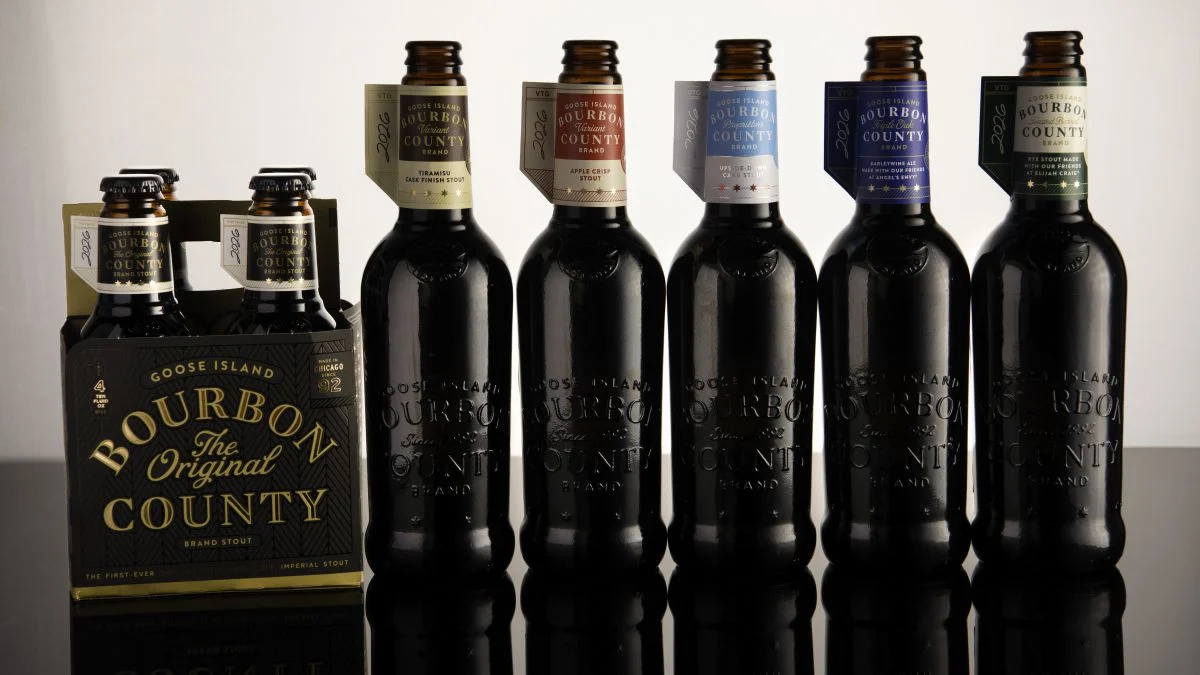
While the sweltering heat of summer still grips much of the country, the connoisseurs of the craft beer world have their sights set firmly on the horizon. For collectors and aficionados, the turn of the seasons signifies more than just a change in foliage; it heralds the arrival of the "Black Friday" tradition that has defined American craft beer culture for over a decade: the release of Goose Island’s Bourbon County Stout (BCS) series.
This year, the Chicago-based brewing pioneer has once again reached into its legendary vault of Kentucky bourbon barrels to curate a lineup that pushes the boundaries of fermentation, barrel-aging, and culinary-inspired innovation. As the 2026 collection prepares to hit shelves on November 27, the industry is once again abuzz with talk of complex flavor profiles, rare wood finishes, and the storied history that makes this series the gold standard of barrel-aged imperial stouts.
The Core of the Collection: A Legacy Defined by Wood
To understand the significance of the 2026 lineup, one must look back to the inception of the project. Bourbon County Stout was first introduced in 1992—a revolutionary moment for the industry, as it was the world’s first bourbon barrel-aged beer. Conceived by Greg Hall to celebrate the brewery’s 100th batch, the beer was a bold experiment that fundamentally altered the trajectory of craft beer.
However, it wasn’t until 2010 that the series expanded into the multi-variant juggernaut we recognize today. Since then, Goose Island has maintained a delicate balance: honoring the structural integrity of the original stout while consistently evolving through creative finishing techniques.
"From the beginning, in the early ’90s, we recognized that the barrel acts as an essential ingredient, just like water, malt, hops, and yeast," says Todd Ahsmann, president of Goose Island Beer Co. "We also realized that no two barrels are ever quite the same. That’s the fun of barrel-aging: every barrel adds its own character, giving each beer a personality all its own. In 2026, we’re continuing to push ourselves with this lineup, embracing where we started while ever evolving to push the boundaries of what barrel-aged beer can be."
The 2026 Lineup: A Deep Dive into the Variants
The cornerstone of the annual release is, as always, the Bourbon County Brand Original Stout. This year, the team has sourced "freshly emptied" barrels from a veritable "who’s who" of American distilling royalty, including Buffalo Trace, Heaven Hill, Four Roses, and Wild Turkey. Aged for an average of 13 months, this year’s Original promises a rich, decadent profile defined by deep notes of fudge, creamy vanilla, and caramelized sugar.
However, the real excitement for collectors lies in the experimental variants. This year’s roster is particularly daring:
1. Bourbon County Brand Tiramisu Cask Finish Stout
In a historic first for the brewery, Goose Island has incorporated a rum cask finish. This imperial stout is first aged in bourbon barrels before being transferred to rum casks. The addition of espresso, cocoa nibs, and vanilla creates a sophisticated, dessert-forward experience that highlights the interplay between the sweetness of the rum wood and the bitterness of the roasted coffee.
2. Bourbon County Brand Apple Crisp Stout
Embracing the flavors of the harvest season, this variant is aged in bourbon barrels alongside a complex mixture of apple, cinnamon, clove, nutmeg, oats, and panela sugar. It is an intentional nod to the comforting flavors of autumn, designed to mirror the sensory profile of a freshly baked apple crisp.
3. Bourbon County Brand Proprietor’s Stout
Perhaps the most sought-after bottle in the collection, the "Proprietor’s" version is always a local favorite. This year, it pays tribute to the classic pineapple upside-down cake. Developed by Goose Island barrel team member Chase Craig, the beer is finished with pineapple, Montmorency cherry, and panela sugar. It represents a bold departure from traditional dark, heavy stouts, opting instead for a bright, fruity, and sugar-forward complexity.

4. Bourbon County Brand Triple Oak Barleywine
Taking inspiration from the highly acclaimed Angel’s Envy Triple Oak Bourbon, this barleywine is a masterclass in wood management. The beer is aged in Kentucky bourbon barrels and subsequently finished in the same chinkapin, French, and Hungarian oak barrels used to craft the famous Angel’s Envy expression. The result is a multi-dimensional liquid that highlights the unique tannins and spice profiles of different oak species.
5. Bourbon County Brand Toasted Barrel Rye Stout
Rounding out the collection is this rye-based stout, which undergoes a two-stage aging process. It begins in Elijah Craig straight rye barrels before being finished in Elijah Craig Toasted Rye barrels. This dual-barrel approach is designed to amplify the natural spice of the rye while balancing it with the warmth and sweetness imparted by the toasted wood.
Chronology of Excellence: From 1992 to 2026
The longevity of the Bourbon County Stout series is a rarity in a market often driven by fleeting trends. The timeline of its evolution provides a blueprint for the modern craft beer industry:
- 1992: The inaugural batch is brewed, marking the first time a brewery utilized bourbon barrels for aging beer.
- 2010: The series shifts from a single annual release to a broader lineup, introducing the concept of variant releases.
- 2015-2020: The "Golden Era" of barrel experimentation, where the brewery begins incorporating exotic ingredients like coffee, vanilla, and various fruit adjuncts on a large scale.
- 2023-2025: A renewed focus on the wood itself, emphasizing specific barrel origins, toast levels, and finishing casks (such as the 2026 rum cask experiment).
Official Responses and Strategic Implications
The release of these bottles is not merely a product launch; it is a complex logistical operation. Goose Island works months, if not years, in advance to secure the barrels from Kentucky’s major distilleries. The reliance on Buffalo Trace, Heaven Hill, and others signifies a deepening symbiotic relationship between the spirits and beer industries.
"The barrel is our partner," notes the brewing team. By sourcing from premier distilleries, Goose Island ensures that the spirit character—the lingering notes of rye spice or the deep oak of a 13-month bourbon soak—is front and center. For the distillers, this partnership provides a high-profile platform for their casks, effectively serving as an advertisement for the quality of the barrels used to age their flagship whiskies.
Market Impact and Future Trends
As we approach the November 27 release date, the implications for the broader beer market are clear. The demand for "collectible" beer remains high, even as the overall craft beer sector faces economic headwinds. Bourbon County Stout occupies a unique niche: it is a "prestige" product that acts as a gateway for drinkers who are interested in the nuances of whiskey aging.
Furthermore, the shift toward "Cask Finish" beers—modeled after the Scotch and Bourbon industries—suggests that the next frontier for craft brewers will be in the realm of secondary maturation. By treating beer with the same rigor and technical specificity as a master distiller treats a spirit, Goose Island is ensuring that its brand remains relevant to a generation of drinkers who are increasingly looking for depth, history, and craftsmanship in every glass.
For those who cannot wait for the Black Friday drop, the secondary market and online portals like Total Wine continue to provide access to previous years’ vintages, allowing enthusiasts to conduct vertical tastings and observe how the base stout evolves over time.
As autumn approaches, one thing is certain: when the temperature drops and the leaves begin to turn, the release of the 2026 Bourbon County Stout series will once again prove that the most innovative ideas in brewing are often found at the bottom of a barrel.
 rifanmuazin
 Laily UPN
 Suro Senen
