

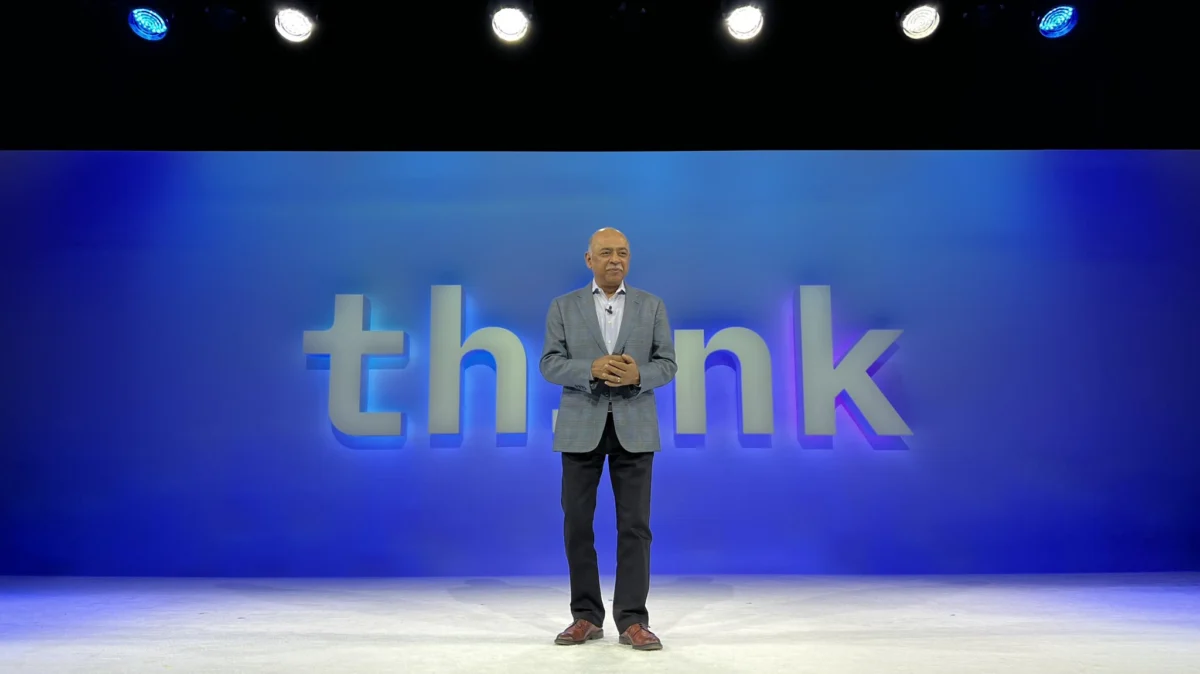
In the high-stakes world of enterprise technology, few names carry the historical weight of IBM. However, on Wednesday, the 115-year-old titan faced a reckoning that sent shockwaves through Wall Street. After a period of relative stability and growth under CEO Arvind Krishna—a tenure largely defined by the company’s successful pivot toward hybrid cloud and artificial intelligence—IBM reported a quarterly performance that fell starkly short of market expectations, triggering the largest single-day stock decline in the company’s storied history.
The Anatomy of the Miss: By the Numbers
To the casual observer, IBM’s financial report might appear to be that of a healthy, functioning enterprise. The company generated $17.2 billion in revenue, posted $9.9 billion in gross profit, and maintained a robust 58% margin. With $2.2 billion in net earnings for the quarter, the company is undeniably still a massive engine of cash flow.
However, in the unforgiving landscape of public markets, performance is measured against expectations, not historical legacy. Wall Street had priced in a different trajectory for IBM, one buoyed by the aggressive AI infrastructure build-out that has lifted the fortunes of hardware and software firms alike over the past 24 months. When the final figures were tallied, the "miss" was so profound that it shattered investor confidence, leading to a 25% cratering of the stock price.
A Chronology of the Collapse: From Warning to Impact
The unraveling of this quarter did not happen on the day of the earnings call; rather, it began in the halls of IBM’s executive suite weeks prior. Recognizing the severity of the shortfall, CEO Arvind Krishna and the board took the rare, proactive step of issuing a "letter to investors" on July 14, 2026.
This preliminary disclosure served as a pre-emptive strike to manage market expectations, warning of "abysmal" revenue in the firm’s critical "infrastructure" segment and predicting significant margin compression. The market’s reaction to the letter was swift and brutal, wiping out years of gains achieved during Krishna’s six-year tenure.
Following the formal earnings release on Wednesday, the company further downgraded its full-year growth forecasts. This revision signaled to the investment community that the problems plaguing the second quarter were not isolated incidents but structural hurdles that would dampen the company’s financial outlook for the remainder of the year.
The "Infrastructure" Crisis: The Mainframe’s Paradoxical Decline
At the heart of the disaster lies IBM’s legendary mainframe business. Once the backbone of global banking and commerce, the mainframe has remained a reliable "cash cow" for Big Blue. This quarter, however, that segment experienced a catastrophic 42% decline in revenue.
The ripple effect of this decline is profound. CFO Jim Kavanaugh explained the systemic risk during the earnings call: IBM operates on a multiplier effect, where every $1 of hardware sold in the mainframe category typically generates $3 in associated software revenue. When hardware sales stall, the software pipeline—the high-margin engine that drives much of IBM’s valuation—inevitably dries up.
The irony of this decline is that it was spurred by the very trend that was supposed to save it: the AI boom. While IBM has positioned itself as an AI-ready partner, the massive, industry-wide race to build out AI data centers has created a competitive tension for corporate budgets.
The Great AI Tug-of-War: Why Hardware Costs Matter
According to Krishna, the company’s poor performance was not due to a loss of market share or a fundamental flaw in technology, but rather a "cascading problem" of capital allocation among their largest enterprise customers.
"Tens" of customers who were slated to upgrade their mainframe infrastructure opted to defer those purchases. While "tens" of clients may sound like a minor deviation, these are not standard retail transactions. A single mainframe unit costs hundreds of thousands, if not millions, of dollars. When combined with long-term maintenance contracts and specialized software suites, a single lost client represents a multi-million dollar revenue hole.
These clients didn’t move away from IBM because they lost faith in the product; they moved their money because they were forced to. As Krishna explained, enterprises across the globe have been squeezed by an unprecedented surge in hardware costs—some seeing price increases between 15% and 30% for data center gear, networking components, and PCs.
This phenomenon is not unique to IBM. Industry peers such as Dell and HP have warned shareholders that the massive demand for AI-specific memory and chips has caused component pricing to spike, effectively forcing these manufacturers to pass the costs on to their customers. Apple, too, has adjusted its pricing models to compensate for the volatile hardware market. When IBM’s clients were faced with the choice of securing critical AI hardware at inflated prices or upgrading their mainframe systems, the immediate, urgent need for AI compute took precedence.
Official Responses: Managing the Narrative
Throughout the investor call, both CEO Arvind Krishna and CFO Jim Kavanaugh worked tirelessly to frame the quarterly results as a "temporary blip." They argued that the fundamental demand for the mainframe remains intact and that the deferred sales are merely a matter of timing.
"We see no evidence of clients moving off the mainframe," Krishna stated, emphasizing that some of the customers who delayed their purchases have already returned to the fold in the current quarter. The executive team’s message was clear: the capital expenditure budget of their customers is finite, and this quarter was simply a moment where the "AI tax" took priority over legacy infrastructure upgrades.
The management team is betting that once the initial "gold rush" of the current AI data center build-out cools, or as companies better manage their overall IT budgets, the mainframe will return to its role as the stable foundation of the enterprise.
The Long-Term Implications: Will the Mainframe Survive?
The narrative surrounding IBM’s mainframe has remained largely unchanged for decades: the industry periodically predicts its death, yet it persists. The mainframe remains a marvel of reliability, security, and high-volume transaction processing that few modern alternatives can replicate.
However, the events of this past quarter raise a significant question about IBM’s future reliance on this legacy hardware. Can a company that markets itself as a modern, AI-first organization afford to be so deeply tethered to the cyclical nature of hardware sales? The "cascading" nature of the revenue decline suggests that the company’s software division, which was intended to be the hedge against hardware volatility, is still fundamentally dependent on the mainframe’s health.
For investors, the coming quarters will be critical. If Krishna is correct, and this is merely a temporary deferral of capital, IBM will likely see a "catch-up" effect in the latter half of the year. If he is wrong—and the decline marks a shift in how enterprises approach their long-term infrastructure architecture—then IBM may face a much more difficult road ahead.
In the final analysis, the story of IBM’s Q2 is a reflection of the broader tech landscape. It is a cautionary tale of how the hype and capital requirements of the AI era are disrupting the traditional rhythms of the enterprise technology market. While IBM may be a titan of industry, even giants are not immune to the chaotic, supply-constrained reality of a world in the midst of a massive technological pivot. For now, the world waits to see if the mainframe remains the bedrock of the future or if it is finally beginning to show its age.
 Asep Darmawan
 Siti Muinah
 Ali Ikhwan
