

The global race to decarbonize the world economy has triggered an unprecedented surge in demand for "critical minerals"—the essential building blocks for electric vehicles (EVs), wind turbines, and advanced energy storage systems. As nations scramble to secure supplies of lithium, cobalt, nickel, and copper, a fundamental challenge has emerged: how to ensure that the extraction of these resources does not repeat the historical patterns of exploitation, environmental degradation, and economic inequality.
The United Nations, through its Development Coordination Office (DCO) and various specialized agencies, is currently spearheading a paradigm shift. The objective is to move beyond the "extractivist" model, where raw materials are exported to global markets with little benefit to the source nation, toward a model that prioritizes local value addition, environmental stewardship, and community empowerment.
The Global Context: Why Critical Minerals Matter
The International Energy Agency (IEA) estimates that to meet the goals of the Paris Agreement, the world will need to quadruple its supply of critical minerals by 2040. However, the physical act of digging these minerals from the earth is merely the prologue. The core issue lies in the governance of the supply chain.
For mineral-rich nations, the "critical mineral boom" presents a double-edged sword. While it offers a massive opportunity for economic development, it also poses risks of "Dutch disease"—where a focus on commodity exports stifles other sectors—as well as the potential for human rights abuses, water depletion, and the marginalization of Indigenous populations. The UN is acting as a mediator, regulator, and capacity-builder to ensure that these countries capture the full potential of their natural wealth.
Chronology of a Shifting Landscape
The global effort to reform mineral governance has accelerated over the past decade, shaped by several key milestones:
- 2011: Adoption of the UN Guiding Principles on Business and Human Rights, establishing the benchmark for corporate responsibility in extractive industries.
- 2015: The UN Sustainable Development Goals (SDGs) are adopted, providing the framework for linking mineral extraction to social progress.
- 2019-2021: As EV adoption rates skyrocket in Europe and China, price volatility for battery-grade lithium and cobalt prompts a surge in speculative mining projects in the Global South.
- 2022-2023: The UN launches targeted initiatives in Argentina, the DRC, Indonesia, Kazakhstan, and Zambia to integrate sustainability into the core of their national mining policies.
- 2024: UN-led dialogues begin to emphasize "Circular Economy" practices, focusing on urban mining and e-waste recycling as a secondary source of supply, reducing the pressure for new, high-impact extraction.
Regional Case Studies: Implementing the Vision
Argentina: Human-Centric Lithium Development
Argentina’s vast lithium deposits in the "Lithium Triangle" have made it a focal point for the energy transition. The UN’s intervention here has been centered on the "social license to operate." By facilitating multi-stakeholder dialogues between the government, private sector, and Indigenous communities, the UN is ensuring that lithium development respects ancestral land rights and water security. Furthermore, provincial capacity building is helping local governments manage mining royalties, ensuring that profits are reinvested into education and healthcare rather than disappearing into global financial circuits.
DR Congo: Value-Added Growth
Producing 70% of the world’s cobalt, the Democratic Republic of the Congo occupies a strategic position in the global battery chain. The challenge has long been to move the DRC up the value chain. The UN is currently supporting policy reforms that encourage "in-country" processing. Instead of exporting raw cobalt ore, the initiative aims to train a local workforce to perform initial refining, which significantly increases the economic value retained within the country.
Indonesia: The Nickel Revolution
Indonesia has taken a bold stance on industrial policy by banning the export of raw nickel ore to force domestic investment in smelting and battery manufacturing. The UN is providing technical assistance to ensure this rapid industrialization adheres to international safety and environmental standards. This includes the implementation of cleaner, more energy-efficient smelting technologies and the creation of "green skills" programs for the local workforce.
Kazakhstan: Governance and Transparency
In Kazakhstan, the focus is on systemic integrity. As the country opens its mineral sector to global investment, the UN is assisting in the alignment of national legal frameworks with international anti-corruption standards. This includes rigorous oversight of supply chain traceability, ensuring that materials extracted are free from links to organized crime or human rights violations.
Zambia: Empowerment and Formalization
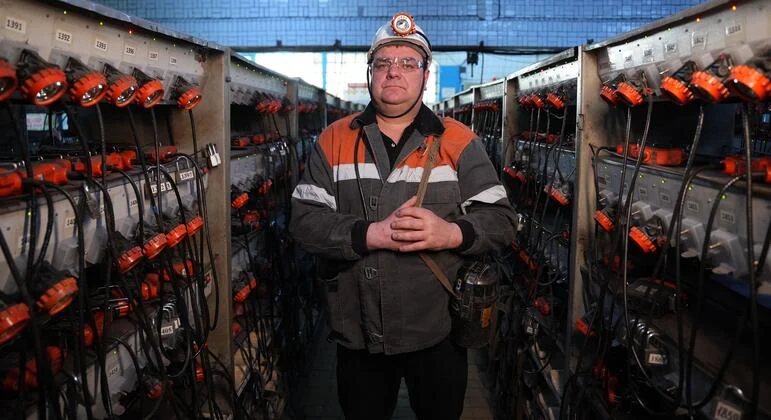
Zambia is working to integrate its artisanal and small-scale mining (ASM) sector into the formal economy. The UN’s support has been instrumental in providing these miners with safety equipment, environmental training, and access to legal protections. By formalizing these workers, the UN is not only improving their livelihoods but also ensuring that environmental monitoring is carried out at the grassroots level, involving local communities in the oversight of mining operations.
Supporting Data: The Economic Imperative
The shift from raw material export to high-value processing is not merely a moral imperative—it is an economic necessity. Data from UN development agencies suggests that for every dollar of raw material extracted, countries that invest in local processing and refining can increase the value of their exports by a factor of three to five.
Furthermore, the "green jobs" potential is substantial. In the countries mentioned above, the UN projects that formalizing the mining sector and investing in local value chains could create over 500,000 direct and indirect jobs by 2030, specifically in roles requiring technical and vocational skills that contribute to a sustainable, circular economy.
Official Responses and Strategic Outlook
UN officials emphasize that the "Critical Mineral transition" cannot be successful if it is viewed solely through the lens of energy security for the Global North.
"Our goal is to ensure that the energy transition does not leave the Global South behind," says a representative from the UN Development Coordination Office. "We are working to create a global compact where sustainability is not an ‘add-on’ but the foundation of mining policy. This requires transparency, the protection of labour rights, and a commitment to shared prosperity."
Corporate stakeholders have also begun to respond to these pressures. Mining giants are increasingly seeking UN-aligned certifications to satisfy investor demand for "ESG-compliant" (Environmental, Social, and Governance) minerals. However, the UN maintains that voluntary corporate pledges are insufficient; they must be backed by robust national regulations and international cooperation.
Implications for the Future: A Circular Transition
Looking ahead, the UN is pushing for a broader understanding of the mineral supply chain that includes the "circular economy." As the volume of e-waste (discarded smartphones, laptops, and EV batteries) grows, the UN is advocating for technologies that allow for the recovery of lithium, cobalt, and nickel from recycled products.
This shift has profound implications:
- Reduced Extraction Pressure: Recycling reduces the need for new, environmentally destructive mining operations.
- Resource Security: Nations with fewer natural reserves can still build an industrial base by becoming hubs for mineral recovery and recycling.
- Governance Maturity: The shift toward circularity encourages nations to invest in high-tech infrastructure, further diversifying their economies away from total dependence on raw commodity prices.
Conclusion
The United Nations’ intervention in the critical minerals sector represents one of the most ambitious industrial and social development projects of the 21st century. By aligning the needs of the global energy transition with the fundamental rights and economic aspirations of mineral-producing nations, the UN is attempting to rewrite the history of the extractive industry.
While the challenges—corruption, environmental degradation, and geopolitical instability—remain formidable, the path forward is clear: a successful energy transition must be a just transition. Through capacity building, technical support, and the promotion of international standards, the UN is helping to ensure that the minerals powering the future of our planet also serve to build a more equitable and sustainable world for those living at the source.
 Lina Hope
 Asro
Asro
 Layla Zulfa
