

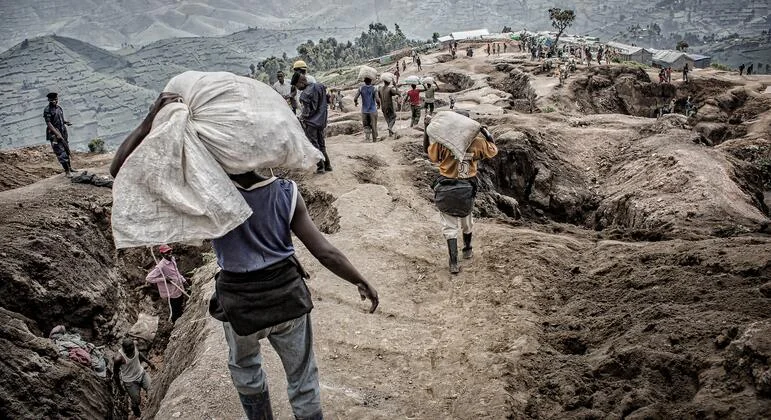
NEW YORK — The United Nations Security Council convened today in a high-stakes session that strikes at the heart of the 21st-century global economy. As the world accelerates its transition away from fossil fuels, the demand for "critical minerals"—lithium, cobalt, copper, nickel, and rare earth elements—has surged to unprecedented levels. With demand projected to triple by 2030, the international community is facing a defining paradox: the very resources required to save the planet from climate catastrophe are currently fueling regional instability, human rights abuses, and geopolitical friction.
The meeting, held at UN Headquarters in New York, aims to address a fundamental question: Can the global green energy transition be decoupled from the exploitation and conflict that have historically defined resource extraction?
The Core Conflict: A New Era of Resource Scarcity
The transition to renewable energy is, at its essence, a transition to a mineral-intensive system. An electric vehicle (EV) battery requires significantly more minerals than a traditional internal combustion engine. Solar panels and wind turbines are similarly reliant on complex supply chains that trace back to specific, often volatile, geological hotspots.
Current data indicates that while the global North drives the demand for green technologies, the supply originates largely from the global South, particularly in nations where governance structures are weak or compromised by local militias. The UN Security Council’s debate highlights the urgent need for a regulatory framework that ensures transparency and ethical sourcing. Without intervention, experts fear that "green gold" will mirror the "blood diamonds" of the late 20th century, financing armed groups and perpetuating systemic poverty.
Chronology: From Extraction to Global Debate
- 2015-2020: The Silent Surge. As the Paris Agreement spurred national climate targets, the demand for lithium and cobalt began its exponential climb. During this period, global investment in mineral exploration saw a 40% increase.
- 2021-2023: Supply Chain Fragility. The post-pandemic economic recovery exposed the extreme concentration of processing capabilities, largely centered in a few key nations, triggering alarm bells in major capitals regarding national security and economic independence.
- 2024: The Human Rights Spotlight. Reports from international NGOs and UN human rights rapporteurs began to document increasing instances of child labor, forced displacement, and environmental degradation in mining hubs, specifically within the eastern Democratic Republic of the Congo (DRC) and parts of the "Lithium Triangle" in South America.
- 2025: Geopolitical Maneuvering. Major powers implemented stringent "green protectionist" policies, leading to trade tensions and a scramble for exclusive mineral concessions, often sidelining local community interests.
- July 22, 2026: The Security Council Session. The UN Security Council formally recognizes the link between the energy transition and international security, initiating a high-level dialogue on responsible mineral governance.
Supporting Data: The Scale of the Challenge
To understand the urgency of the UN’s intervention, one must look at the data provided by the International Energy Agency (IEA) and recent UN trade reports:
- Demand Projections: The IEA forecasts that to meet Net Zero goals by 2050, the demand for critical minerals must grow by at least 350% by 2030.
- Market Concentration: Currently, the processing of lithium, cobalt, and rare earth elements is highly centralized. For instance, three countries control over 75% of the world’s lithium processing. This creates a "chokepoint" that poses a risk to global energy stability.
- Conflict Linkages: According to UN monitoring groups, mineral-rich zones in the eastern DRC are currently subject to the influence of over 100 armed groups. These groups use the profits from illicit artisanal mining to purchase weapons, effectively turning the climate transition into a self-sustaining cycle of warfare.
- Environmental Footprint: Traditional extraction processes consume vast quantities of water—a critical issue in arid regions like the Atacama Desert—and produce tailings that threaten local ecosystems and indigenous livelihoods.
Official Responses: Diplomacy in the Face of Greed
The debate in the Council chamber has been marked by a clear divide between nations that view minerals as a sovereign asset and those who view them as a global commons requiring international oversight.
The Perspective of Producing Nations
Delegations from the Global South emphasized the "resource curse." Many representatives argued that past patterns of extraction have left them with environmental degradation and empty coffers. "We are not simply ‘mineral mines’ for the world’s electric vehicle industry," noted one representative. "We are sovereign nations that require technology transfer, value-added processing, and equitable revenue-sharing agreements."
The Perspective of Consumer Nations
Conversely, industrialized nations stressed the importance of "secure and resilient supply chains." They argued that the green transition is a race against time to prevent catastrophic climate change. However, they acknowledged that "green energy cannot be built on a foundation of human rights violations." The debate featured calls for a "Global Minerals Compact" that would establish binding international standards for environmental and social governance (ESG) at the mining source.
Implications: The High Cost of the Green Transition
The outcome of this Security Council meeting—and the subsequent policies that emerge—will have profound implications for the next decade of global development.
1. The Human Rights Mandate
If the UN succeeds in establishing a robust certification system, it could lead to the professionalization of the artisanal mining sector. By providing miners with better equipment, fair wages, and safe conditions, the industry could shift from a source of conflict to a source of sustainable employment. However, if the session ends in rhetoric without action, the "human cost" of the green transition will likely continue to rise, fueling migration and local uprisings.
2. Geopolitical Stability
The scramble for minerals is rapidly becoming the "Great Game" of the 21st century. The Security Council’s involvement represents an attempt to prevent this competition from turning into direct state-on-state conflict. By framing critical minerals as a matter of "international peace and security," the UN is effectively telling the world that mineral supply chains are too important to be left to unregulated market forces.
3. Economic Transformation vs. Extractive Colonialism
The most significant long-term implication is whether mineral-rich nations will be allowed to move up the value chain. If developing nations can shift from simply exporting raw ore to manufacturing battery components and refined metals locally, the energy transition could trigger a wave of industrialization in the Global South. If they remain mere exporters of raw materials, the current status quo of economic inequality will only deepen.
Conclusion: A Turning Point for Global Policy
As the Security Council session continues, the world watches with bated breath. The challenge is not merely technical or economic; it is moral. The energy transition is a necessity for the survival of the biosphere, but it cannot be achieved through the exploitation of vulnerable populations or the destabilization of sovereign territories.
The UN’s current efforts suggest that the international community is finally waking up to the reality that the "clean" future must be built on "clean" foundations. Whether this leads to a new era of international cooperation or further entrenches the divide between the resource-hungry North and the resource-rich South remains to be seen.
For now, the message from the UN floor is clear: The minerals that will power our future must not be allowed to destroy our present.
Stay tuned for further updates as this story develops. For daily analysis on global development and humanitarian crises, subscribe to the UN News newsletter or download the UN News app on iOS or Android.
 Lina Hope
 Asro
Asro
 Layla Zulfa
