

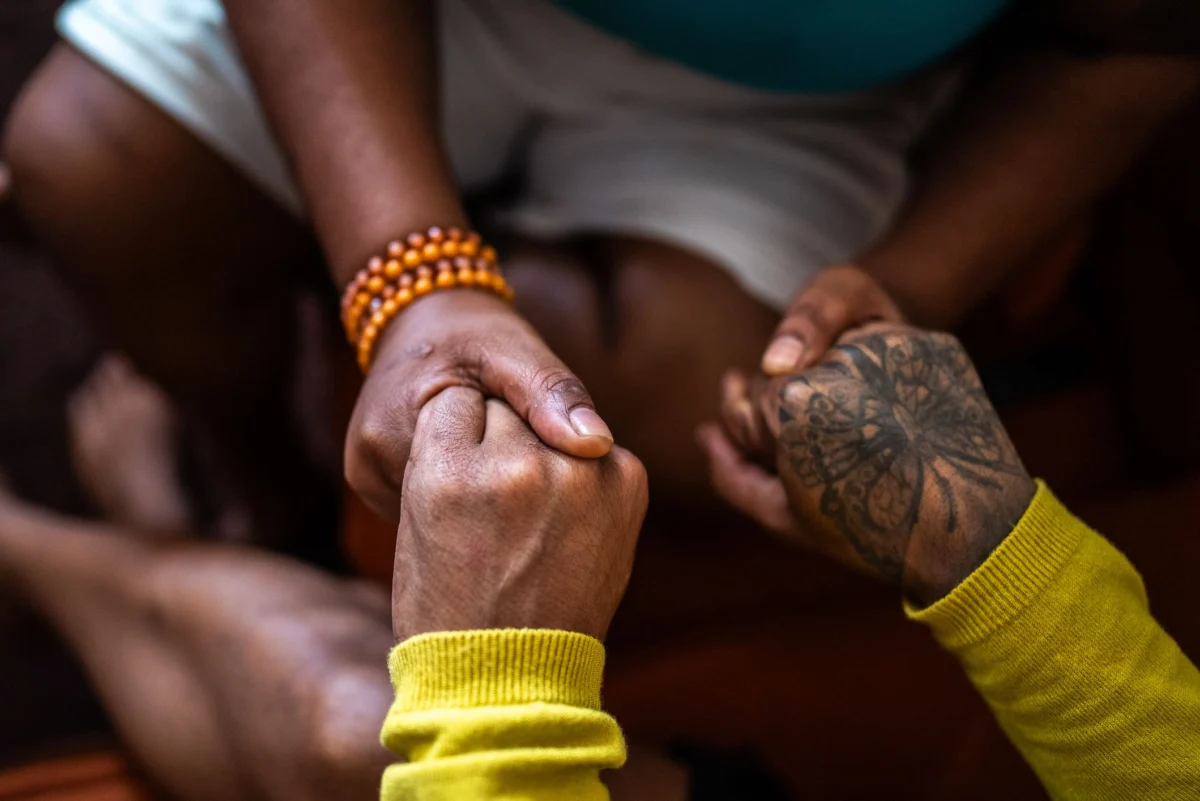
When examining the landscape of breast health for Black women in the United States, the statistics often paint a stark and sobering portrait. These numbers, while vital for public health research, frequently fail to capture the humanity behind the diagnoses—the resilience, the systemic barriers, the quiet strength, and the profound transformation that occurs in the wake of a life-altering illness.
Black women are diagnosed with breast cancer at a younger median age—60 compared to 62 for white women—and are 38% more likely to die from the disease. They face the lowest survival rates across every known stage of breast cancer. Perhaps most alarmingly, roughly one in five Black women diagnosed with breast cancer are facing triple-negative breast cancer (TNBC), an aggressive and difficult-to-treat form of the disease that disproportionately affects this demographic.

Yet, these figures are merely starting points. They do not account for the 3 a.m. phone calls, the collective grief of head-shaving parties, or the life-defining decision to fight for the sake of one’s children and grandchildren. Thirteen women, each a testament to the power of the human spirit, share their journeys below, proving that they are far more than a data point.
The Chronology of Diagnosis: A Pattern of Disparity
For many of the women interviewed, the path to a diagnosis was fraught with obstacles. A recurring theme across these personal accounts is the necessity of self-advocacy in a medical system that often minimizes the concerns of Black women.

Monique Bass, 53, a proactive mother and grandmother, performed a self-exam that detected a lump. Despite her diligence, she faced years of dismissive medical advice. After three biopsies returned benign results, she insisted on a lumpectomy. Her intuition was correct: she was diagnosed with stage 1 invasive ductal carcinoma. Similarly, Marylande Regis, 38, was told by an on-call provider that a lump discovered after breastfeeding was likely just a "clogged milk duct" and that she was "too young" to worry. By the time she bypassed that dismissal and sought further evaluation, her condition had progressed to aggressive stage 2B breast cancer.
This pattern suggests a systemic failure where age and demographic biases delay critical interventions. For these women, the journey from initial discovery to formal diagnosis was not a straightforward medical process but a battle of persistence against a system that often fails to listen.
.jpg)
Supporting Data: Why the Disparity Persists
The medical community acknowledges that the survival gap is not merely biological but multifactorial. According to the National Breast Cancer Foundation, the prevalence of TNBC among Black women is a significant driver of mortality. TNBC lacks the estrogen, progesterone, and HER2 receptors that allow for common targeted therapies, leaving chemotherapy as the primary, albeit grueling, treatment.
Furthermore, social determinants of health—including access to high-quality care, historical mistrust of medical institutions, and socioeconomic stressors—create a "perfect storm" for worse outcomes. As Patricia Fox, 38, noted, the stress of modern life and the lack of culturally competent mental health support often exacerbate the physical toll of cancer. Therapy, while often stigmatized in some Black communities, became the "fortification" she needed to survive.

Official Responses and Medical Advocacy
In response to these persistent disparities, organizations like the African American Breast Cancer Alliance and The Black Breast Cancer Alliance have emerged as critical pillars of support. These groups work to bridge the gap between patient experience and medical research, ensuring that Black women have access to clinical trials, peer support, and, crucially, a voice in the development of treatment protocols.
Ricki Fairley, co-founder of the Black Breast Cancer Alliance, turned her own stage 3A TNBC diagnosis into a mission to overhaul the system. After navigating her own survival, she recognized that the medical establishment needed to be held accountable for the disparate mortality rates. Her work, alongside that of Dr. Nita (Annita White) and Monique Bass, highlights a shift toward "survivor-led advocacy," where those who have navigated the system are now changing it for the next generation.

Implications: Redefining Strength and Survival
The narratives of these thirteen women reveal that survival is not a linear process. It is a radical act of reclaiming one’s own body and future.
The Evolution of Strength
For many of these women, "strength" was initially defined as the ability to endure, to hold everything together for their families, and to remain stoic. However, the cancer journey forced a redefinition. Jessica Ncube, 41, learned that true strength is not about holding everything in, but about "allowing myself to receive, to rest, and to not have all the answers." This shift from rigid resilience to "softness" is a profound psychological pivot that many survivors cite as essential for their long-term well-being.

The Power of Community
From the "head-shaving parties" mentioned by Charlotte Connor to the prayer circles organized by Annette Colden, community is the thread that binds these experiences. These women did not just seek medical help; they built networks of care that included food delivery, financial advice, and emotional companionship. The "blueprint for survival" they are passing on is one that prioritizes communal care over individual endurance.
The Future of Breast Health
The implications for the medical field are clear:

- Validation of Patient Concerns: Doctors must prioritize self-detected anomalies in younger Black women, even when initial screenings are clear.
- Mental Health Integration: Cancer treatment protocols must include mental health support that acknowledges the unique cultural and societal stressors facing Black women.
- Accessibility: Navigating the healthcare system—from finding specialists to understanding insurance—is a full-time job. Providing patient navigators could significantly reduce the time between detection and treatment.
A Call to Action for Every Woman
As we look at the lives of Judy Fambrough-Billingsley, who leveraged her background as a Civil Rights activist to fight cancer, and Ameiko Newman, who launched a business designing scarves for chemo patients, it becomes evident that these women are not just survivors; they are pioneers.
Their stories offer a blueprint that goes beyond medical statistics. It is a blueprint of advocacy, self-love, and community mobilization. For any Black woman navigating a diagnosis, the message from these thirteen women is unified: Your voice is your most potent tool. Do not accept a dismissal. Seek a second opinion. Demand the care you deserve.

Cancer may be a disease that affects the body, but as these women have shown, the spirit, when fortified by community and truth, can withstand the storm. They have proven that while the data may tell a story of struggle, their lives tell a story of victory, purpose, and an enduring, radiant life after diagnosis. The clouds may move, but as Marylande Regis said, the sun is waiting to show itself. It is a reminder that while the fight is hard, it is one that, collectively, they are winning.
 Asro
Asro
 Dwi Wanna
 Nana
Nana
