

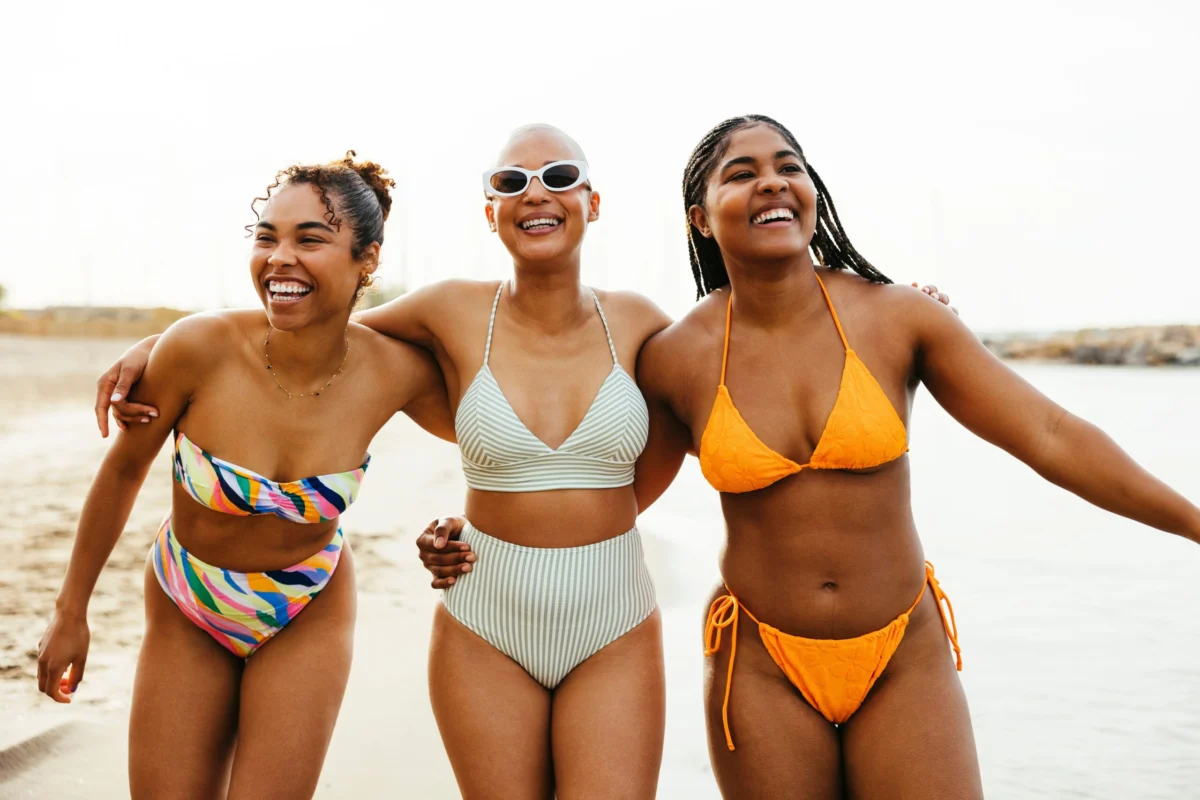
In a travel industry long dominated by the binary of the "honeymoon" for the newlywed and the "babymoon" for the expectant, a new travel paradigm is emerging: the "we-moon." It is a deliberate, celebratory getaway designed not to honor a traditional domestic milestone, but to commemorate individual achievements—be it a professional promotion, the completion of a master’s degree, a successful business launch, or, as in the case of one recent traveler, the publication of a first book.
The concept represents a cultural shift in how single women—and those who define their primary support systems through deep, platonic friendships—allocate their leisure time and disposable income. Rather than waiting for a partner to facilitate a dream destination experience, the "we-moon" empowers individuals to invite their "chosen family" to honor their personal successes.
The Genesis of a New Travel Category
The term "we-moon" acts as a linguistic reclamation. For decades, the travel sector has catered to the "couple" as the primary unit of consumption. When traveling in a speedboat toward the turquoise waters of Anguilla, it is common to find oneself surrounded by honeymooners. Yet, the "we-moon" is a defiant assertion that the single experience is not merely a "waiting period" for partnership, but a life state worthy of its own grand celebrations.
This movement is gaining traction as women continue to prioritize career milestones and personal autonomy. Unlike the traditional "girls’ trip," which often serves as a generic social gathering, the "we-moon" is defined by a specific, celebratory intent. It is an act of self-advocacy—making the phone call, booking the flight, and asking friends to show up for your accomplishments with the same fanfare typically reserved for weddings or baby showers.
A Case Study in Anguilla: Luxury and Intentionality
To understand the practical application of a "we-moon," one must look at the recent retreat hosted at the Four Seasons Resort and Residences Anguilla. The trip, involving a trio of friends, functioned as a celebratory backdrop for a literary milestone.

The choice of location was strategic. By opting for villa rentals within a luxury resort, the group was able to balance the privacy of a personal home with the operational support of a five-star hotel. This dual-access model—having a dedicated villa concierge while maintaining the ability to order room service or access resort-wide spa facilities—allowed the travelers to curate a schedule that was both communal and deeply personal.
Chronology of an Intentional Retreat
- The Planning Phase (3 months prior): Establishing a shared budget to avoid "luxury anxiety" among participants.
- Day 1 (Arrival & Decompression): Checking into private villa accommodations to ensure individual space, followed by an intimate evening of low-pressure conversation.
- Day 2 (Personal Growth): A morning of individual pursuits (e.g., private poolside yoga) followed by group-oriented relaxation (e.g., spa treatments).
- Day 3 (Skill Acquisition): A structured group activity, such as a mixology class, designed to stimulate the brain and provide shared amusement.
- Day 4 (The Deep Dive): An evening reserved for "unraveling"—vulnerable, late-night conversations held in a controlled, tranquil environment (such as a private jacuzzi) to solidify bonds.
Expert Insight: The Psychology of the ‘We-Moon’
Dr. Joy Harden Bradford, a licensed psychologist and author of Sisterhood Heals, notes that the "we-moon" serves a vital function in mental and relational health. According to Dr. Bradford, the modern woman is often so bogged down by the "expectations of what a vacation should be" that she rarely gets to truly recharge.
"I think having a place where everybody can retreat and have alone time is really good if that is something the group can do," Dr. Bradford explains. "Private sleeping quarters are paramount."
Dr. Bradford emphasizes that the primary cause of friction in group travel is a lack of transparency regarding expectations. Whether it is the divide between those who view a hotel as a mere place to sleep and those who view it as a destination in itself, or the pressure to participate in every planned excursion, communication is the bedrock of a successful trip. The "we-moon" succeeds because it acknowledges that travel—like any significant relationship—requires clear boundaries and mutual respect for individual needs.
Supporting Data: Why Women Need "We-Moons"
Research into brain health and social connectivity supports the model of the "we-moon." Engaging in new experiences—such as learning to mix a cocktail, playing a new sport like pickleball, or even navigating a new island terrain—activates neuroplasticity and fosters group cohesion.

Furthermore, the "social experiment" aspect of traveling with friends—where failure is met with laughter rather than judgment—is a crucial stress-relief mechanism. In a world where high-pressure careers and constant digital connectivity dominate the lives of women, the "we-moon" provides a necessary "reset." It creates a protected space for vulnerability. As Dr. Bradford notes, "If these are people that you are hoping to grow closer to, it is important to continue to go deeper with those relationships. That requires a lot of vulnerability, which is hard for people."
Implications: The Shift in Travel Marketing
The rise of the "we-moon" signals a massive shift for the hospitality and travel industries. Luxury resorts that historically focused their marketing collateral on romantic couples are beginning to recognize the economic power of the "chosen family."
The implications for the industry are clear:
- Flexibility in Accommodations: There is an increasing demand for villas and multi-bedroom suites that allow for individual privacy while providing communal gathering spaces.
- Customized Experiences: The modern traveler is less interested in pre-packaged tours and more interested in concierge-led, bespoke activities that allow for both group bonding and individual pursuits (e.g., private yoga versus group spa time).
- The "Milestone" Economy: Travel agencies and resorts that pivot their branding to honor professional and personal achievements—rather than just domestic milestones—will likely capture a significant portion of the millennial and Gen Z market share.
Conclusion: A New Standard for Celebration
The "we-moon" is more than a trend; it is a movement toward self-validation. By formalizing the act of celebrating oneself with the people who matter most, women are effectively restructuring the hierarchy of travel.
As we move forward, the "we-moon" challenges the outdated notion that a milestone is only "real" if it involves a romantic partner or a biological family. Whether it is a promotion, a creative project, or simply the desire to exist in a beautiful space with friends who support your growth, the "we-moon" offers a blueprint for a life well-lived. It serves as a reminder that the most important relationship one can nurture is the one with one’s own sense of accomplishment—and that sometimes, the best way to honor that is by hopping on a boat, heading for the islands, and surrounding yourself with the people who celebrate you the loudest.
 Lina Hope
 Asro
Asro
 Sagoh
Sagoh
