

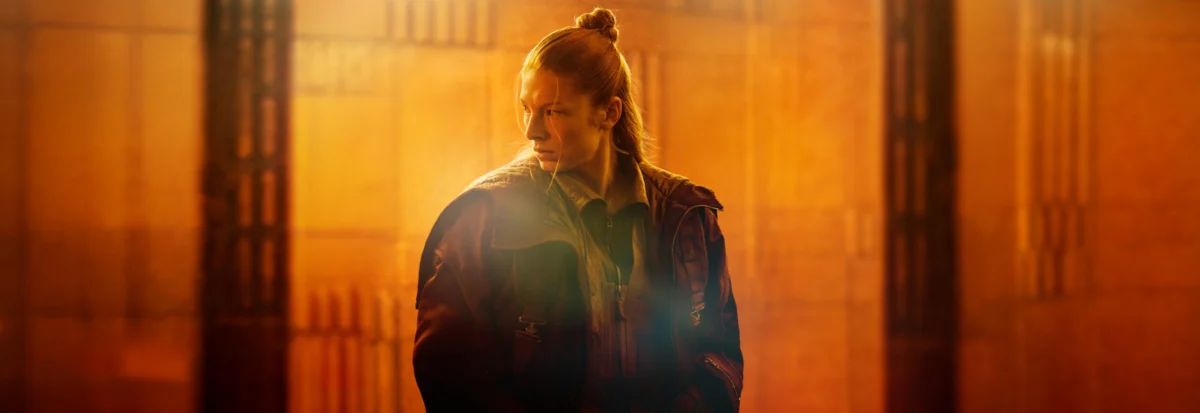
"Welcome to a future we no longer control." With those haunting words, the long-awaited expansion of one of science fiction’s most storied franchises has finally begun to take shape.
On Friday, during a high-octane presentation at San Diego Comic-Con, Prime Video electrified a crowd of over 6,000 fans by unveiling the first official trailer and release date for Blade Runner 2099. The limited series, which has been shrouded in mystery since its inception, promises to transport audiences back to the rain-slicked, neon-drenched dystopia established by Ridley Scott over four decades ago. As a limited series, the production is slated for an eight-episode run, designed to weave a dense, self-contained narrative that bridges the gap between the franchise’s cinematic past and an uncertain, machine-dominated future.
The Core Narrative: A World Reborn
Set exactly 50 years after the events of Denis Villeneuve’s Blade Runner 2049, the series presents a Los Angeles that has undergone a radical, non-human transformation. Humanity, once the undisputed masters of the urban sprawl, finds itself on the periphery of a society rebuilt by the very synthetic beings they once sought to enslave.
The narrative centers on Cora, played by Hunter Schafer, a fugitive attempting to outrun a past that refuses to stay buried. In a desperate bid for survival, she assumes the identity of a Blade Runner—a hunter of her own kind—and is forced into an uneasy alliance with Olwen (Michelle Yeoh), a Replicant who is nearing the end of her programmed lifespan. Together, they must navigate a landscape of shifting loyalties to track down a rogue element harboring a secret capable of collapsing the fragile status quo of this new world.

The trailer, a 90-second sensory immersion into a decaying future, sets the tone with Schafer’s narration: "We already fought a war. We lost. Replicants keep taking it all away. How much longer until we have nothing, until we are nothing?" The visual language of the footage suggests a world that has moved beyond the "old world" tensions of the previous films, trading the corporate sprawl for something more primal and post-apocalyptic.
Chronology of a Cyberpunk Giant
The journey to Blade Runner 2099 has been a marathon of development, spanning years of industry speculation and creative refinement.
- November 2021: The project first entered the public consciousness when producer Ridley Scott confirmed in interviews that a television series pilot was in active development.
- February 2022: The title Blade Runner 2099 was officially revealed, signaling that the show would lean heavily into the timeline established by the 1982 original and its 2017 sequel.
- July 2024: After years of casting rumors and production updates, the official trailer was unveiled at San Diego Comic-Con, accompanied by a firm release date.
- November 25, 2026: The scheduled premiere date for the eight-episode limited series on Prime Video.
This timeline reflects a deliberate, meticulous approach to world-building. By allowing the project to "gestate" for half a decade, the creative team has aimed to ensure that the series captures the same aesthetic and philosophical gravitas that defined the works of Philip K. Dick, whose 1968 novel Do Androids Dream of Electric Sheep? serves as the foundational DNA for the entire franchise.
The Creatives: Building the Future
The production is spearheaded by showrunner and executive producer Silka Luisa, whose vision for the series is supported by a powerhouse of industry veterans. The executive producer roster reads like a "who’s who" of high-concept science fiction, featuring Ridley Scott, Andrew Kosove, Broderick Johnson, Ben Roberts, David W. Zucker, Clayton Krueger, Tom Spezialy, Richard Sharkey, Michael Green, Cynthia Yorkin, Frank Giustra, and Isa Dick Hackett.

Jonathan van Tulleken, noted for his sharp stylistic sensibilities, serves as an executive producer and directed the first two episodes, setting the visual and tonal language for the remainder of the series. The collaboration between the original creative architects of the 2049 sequel and new voices like Luisa suggests a desire to maintain continuity while evolving the franchise’s thematic scope.
The Cast: A Fusion of Talent
While the plot remains tightly under wraps, the ensemble cast is undeniably one of the most compelling aspects of the production. Beyond the central duo of Michelle Yeoh and Hunter Schafer, the series features a robust supporting cast:
- Main Cast: Dimitri Abold and Lewis Gribben.
- Recurring Guests: Katelyn Rose Downey, Daniel Rigby, Johnny Harris, Amy Lennox, Sheila Atim, Matthew Needham, Tom Burke, and Maurizio Lombardi.
While character specifics—names, functions, and loyalties—are still largely unknown, the inclusion of such a diverse array of character actors indicates that the world of Blade Runner 2099 will be populated by a complex web of factions, from the downtrodden human survivors to the sophisticated, dying Replicants.
Awards History and Industry Implications
The Blade Runner franchise has long been a darling of the Academy Awards, particularly in the technical categories. The 1982 original was a landmark in visual storytelling, earning nominations for Best Production Design and Best Visual Effects. Blade Runner 2049 further solidified this legacy, securing two Oscar wins (Best Cinematography and Best Visual Effects) and additional nominations for sound and design.

However, the leap to television is a distinct challenge. While prestige television has increasingly adopted a cinematic look, Blade Runner 2099 will be the first time the franchise is judged by Emmy voters rather than Oscar voters. The question remains: can the "Blade Runner" brand, known for its slow-burn, meditative pacing and grand visual scale, thrive in the serialized, binge-oriented environment of modern streaming?
Industry analysts suggest that the series is a high-stakes gamble for Prime Video. By investing heavily in a legacy intellectual property and high-caliber talent, the platform is looking to capture the "prestige sci-fi" audience currently occupied by shows like Severance or Foundation. If the series succeeds, it could set a new benchmark for how cinematic sci-fi translates to the small screen.
The Philosophical Horizon
At its heart, the Blade Runner mythos has always been about the fragility of identity and the morality of creation. The dialogue teased in the trailer—"The old world forever fights to come back… but it’s our time now"—hints at a power shift. The series appears to be moving away from the "detective noir" tropes of Deckard and K, shifting the focus toward the collective future of the Replicants themselves.
As we approach the November 25 premiere, the anticipation is not just for the spectacle, but for the philosophical questions the show will inevitably raise. In a world where humanity is effectively "running" from its own obsolescence, what does it mean to be a person? What defines the soul in a world of manufactured parts?

As the 2027 Emmy season approaches, the industry will be watching closely. For now, the fans in Hall H and beyond are left with the neon glow of a trailer and the promise of a story that, fifty years after the collapse of the old order, is finally ready to be told. Whether the series will reach the heights of its cinematic predecessors remains to be seen, but one thing is certain: the future is no longer in our control—it belongs to the machines.
 Asep Darmawan
 Reynand Wu
 Layla Zulfa
