

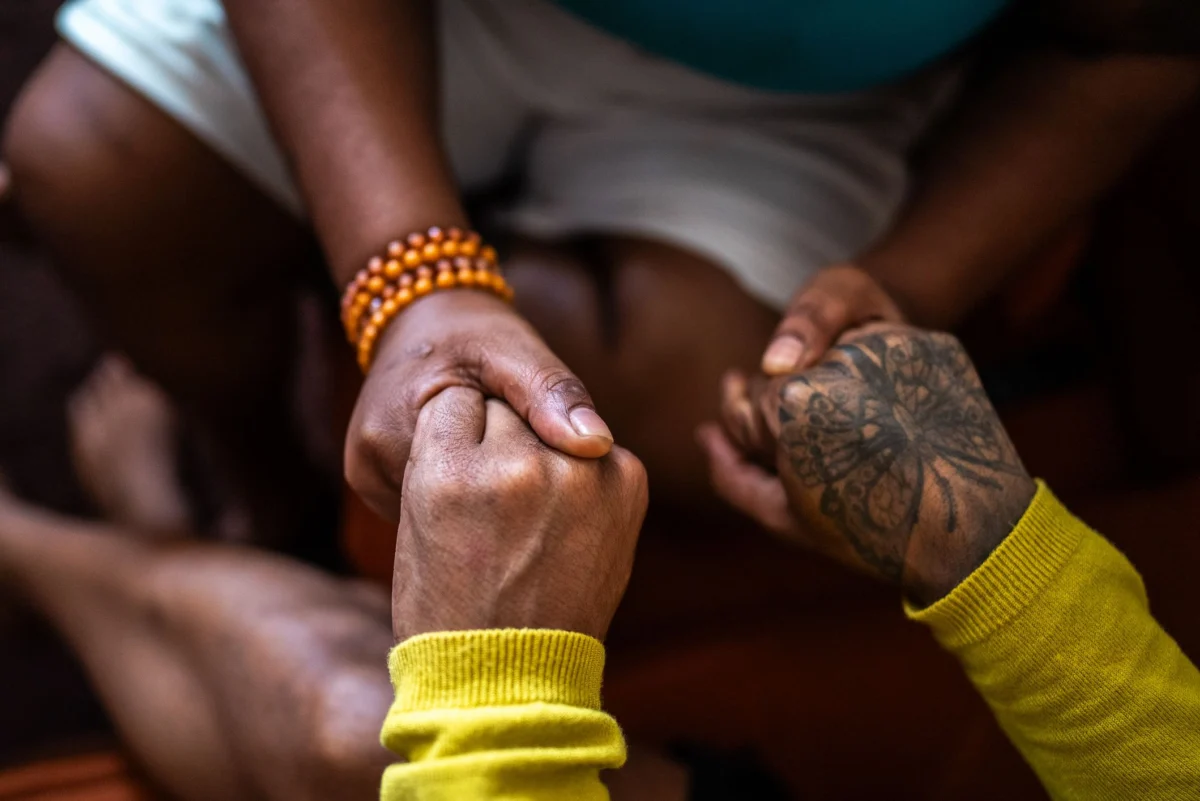
When examining the landscape of Black women’s breast health, official statistics rarely paint a hopeful picture. According to the National Breast Cancer Foundation, Black women are diagnosed with breast cancer at a younger median age—60, compared to 62 for white women—and face a staggering 38% higher mortality rate from the disease. They also experience the lowest survival rates across every known stage of breast cancer. Furthermore, approximately one in five Black women diagnosed with breast cancer faces triple-negative breast cancer (TNBC), a notoriously aggressive and hard-to-treat form of the disease that impacts Black women at higher rates than any other racial or ethnic group.
Yet, statistical data cannot capture the human element of these crises: the 3 a.m. phone calls, head-shaving parties, transformative therapy sessions, or the quiet moment a mother looks at her children and decides they are reason enough to fight. Black women have always been far more than a data point. Nowhere is that truer than in how they face, survive, and completely rebuild their lives after a breast cancer diagnosis.
Main Facts: The Reality of Health Disparities
The medical disparities surrounding Black women and breast cancer are well-documented, yet the systemic barriers persist. Misdiagnoses, dismissed symptoms, age-related screening guidelines that fail to account for early-onset aggressive variants, and unequal access to advanced medical treatments contribute to a widening health gap.

Despite these grim metrics, a parallel narrative exists—one written by the individuals who refuse to be reduced to percentages on a medical chart. Thirteen women share their unique journeys, navigating careers, motherhood, humor, faith, and rage. Their experiences with breast cancer have changed them in profound ways, ultimately establishing a community, a shared sense of purpose, and a hard-won blueprint for survival for future generations.
Chronology of Courage: Stories of Diagnosis, Treatment, and Triumph
1. Monique Bass: "I put my boxing gloves on."
Monique Bass, 53, was a proactive single mother of twin sons and a grandmother of four who started annual mammograms at 40. However, a self-exam at 47 revealed an abnormal lump. Over three years, three tissue biopsies came back benign, and doctors urged continued monitoring. Bass pushed back, insisting on a lumpectomy. The diagnosis was stage 1 invasive ductal carcinoma. Navigating treatment during the 2020 pandemic and a simultaneous divorce, Bass relied on her faith. Today, she is the founder of What’s Behind the Bra?, a New Jersey nonprofit that provides comfort care packages and a weekly support podcast.
2. Jaqueline Beale: "I surrounded myself with love and laughter."
Coming from a family with a history of cancer, 64-year-old Jaqueline Beale discovered a lump during a self-exam at age 40. Despite clear sonograms and mammograms, a biopsy revealed stage 1 breast cancer. Rather than succumbing to despair, Beale leaned heavily into humor and joy, requesting that her support system surround her with levity and lightheartedness throughout her treatment.

3. Annita White: "What once felt like the end became the beginning."
Annita White, 51, delayed a routine mammogram due to the demands of being a single mother, higher education administrator, and doctoral student. When she finally went, a new, aggressive mass was discovered. Following grueling chemotherapy, surgeries, and hair loss, White found solace in her faith. Three years later, she is cancer-free, holds her PhD, and serves as an active member of the African American Breast Cancer Alliance survivor network as "Dr. Nita."
4. Marylande Regis: "The clouds are moving."
At 36, Marylande Regis—a registered nurse, realtor, and mother of three—found a lump shortly after stopping breastfeeding. Initially dismissed by an on-call provider as a clogged milk duct, Regis demanded further evaluation, leading to a diagnosis of aggressive stage 2B, BRCA1-positive breast cancer. Following a bilateral mastectomy, chemotherapy, radiation, and a total hysterectomy, Regis credits her resilience and family support with saving her life.
5. Judy Fambrough-Billingsley: "Sickness had never been my world."
At 75, Judy Fambrough-Billingsley was an extraordinarily active athlete who had never smoked, drank, or taken regular medications. When she noticed growing lumps, tests revealed breast cancer. Drawing on her history as a Civil Rights Era activist and member of the NAACP Youth Council, Fambrough-Billingsley approached her medical battle with the same unwavering tenacity she brought to social justice movements decades prior.
.jpg)
6. Taylor Johnson: "I was so used to always being the strong one."
Taylor Johnson was nearly 30 when she discovered a lump on her breast. Initially denied a mammogram for being "too young," she pushed for a biopsy, resulting in a stage 2 triple-negative breast cancer diagnosis. Balancing chemotherapy, radiation, and surgery while shielding her five-year-old daughter from the emotional toll, Johnson discovered an inner emotional and mental strength she never knew she possessed.
7. Jessica Ncube: "I wanted to feel supported through it."
Jessica Ncube, a 41-year-old clinical social worker and practice co-owner, was diagnosed via a routine mammogram. Following unclear margins after a lumpectomy, she opted for a double mastectomy. Professionally trained to care for others, Ncube had to learn how to accept care, balancing her inherent resilience with emotional softness and vulnerability.
8. Ameiko Newman: "Cancer doesn’t define you."
Hospitalized for abdominal pain at age 40, Ameiko Newman received a sudden breast cancer diagnosis. While undergoing weekly chemotherapy and immunotherapy, Newman transformed her trial into a purpose, founding Graceful and Glow to design stylish headscarves specifically tailored for chemotherapy patients.

9. Charlotte Connor: "I shifted to being overly optimistic."
Diagnosed with stage 2A ductal carcinoma at 30 after an initial lump was monitored rather than thoroughly investigated, Charlotte Connor consciously chose radical optimism. Knowing her young daughter was watching, she used humor, a head-shaving party, and future-planning to push through the darkest days of chemotherapy.
10. Donna Culmer: "This is just one more challenge."
In 1999, military instructor and mother of three Donna Culmer faced a stage 1 cancer diagnosis at age 46. Supported by her Navy community, her father, and her church, she navigated months of chemotherapy and a mastectomy. Now 73, Culmer reflects that Black women have weathered historic systemic challenges, and breast cancer is simply another hurdle to overcome.
11. Patricia Fox: "Therapy fortified me to get through cancer."
At 26, Patricia Fox found a golf-ball-sized lump that providers initially dismissed as a cyst due to her age and dense breasts. A biopsy confirmed estrogen receptor-positive stage 2A breast cancer. Facing severe emotional distress, Fox turned to therapy—shattering cultural taboos around mental health in the Black community—which she credits as the vital anchor that got her through treatment.

12. Annette Colden: "I turned to prayer to remain calm."
After losing her sister to breast cancer, Annette Colden made a promise to stay vigilant with screenings. Despite early medical dismissals of a suspicious spot, she pursued answers, leading to a stage 0 diagnosis at 42. Relying on deep faith and prayer, Colden now dedicates her time to supporting other patients through local cancer center networks.
13. Ricki Fairley: "I quit my life and started a new one."
Diagnosed with aggressive stage 3A triple-negative breast cancer at 55, Ricki Fairley underwent a double mastectomy, chemotherapy, and radiation while entirely restructuring her life—quitting her corporate job, divorcing, and selling her home to prioritize her peace. Later facing and beating a metastatic TNBC diagnosis after finding a specialist, Fairley co-founded The Black Breast Cancer Alliance to actively work toward closing the racial mortality gap in breast cancer care.
Supporting Data: Understanding the Landscape
The collective experiences of these 13 women highlight several critical metrics compiled by public health organizations:

- Age Disparities: Black women face a median diagnosis age of 60 compared to 62 for white women, with many being diagnosed well before standard screening guidelines kick in.
- Aggressive Subtypes: TNBC accounts for roughly 20% of breast cancer diagnoses in Black women, presenting limited targeted treatment options and higher recurrence rates.
- Systemic Dismissal: Younger Black women frequently report having symptoms dismissed as "cysts" or benign tissue due to assumptions regarding their age and breast density.
Official Responses and Medical Insights
Oncology experts, patient advocates, and medical institutions increasingly recognize the urgent need for culturally competent care. Organizations such as the African American Breast Cancer Alliance and The Black Breast Cancer Alliance emphasize that systemic changes are long overdue. Medical guidelines are slowly evolving to recommend earlier baseline screenings—such as lowering the standard mammogram screening age to 40 for all women, and incorporating MRIs or ultrasounds for individuals with dense breast tissue.
Furthermore, healthcare providers are being urged to listen more closely to patient self-advocacy. As demonstrated by multiple accounts in this cohort—such as those of Monique Bass, Marylande Regis, and Patricia Fox—pushing back against initial medical dismissals was the deciding factor between early intervention and late-stage progression.
Implications for the Future of Black Women’s Health
The stories of these 13 women transcend clinical parameters. They reveal systemic failures in diagnostic protocols while simultaneously spotlighting the unmatched power of community care, mental health resources, spiritual grounding, and unrelenting self-advocacy.

By sharing their blueprints for survival, these women are reshaping the future of oncology care. They prove that while statistics outline the obstacles, community and resilience dictate the outcome. Through advocacy networks, nonprofit foundations, and peer-to-peer support, they are transforming individual survival into collective liberation, ensuring that every Black woman diagnosed in the future is met with accurate information, early detection, and a community ready to help her fight.
 Lina Hope
 Asro
Asro
 Sagoh
Sagoh
