

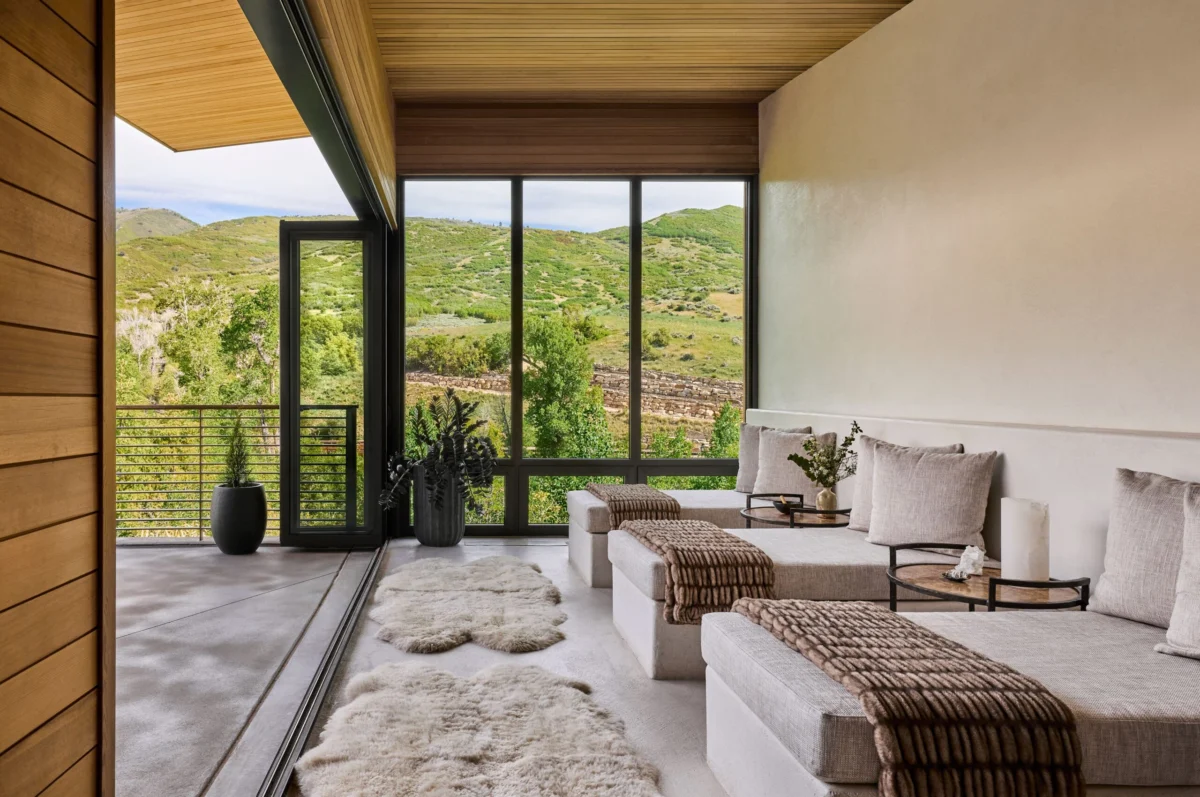
In the high-altitude silence of the Wasatch Range, just outside Park City, Utah, forty strangers gathered with a singular objective: to trade the noise of modern life for a deeper, more intentional sense of connection. The setting was The Lodge at Blue Sky, a flagship property of the Auberge Resorts Collection, where 4,000 acres of rugged, untamed wilderness serve as the backdrop for a new evolution in the luxury wellness travel industry.
For many, the draw was the weekend’s featured guest: spiritual guide and self-help luminary Gabby Bernstein. However, for those who attended, the true transformation occurred not in the scheduled workshops, but in the quiet, unscripted moments—the shared vulnerability in a Shoshone sweat lodge and the solitary reflection found on private, fire-lit porches.
The Genesis of a New Wellness Paradigm
The wellness retreat industry has shifted dramatically in recent years. Where once travelers sought standardized yoga sessions and calorie-restricted menus, the modern wellness seeker demands authenticity, emotional resonance, and a connection to the local landscape.

Auberge Resorts Collection has tapped into this cultural shift through its "Fundamentals Cultivating Joy" initiative. According to Vivianne Garcia-Tunon, Auberge’s VP of Wellbeing, the brand’s philosophy is built upon four non-negotiable pillars: awe, connect, excel, and nurture.
"The goal is not to fill a calendar," Garcia-Tunon explains. "It is to create a container where guests can be present. We want to facilitate moments that force you to pause—whether that’s through the sheer scale of the Utah mountains or the intimacy of a guided conversation."
The Lodge at Blue Sky embodies this ethos. With its sophisticated, earth-toned architecture—incorporating natural stone, reclaimed wood, and vast glass vistas—the property acts as a natural extension of the landscape. It is designed to facilitate a "slow-down" effect, a luxury that is increasingly rare for the high-achieving, hyper-connected demographic that typically frequents these retreats.

A Chronology of Connection
The retreat followed a rhythm that prioritized internal exploration over rigid productivity.
Day 1: Arrival and Orientation
Participants arrived at the sprawling estate, transitioning from the frantic energy of city life to the expansive silence of the Wanship mountains. The initial orientation set a tone of radical honesty. Rather than a traditional lecture, Gabby Bernstein opened the floor, establishing the space as a sanctuary for truth.
Day 2: The Deep Dive
The heart of the retreat took place in "The Arena," a massive indoor space once used for equestrian training. Over two hours each day, the group engaged in workshops that moved beyond surface-level self-help. Through guided meditation, journaling, and group sharing, the barrier between "stranger" and "peer" began to dissolve.

Day 3: The Integration
The final day focused on bringing the lessons of the workshops into the natural environment. While some participants opted for structured hikes or sessions with the resort’s rescue horses, others utilized the Edge Spa to process the emotional release experienced during the group sessions. The retreat culminated in a profound experience within a traditional Shoshone sweat lodge, led by Chief Darren Parry.
Supporting Data: The Rise of Transformative Travel
The success of this retreat is not an anomaly; it reflects a broader trend in the hospitality sector. According to industry reports on travel behavior for 2026, there is a marked increase in demand for "transformative travel"—trips that prioritize emotional growth and mental health over traditional sightseeing.
- Market Growth: The global wellness tourism market is projected to reach unprecedented heights as high-net-worth travelers seek retreats that offer mental health benefits alongside physical luxury.
- The "Awe" Factor: Psychological studies have repeatedly shown that exposure to expansive, natural landscapes—such as the 4,000-acre Blue Sky preserve—induces a state of "awe," which lowers cortisol levels and increases feelings of empathy and connectedness to others.
- The Power of Peer Vulnerability: Group dynamics in a curated, safe setting significantly accelerate emotional breakthroughs. By removing the digital tether, participants are forced to process their own internal narratives, leading to higher rates of reported satisfaction and long-term behavioral change.
Expert Perspectives: The Role of the "Guide"
The presence of a facilitator like Gabby Bernstein is central to the efficacy of such retreats. Her role is not merely that of a lecturer, but of a catalyst. By holding space for difficult conversations, the guide enables participants to bypass their usual social defenses.

"When you bring together people from diverse professions—financiers, designers, small business owners—there is a common denominator," says one attendee. "We were all looking for something we couldn’t find in our day-to-day lives. Gabby didn’t give us the answers; she gave us the permission to stop hiding from our own questions."
The integration of local cultural figures, such as Chief Darren Parry, adds a layer of depth that distinguishes this from a typical "corporate" wellness event. By engaging with the history of the Shoshone land, participants were grounded in a sense of place that extended beyond the resort’s luxury amenities.
Implications for the Luxury Traveler
The success of the Blue Sky retreat highlights a critical evolution in luxury: the shift from "passive consumption" to "active participation."

For the modern traveler, a high-thread-count sheet is no longer enough to justify a luxury price point. Guests are now looking for "return on experience." They want to leave a property feeling fundamentally different than when they arrived.
The Future of "The Fundamentals"
The Auberge "Fundamentals Cultivating Joy" program is clearly an attempt to codify this experience. By selecting locations that are geographically and spiritually unique, and pairing them with high-caliber facilitators, the brand is positioning itself at the forefront of the mental-health-as-luxury movement.
However, the risk remains in the execution. If a retreat becomes too scripted, it loses the very vulnerability that makes it transformative. The success at Blue Sky suggests that the key lies in the liminal space—the time between workshops, the quiet reading on a porch, and the willingness to leave the itinerary open-ended.

Conclusion: "Getting Covered"
Perhaps the most telling moment of the weekend came during the final workshop. When the author of this experience remarked on their initial skepticism—their "left-brained" resistance to the "woo-woo" nature of spiritual retreats—Bernstein offered a simple reflection: "You came to cover this. Instead, you got covered."
To be "covered" in this context is to be enveloped by the experience, to surrender the need for control, and to allow the environment—the purple mountains, the starry sky, the communal tears of the sweat lodge—to do the work.
As the wellness industry continues to mature, properties like The Lodge at Blue Sky are proving that the most profound luxury is not found in the spa or the suite, but in the rare, courageous act of being truly, vulnerably present with others. For the forty attendees who left Wanship, the takeaway was clear: wellness is not a destination to reach, but a state of openness to be cultivated. Whether it is through the silence of a mountain morning or the shared words of a stranger, the path to joy often begins when we stop trying to direct the journey and start allowing ourselves to be part of the landscape.
 Basiran
 Nana
Nana
 Nana Muazin
