

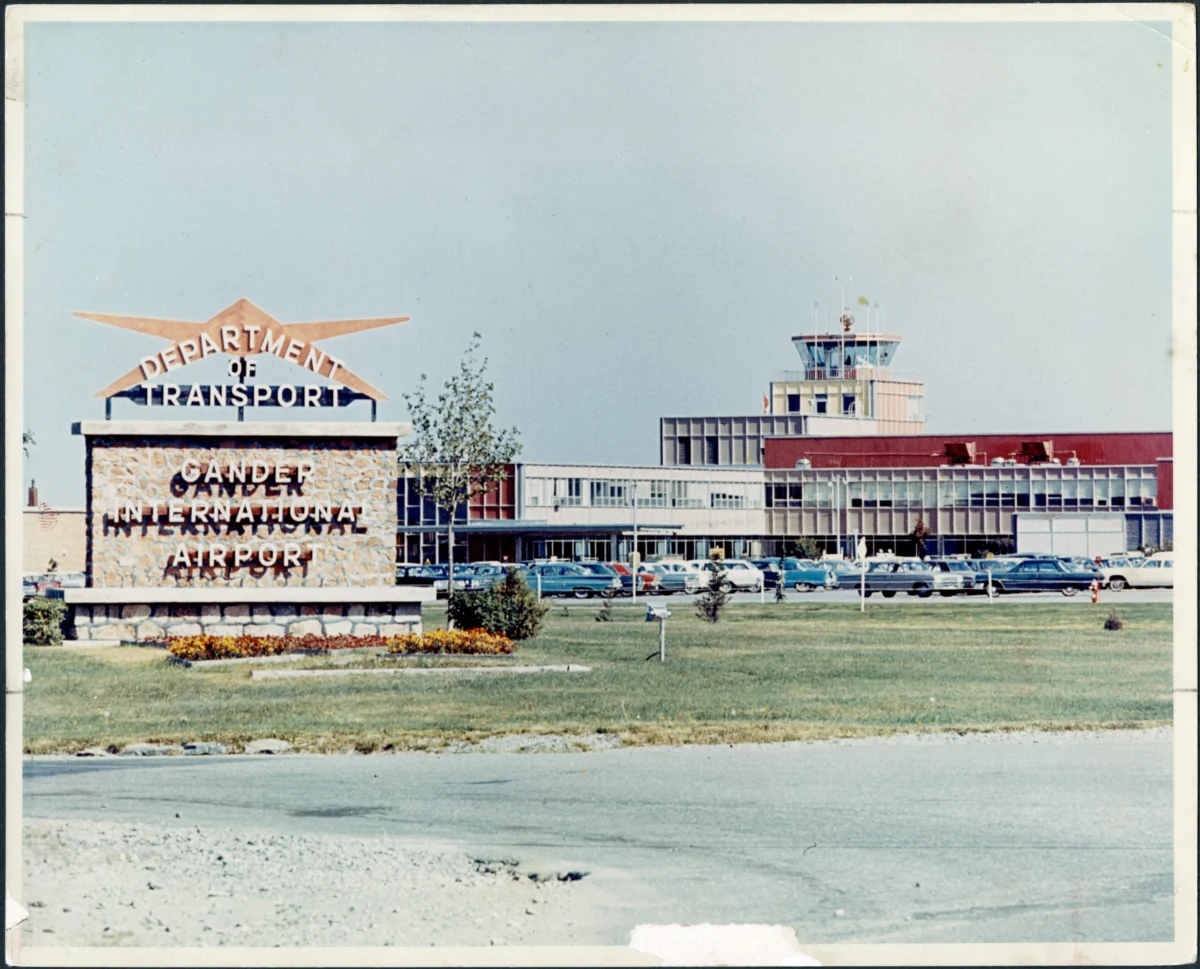
For the residents of Gander, Newfoundland, the roar of a jet engine is not merely noise—it is the heartbeat of their town. Nestled in the remote, rugged landscape of the North Atlantic, this small community of 10,000 has spent nearly a century serving as an indispensable waypoint for the global aviation industry. From its origins as a vital refueling stop in the dawn of trans-Atlantic flight to its modern-day role as a beacon of humanitarianism and architectural heritage, Gander remains a place where the world stops, if only for a moment, to catch its breath.
A Legacy Written in the Clouds
The story of Gander begins in the late 1930s, a mere three decades after the Wright brothers first conquered the skies at Kitty Hawk. As the world turned its eyes toward long-haul aviation, geography favored this corner of Newfoundland. Situated on the Great Circle Route, Gander sits 930 miles closer to Europe than any other point in North America. When early aircraft lacked the fuel capacity for non-stop trans-Atlantic crossings, Gander became the essential staging point for refueling, maintenance, and emergency landings.
The first aircraft touched down on a snow-packed runway in 1938, marking the birth of an airfield that would soon become the most strategically significant airport in the world. By 1940, it had earned the title of the world’s largest airport, acting as the primary maintenance and transit hub for Allied aircraft during the Second World War. Even as the war ended, Gander’s role evolved; it became a mandatory stop for commercial flights linking Europe, the Soviet Union, and North America.

The 9/11 Turning Point: A Haven for the Stranded
While Gander’s aviation roots are deep, its reputation as a global symbol of kindness was solidified on September 11, 2001. When the Federal Aviation Administration closed American airspace following the terrorist attacks, the North Atlantic suddenly became a sea of displaced aircraft.
Thirty-eight commercial flights were diverted to Gander International Airport, forcing the town to absorb nearly 7,000 passengers and crew—an influx equivalent to 70 percent of the town’s total population. Brian Mosher, a local resident and television reporter at the time, recalls the frantic, exhausting days that followed.
"There were 7,000 different reasons why people had to get home," Mosher says. "We were their shoulders to cry on."

The "come from aways"—the local Newfoundland term for visitors—were met with an outpouring of compassion that defied logic. Residents opened their homes, schools, and churches to strangers. Local volunteer networks established massive buffet tables, providing sustenance and comfort to those who were suddenly stranded in a state of shock. What was initially expected to be a brief refueling delay stretched into five days of community bonding, an event that would eventually be immortalized in the hit Broadway musical Come From Away.
The Modernist Time Capsule: A Design Icon
Beyond its human story, Gander holds a treasure for architectural historians. In June 1959, Queen Elizabeth II inaugurated a new International Departures Terminal that served as a masterpiece of Canadian Modernism. The building was designed to be the "first face of Canada" for international travelers, featuring a sophisticated aesthetic that blended art with functionality.
The terminal remains a time capsule, preserved with its original salmon, slate, and jade terrazzo flooring. It is furnished with iconic pieces by legends such as Charles and Ray Eames and Arne Jacobsen. The centerpiece of the terminal is the 72-foot mural Flight and Its Allegories by Kenneth Lochhead. The mural depicts a vibrant, hopeful world of aviation, featuring stylized birds that predate the Concorde by more than a decade—a testament to the optimism of the Jet Age.

Todd Saunders, the celebrated architect behind the Fogo Island Inn, recalls how the terminal shaped his early understanding of design. "The Canadian government invested in architecture because this was the first face of Canada, and that first impression was really important," Saunders notes. For him, the terminal was a cosmopolitan bridge, a place where he could ride his BMX bike to the tarmac to see global icons like Mick Jagger or members of the Rolling Stones, who often touched down for fuel.
A Chronology of Influence
- 1938: The first aircraft lands on a snow-packed runway, establishing Gander as a critical refueling site.
- 1940: Gander is officially recognized as the world’s largest airport, serving as a pivotal hub for the Allied war effort.
- 1959: Queen Elizabeth II opens the iconic International Departures Terminal, marking a new era of architectural and cultural prominence.
- 1976: A period of global curiosity, where figures like Fidel Castro are spotted enjoying the local snow.
- 2001: September 11 brings 38 flights and 7,000 passengers to Gander, cementing the town’s reputation for radical hospitality.
- 2022: The historic 1959 terminal is officially reopened as a museum, preserving its legacy for future generations.
Supporting Data and Economic Impact
While the Jet Age eventually rendered refueling stops obsolete—allowing planes to bypass Gander entirely—the airport has refused to fade into obscurity. Today, it operates as a vital economic engine for the region. According to Reg Wright, President and CEO of Gander International Airport, a recent economic impact study revealed that one in five jobs in the town is directly or indirectly associated with the airport.
The airport’s evolution into a museum space has also become a cultural draw. Visitors now travel specifically to view the archives of the "unusual"—from the ping-pong balls destined for Moscow to the live alligators that once passed through its cargo bays. These artifacts offer a whimsical, tangible look at a time when Gander was the true "crossroads of the world."

Official Perspectives: The Spirit of Gander
The local sentiment toward the airport is best summarized by the pride of its residents. Janet Langdon, a local textile artist, describes the airport as a window to the world that once brought international culture directly to her doorstep. "I was making my own clothes at the time, and through my young eyes, it was super exciting to see worldly fashions," she says, recalling her experiences as a teenager hitchhiking to the airport to catch glimpses of global travelers.
Reg Wright, leading the charge to keep the airport’s spirit alive, believes that Gander’s future is as bright as its past. "It’s nice to see Gander and its guests gather in the lounge again," Wright remarks. His often-quoted sentiment—that the people of Gander have "jet fuel in their veins"—is more than just a slogan; it is a declaration of the town’s enduring identity.
Implications for the Future
The preservation of the Gander International Airport terminal is an example of how communities can repurpose history to sustain local economies. By transforming a defunct transit space into a museum, gastropub, and cultural center, the town of Gander has ensured that its architectural and humanitarian contributions remain part of the public consciousness.

The airport is no longer just a place of transit; it is a place of pilgrimage for aviation enthusiasts, history buffs, and those inspired by the story of 9/11. As global travel continues to evolve, Gander stands as a reminder that even the most "remote" places can hold the center of the world’s attention. Should the skies ever grow turbulent again, the community and the airport stand ready, just as they did twenty-five years ago, with open doors and a shared, unwavering commitment to the stranger in need.
Gander is proof that while aviation is about the speed of travel, it is the human connections made on the ground that truly define the journey. Whether through the lens of a historical museum or the warm welcome of its residents, Gander remains a testament to the fact that some places are simply meant to be the heart of the journey, not just a stop along the way.
 Asro
Asro
 Siti Muinah
