

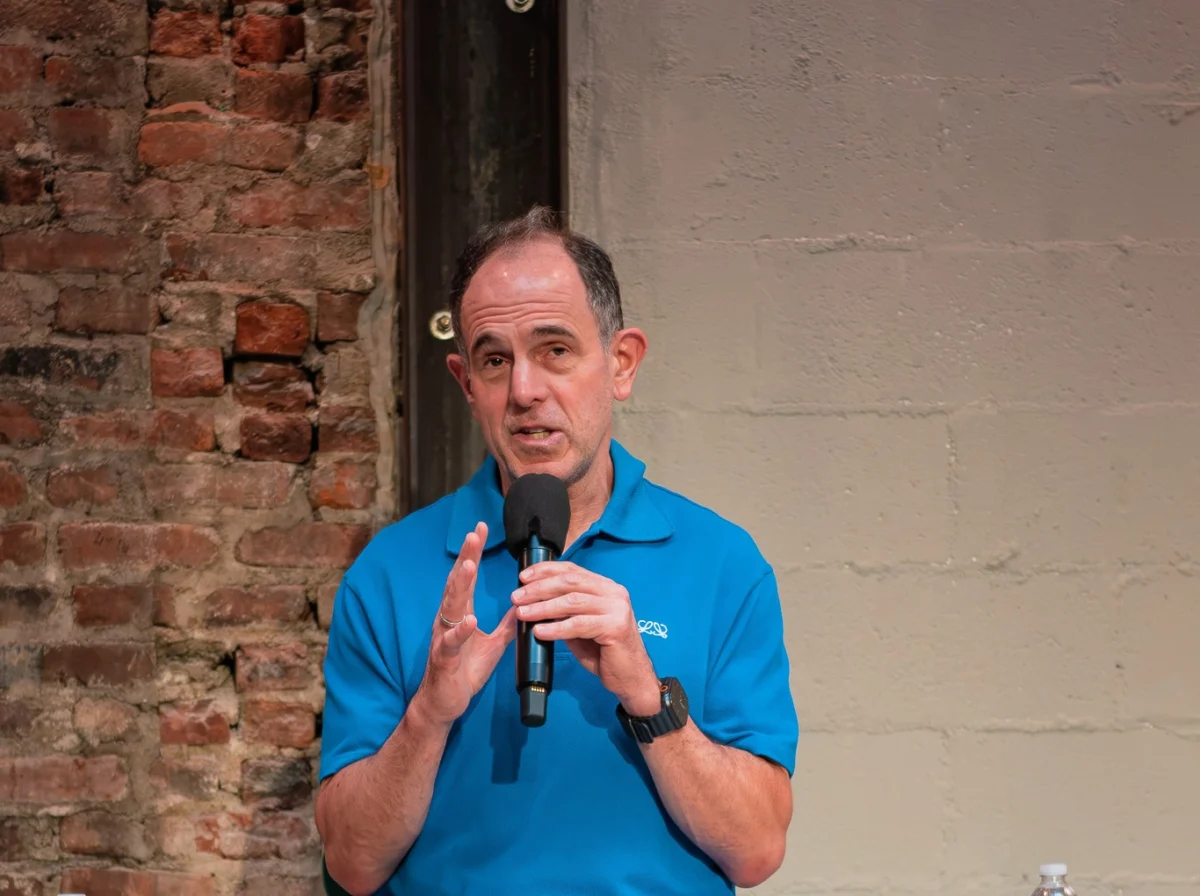
NEW YORK — For the entirety of its 13-year venture capital existence, Keith Rabois’s professional trajectory has remained firmly anchored to the legendary, sun-drenched corridors of Khosla Ventures’ Menlo Park headquarters. Nestled in the heart of Silicon Valley, the firm’s California home has long been synonymous with the birth of modern tech giants. But tectonic shifts in the venture capital landscape demand new geographies.
Speaking before a packed crowd on a Thursday evening at TechCrunch’s StrictlyVC event in the heart of New York’s West Village, Rabois officially confirmed what industry insiders had whispered for months: Khosla Ventures is shattering decades of tradition to open its very first office outside of Sand Hill Road.
The new East Coast outpost will be situated on 14th Street in Manhattan and is slated to open its doors this fall—though Rabois, displaying the world-weary cynicism of anyone who has ever managed a commercial real estate buildout, added a touch of cautious skepticism to the timeline.
“It’s actually allegedly being built out now,” Rabois joked to the audience. “We’ll see. This fall opening date is very vague in my mind.”
This landmark geographic expansion underscores a rapidly evolving paradigm in the technology and venture capital sectors. For a firm as steeped in Silicon Valley lore as Khosla Ventures, leaving the Bay Area cradle is no minor adjustment; it is a profound philosophical and operational pivot.
Main Facts: The Anatomy of Khosla’s Manhattan Expansion
The decision to plant a flag in New York City represents a calculated, multi-faceted strategy rather than a mere satellite desk for remote partners.
- The Location: A brand-new office space on 14th Street in Manhattan, scheduled (tentatively) for an autumn debut.
- The Leadership: The office will house a dedicated roster of Khosla investors, including Rabois himself, who relocated to the East Coast earlier this year.
- The "Executive Briefing Center": Unlike traditional venture capital offices designed solely for internal meetings and pitch sessions, Khosla’s New York hub features a unique collaborative engine. Four days a week, the firm will cycle groups of 10 to 12 portfolio companies through the space to pitch, network, and secure lucrative contracts with Fortune 500 executives.
- The Catalyst: The expansion follows Rabois’s personal relocation to the Washington, D.C., area to be closer to his family, coupled with a broader macroeconomic migration of tech talent, capital, and artificial intelligence development toward the Eastern Seaboard.
“We don’t even have an SF office, so this is a very big step for us,” Rabois emphasized during the live interview.
Chronology of a Shift: From Silicon Valley Monolith to Bi-Coastal Player
To understand the weight of Khosla Ventures’ Manhattan expansion, one must trace the timeline of both the firm’s historical insularity and Rabois’s recent personal and professional realignment.
The Sand Hill Road Era (2011–2023)
For over a decade, Khosla Ventures remained intensely focused on its Northern California roots. While other elite venture firms—such as Sequoia Capital and Andreessen Horowitz—established small, localized footprints in major financial and cultural hubs like New York, Khosla largely bucked the trend. The firm built its reputation on backing disruptive early-stage technologies—ranging from clean energy to artificial intelligence—strictly operating out of the classic Bay Area ecosystem. Even as San Francisco experienced its own localized tech booms and busts, Khosla maintained its primary allegiance to Menlo Park.
Rabois’s East Coast Transition (Early 2024)
The catalyst for this institutional pivot began with a personal transition. Months prior to the official office announcement, Keith Rabois relocated his life to the East Coast. The move was prompted by family ties: his husband, Jacob Helberg, serves as the Under Secretary of State for Economic Growth, Energy, and the Environment, keeping the family anchored in the Washington, D.C., and broader Mid-Atlantic sphere.
Rather than stepping back from his venture responsibilities, Rabois began splitting his time and casting a critical eye toward the intellectual and entrepreneurial vitality of the Eastern Seaboard.
The Manhattan Real Estate Play (Fall 2024 and Beyond)
By mid-year, scouting reports solidified into concrete action. Securing real estate on 14th Street marked the physical manifestation of Rabois’s bi-coastal lifestyle. Set to open in the coming months, the office is engineered to serve as an east-west bridge, connecting disruptive venture-backed startups with the legacy corporate powerhouses of the tri-state area.
Supporting Data: The Talent Equation and New York’s Ascent
Rabois’s migration to the East Coast naturally invites a fundamental question for any veteran tech investor: Does New York possess the dense, highly specialized talent pool required to scale world-class technology companies, a resource he spent decades mining in the Bay Area?
According to Rabois, the answer depends entirely on the seniority of the talent in question.
The Junior Talent Boom
At the entry level, Rabois is entirely unequivocal. When evaluating individual contributors straight out of college, New York matches—and in some cases exceeds—traditional expectations.
He pointed to Ramp, the explosive fintech titan he has backed repeatedly, as empirical proof. “Individual contributor level, right out of school, absolutely,” Rabois stated. “We’ve been tapping into right-out-of-school graduates and been able to create a critical density of talent from the intern class [onward] that is extraordinary.”
The Senior Engineering Bottleneck
Conversely, scaling senior technical talent presents a formidable hurdle. Rabois noted that finding elite, architect-level senior engineers in New York remains a distinct challenge. However, he offered a pragmatic caveat for the modern era: thanks to modern software architectures and productivity tools, companies often require fewer senior engineers than they did historically.
The Executive Commute and Lifestyle Crisis
The single greatest pain point for New York-based startups, according to Rabois, is not technical talent, but proven senior executive leadership. Ironically, this limitation stems less from a lack of qualified executives living in the region and more from strict geography, lifestyle realities, and corporate culture demands.
Drawing on his own childhood growing up in a New York commuter suburb—where an express train could whisk workers into the city in 32 minutes—Rabois noted that today’s senior leaders often live far beyond those concentric rings.
“If you have an in-office culture, most of the more senior people that live and reside in the New York area live outside the city, and the commute in and out of the city for an office environment can be very painful,” Rabois explained.
For startups attempting to enforce a rigorous five-day-a-week in-office mandate, this dynamic creates a recruiting wall. “When you need to recruit proven executive talent, and you really believe in an in-office culture, [that has] been very challenging,” he said. Unless a senior executive is independently wealthy, raising a family directly in the heart of Manhattan is often financially prohibitive, while commuting from the outer suburbs into a strict five-day office environment is deeply unappealing.
Ramp, he noted, has navigated this structural challenge by consciously bypassing traditional senior executive hires. Instead, the company builds its leadership team from the ground up—a deliberate organizational strategy practiced over the last three years.
“That can work,” Rabois acknowledged. “But if you need a CFO, an SVP of sales, someone who’s got a lot of gravitas and experience, it’s really hard to have them in the office five days a week.”
Industry Implications: A Seismic Shift in Tech Geography
Khosla Ventures’ Manhattan expansion arrives at a fascinating historical juncture for American technology hubs.
For decades, the undisputed narrative dictated that foundational software, hardware, and venture capital innovation lived exclusively in Northern California, while New York remained the domain of finance, media, and advertising. Today, those boundaries are blurring beyond recognition.
Joining a Select Club
While Khosla’s move is massive for the firm itself, it also elevates its status within a select group of elite Bay Area venture funds. Industry giants like Sequoia Capital and Andreessen Horowitz have maintained physical outposts in New York for years, though their operations there have traditionally functioned as modest extensions of their core West Coast empires. Khosla’s new office—anchored by an active executive briefing center—signals a much more aggressive, operational footprint.
The CBRE Data Drop: New York Takes the Crown
The timing of Khosla’s announcement dovetails cleanly with hard economic data released last month by commercial real estate services firm CBRE. According to the report, New York has narrowly overtaken the San Francisco Bay Area in total tech talent headcount for the first time in the 13 years CBRE has tracked the metric.
This historic flip has been largely fueled by traditional Wall Street and Manhattan-based financial institutions aggressively poaching and hiring artificial intelligence talent, even as West Coast technology companies underwent extensive post-pandemic workforce contractions and layoffs.
Cultural Skepticism Persists
Despite hard data and institutional moves from heavyweights like Keith Rabois, old habits—and old rivalries—die hard.
Inside the packed room at Thursday night’s StrictlyVC event, the audience response to the CBRE findings proved that local skepticism remains alive and well. When reminded of the study showing New York’s newly minted tech talent supremacy, one prominent event attendee muttered bluntly:
“I heard about that study. I don’t buy it.”
Whether traditionalists choose to believe the data or not, the physical reality on 14th Street tells a different story. As Khosla Ventures prepares to open its doors this fall, bringing its portfolio companies face-to-face with Fortune 500 decision-makers four days a week, the center of gravity in American venture capital is indisputably stretching eastward. Silicon Valley may still be the spiritual home of tech innovation, but Manhattan is quickly becoming its most vital operational frontier.
 rifanmuazin
 Nana Muazin
