

By Global Tech & Business Correspondent
Published: September 2026
Main Facts
The artificial intelligence landscape is facing a profound philosophical and geopolitical rift over a core machine-learning practice known as “model distillation.” While prominent frontier AI developers—such as Anthropic and OpenAI—are sounding alarms about the extraction of their proprietary capabilities, a dissenting voice of massive influence has emerged from the heart of Silicon Valley.
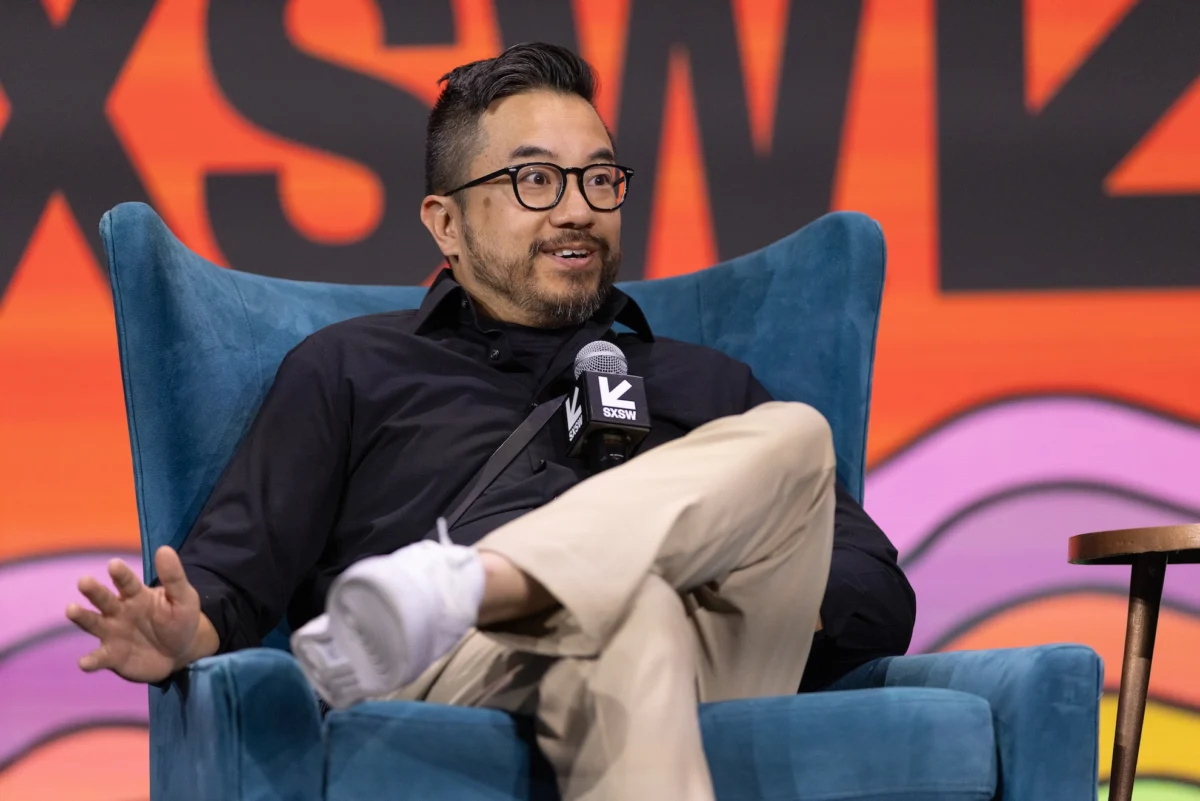
Garry Tan, the outspoken CEO of the elite startup accelerator Y Combinator, is openly pushing back against calls to regulate or criminalize AI distillation. Distillation involves querying a more advanced "frontier" model extensively to train or refine a smaller, more efficient model, allowing the recipient model to inherit advanced reasoning patterns.
While companies like Anthropic have published threat intelligence reports alleging that foreign entities—specifically Chinese labs—are deploying illicit tactics, stolen credentials, and masked identities to execute these extractions, Tan’s perspective is radically different. Rather than calling for regulatory crackdowns or protective moats around proprietary models, Tan suggests that U.S. regulators should practice a policy of benign neglect: “I would do nothing.”
Going a step further, Tan argues that American open-weight AI labs should adopt the same methodology domestically. He contends that knowledge derived from models trained on the collective corpus of human data should serve as a broader public utility rather than being indefinitely locked behind restrictive corporate terms of service. This clash has ignited a high-stakes debate over intellectual property, national security, industry competition, and the ultimate architectural future of artificial intelligence.
Chronology of the Conflict
Early 2026: The Rise of Advanced Open-Weight Alternatives
As smaller open-weight models began catching up to the performance benchmarks of closed, proprietary frontier models, industry leaders noticed a dramatic acceleration in training efficiency. Smaller labs realized they could bypass years of expensive, foundational data-scraping and training cycles by systematically prompting top-tier models and learning from their outputs.
March 2026: Cultural Integration and "Cyber Psychosis"
Garry Tan cemented his status as one of Silicon Valley’s most aggressive tech evangelists, famously describing his heavy integration of tools like Claude Code as bordering on "cyber psychosis." His deep immersion in daily AI workflows informed his belief in frictionless, open access to technological intelligence.
July 2026: Legal Precedents on Copyright
The foundational tension of AI training received a massive legal landmark when a monumental $1.5 billion copyright settlement involving Anthropic was formally approved. The settlement underscored an uncomfortable truth that Tan and other critics frequently highlight: frontier labs built their multi-billion-dollar empires by vacuuming up massive quantities of copyrighted human knowledge without the explicit permission or compensation of original intellectual property holders.
September 11, 2026: CNBC Interview and the "Doomer" Warning
In an interview with CNBC, Tan formally articulated his stance on regulatory intervention in distillation. He argued against protective government barriers, suggesting instead that an "American distillation regime" could empower local open-weight developers to keep pace with hyper-capitalized monopolies. He warned that the ultimate "doomer scenario" for artificial intelligence is not unauthorized distillation, but rather the consolidation of all planetary intelligence into a single, monolithic corporate entity.
Mid-September 2026: Anthropic’s Threat Intelligence Report
Simultaneously, Anthropic released its second comprehensive threat intelligence report detailing what it categorized as "illicit distillation attacks." The report outlined sophisticated efforts by Chinese labs to bypass security filters, hide their digital footprints, and use fraudulent credentials to harvest capabilities from American frontier models. Anthropic CEO Dario Amodei publicly doubled down on his calls for Washington to implement strict legal and technical controls against the practice.
Supporting Data & Technical Mechanics
To understand the core of the debate, one must understand what model distillation actually is. In machine learning, distillation is a standard, legitimate engineering technique. It bridges the gap between massive, resource-intensive models (such as GPT-4 class or Claude 3/4 tier models) and smaller, highly efficient open-weight models that can run locally on consumer hardware or corporate servers.
- The Process: A developer prompts a larger teacher model with thousands or millions of diverse scenarios, capturing not just the final answers, but the underlying token probabilities and reasoning paths. This data is then used to train a student model.
- The Economic Disparity: Training a frontier model from scratch costs hundreds of millions, if not billions, of dollars in compute power (GPUs), energy, and data acquisition. Distillation allows secondary players to achieve 80% to 90% of that performance for a fraction of a percent of the original cost.
- The Security Dimension: According to reports from Anthropic, malicious actors often circumvent commercial Terms of Service (ToS) by rotating IP addresses, utilizing stolen credit cards, and deploying automated scripts designed to mimic standard consumer queries. This allows them to systematically harvest structured reasoning outputs without triggering standard rate limits or abuse detection systems.
Official Responses and Stakeholder Positions
The tech ecosystem is currently fractured into two distinct ideological camps: the proprietary gatekeepers and the open-ecosystem advocates.
The Frontier Labs (Anthropic, OpenAI, and Allies)
The leadership of proprietary AI labs views unauthorized distillation not merely as a contract violation, but as a direct threat to national security and commercial viability.
- Dario Amodei’s Stance: The Anthropic CEO has been vocal in urging U.S. regulators to establish guardrails that treat large-scale, deceptive model extraction as intellectual property theft or illicit data export.
- The Security Argument: Proponents of this view argue that if foreign adversaries or competing domestic entities can effortlessly siphon off cutting-edge reasoning capabilities without bearing the R&D costs, the financial incentive for private American companies to invest billions into the next generation of frontier research will evaporate.
The Open-Ecosystem Advocates (Garry Tan and Y Combinator)
Garry Tan represents the libertarian, pro-access wing of Silicon Valley, which fears corporate consolidation above all else.
- The Double Standard of IP: Tan points out the deep hypocrisy of proprietary labs crying foul over distillation when their own existence is predicated on ingesting vast libraries of human-generated, copyrighted material without permission.
- The Anti-Monopoly Stance: Tan argues that allowing users and customers to do whatever they wish with API calls to closed-weight models protects the broader market. In his view, treating intelligence derived from public data as a restricted commodity invites totalitarian corporate control over human thought and progress.
Implications for the Future of Artificial Intelligence
The outcome of the distillation debate will shape the trajectory of artificial intelligence for decades. Several critical implications hang in the balance:
1. The Market Structure: Monoliths vs. Ecosystems
If regulators side with Anthropic and enact strict anti-distillation laws, the barrier to entry in artificial intelligence will skyrocket. This could result in a winner-take-all market where only two or three trillion-dollar conglomerates control the world’s premier intelligence models. Conversely, if Tan’s vision prevails—or if enforcement proves logistically impossible—a vibrant, competitive ecosystem of smaller, fine-tuned open-weight models will democratize access, driving down costs and accelerating global adoption.
2. Geopolitical Tech Competitiveness
The argument is heavily laced with geopolitical anxiety. While U.S. policymakers are eager to prevent strategic capabilities from leaking to geopolitical rivals like China, restrictionists face a paradox. If American open-weight labs are legally barred from distilling or optimizing based on domestic frontier models, they may fall permanently behind both domestic monopolies and unfettered foreign competitors. An "American distillation regime," as Tan calls it, could theoretically ensure that domestic open-source developers remain globally competitive.
3. The Redefinition of Digital Property Rights
Ultimately, this dispute forces a legal and philosophical reckoning over what constitutes "property" in the age of AI. Are the reasoning patterns emitted by an LLM in response to an API prompt the exclusive property of the creator, or do they become public domain knowledge the moment they are communicated to a user? As courts and legislators wrestle with these questions, the stance of influential figures like Garry Tan ensures that the push toward open, decentralized access will remain a powerful, disruptive force against corporate enclosure.
 Asep Darmawan
 Siti Muinah
 Ali Ikhwan
