

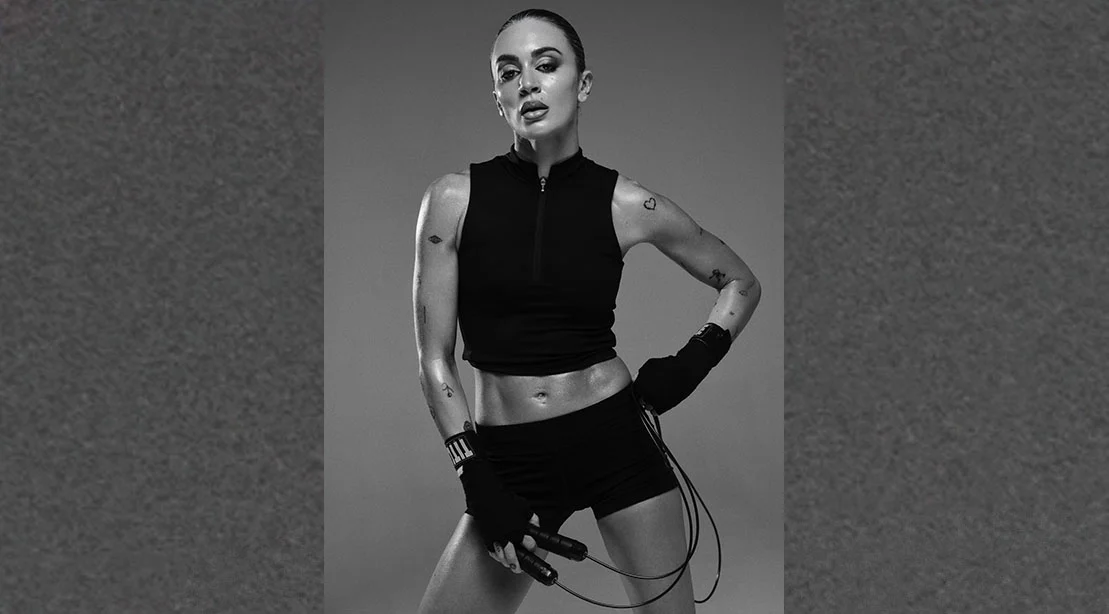
At first glance, Christina Kirkman’s social media presence mirrors the polished, aspirational aesthetic of the modern digital creator. Her feed is a mosaic of high-intensity boxing sessions, globetrotting adventures, impeccably styled outfits, and an undeniable physical prowess. To the casual observer, it is easy to assume she has "figured it out"—that her life is a seamless curation of success and strength.
However, a deeper conversation with Kirkman reveals that what she presents online is not a performance. In a rare departure from the typical "fitness influencer" narrative, Kirkman is shedding the curated veneer to discuss the arduous, non-linear journey of reclaiming her identity after a childhood spent in the public eye. For Kirkman, fitness is not about vanity or macros; it is a vital tool for emotional regulation and a testament to the hard-won independence she has built in her 30s.
The Chronology of a Public Childhood
Kirkman’s relationship with visibility began early. As a child star on Nickelodeon, she was thrust into the public consciousness at an age when most are still learning the boundaries of their own personalities. This early exposure created a unique psychological challenge: when the cameras stopped rolling and the contracts ended, she was forced to reconcile the public version of "Christina" with the private reality of growing up.
"I think I maybe had to come to terms with identity, self-love, and confidence earlier than most people," Kirkman explains. "There is no handbook for how to deal with this stuff when you’re 10 years old. I started to think that being entertaining and taking up space no longer felt safe, and I turned into a bit of a shell of a person for many years."
Following her time in the spotlight, Kirkman underwent a period of self-imposed isolation and reflection. She moved across the country, cycled through various social circles, and spent years attempting to disentangle her self-worth from external validation. It was only through this solitude that she realized her love for entertaining was an intrinsic part of her character, not just a job description. This realization—that she could perform, engage, and connect on her own terms—marked the beginning of her modern era.
The Physics of Presence: Boxing as an Anchor
While Kirkman has an extensive background in athletics—ranging from competitive gymnastics to track, hockey, and cheerleading—it was boxing that provided the mental stability she had been chasing for years.
"I never wanted my workout to feel like a chore," she says. "I’ve always loved activities that were fun first, and the benefit was staying mentally sharp and physically strong."
For a self-described "overthinker" whose mind runs 24/7, boxing offered a rare, forced meditative state. Unlike other forms of exercise where one might mentally draft a to-do list, the boxing ring demands absolute presence. "When I show up to that class, I am not thinking about anything else other than not getting hit in the face," she notes.
This, she admits, was a life-saving pivot. She began training during a period of her life defined by a toxic relationship and low self-esteem. Boxing became her sanctuary, a place where she could physically and metaphorically fight for her own independence.
Sparring: The High-Stakes Chess Match
In her 30s, Kirkman has elevated her training to include sparring, a notoriously intimidating discipline that requires a high degree of vulnerability. She describes the sport as "high-stakes chess," where every move on the heavy bag or mitts is a preparation for the real-time, unpredictable nature of a sparring partner.
"I’m 33, and I just started sparring. That’s such an intimidating thing to start doing as a woman, knowing you can get a black eye or knock a tooth out," she says. "But every partner reveals something different about my own strengths and weaknesses. I’m very fast and nimble—thanks to my gymnastics background—but the only way I’m getting better is by seeking out people who expose the gaps in my game."
This willingness to be humbled is perhaps the most significant indicator of her growth. By choosing to step into the ring, she is actively choosing to confront her own limitations rather than hiding behind a facade of perfection.
The Science of Recovery and Emotional Regulation
Perhaps the most striking aspect of Kirkman’s philosophy is her refusal to separate physical health from emotional health. She has become candid about the physiological cost of stress, citing personal experiences with chronic hives and high histamine levels as physical manifestations of mental turmoil.
"I didn’t realize how detrimental stress was until later. I think stress is the most harmful thing for your body, above all the other foods and whatever it may be," she warns. "If you don’t learn how to regulate your stress or your emotions, that takes a much bigger toll on you than anything else."
To combat this, she has adopted a holistic approach to recovery. While she utilizes specific supplements—citing NAD for its impact on her energy levels and bounce-back time—her foundation is built on the basics: consistent movement, adequate rest, and proximity to nature. Her ritual of heading to the ocean whenever she feels "sore, sick, or depressed" highlights her commitment to grounding herself in the natural world.
The Legacy of Discipline: Lessons from Her Mother
Kirkman’s intense drive can be traced back to her mother, a woman who raised her while working and attending school full-time. "What a badass she was," Kirkman reflects. "Seeing that as a young girl definitely instilled the importance of independence."
Her mother’s strict, "no-nonsense" approach to life—which included home-cooked meals and constant physical activity—provided the framework for Kirkman’s own discipline. Even today, her mother remains a source of inspiration, balancing her own gym routine with the demands of life, reinforcing that fitness is not a phase, but a lifelong commitment to one’s self.
Implications for the Fitness Industry
As Kirkman continues to navigate her career, she is redefining what it means to be a "fitness influencer." By rejecting the idea that confidence is a "finish line" or a "level unlocked in a video game," she is challenging the industry’s status quo.
"Confidence has a really bad PR team," she says. "It’s not something you obtain, and then you’re all good. Real confidence is being able to look in the mirror and say, ‘I feel like a piece of shit today,’ and still going on with your life."
This message carries significant weight in an era of digital perfection. By normalizing the "imperfect day," Kirkman provides a template for her audience that prioritizes endurance over aesthetics. Her philosophy suggests that the ultimate goal of fitness is not to build a body that looks a certain way, but to build a mind that can handle the unpredictability of being human.
Conclusion: A New Standard of Authenticity
In this, one of her most vulnerable interviews to date, Christina Kirkman acknowledges that she is finally comfortable with the "unglamorous" work of wellness. She no longer chases the validation of others or the pressure to perform for an audience.
Instead, she has found peace in the work itself. Whether she is in the boxing ring, at the beach, or working with a therapist, her goal remains the same: to show up as her authentic self. For those looking at her feed and wondering what the "secret" is, the answer is far simpler than a specialized diet or a specific workout split. It is the work of showing up—even on the days when it feels impossible—and treating oneself with the grace that comes from knowing who you are.
"I’ve learned a lot about myself in this," she concludes. "I don’t want fitness to be another performance. I just want to feel strong, present, and alive." In a world of curated images, that commitment to reality is her most powerful strength.
 Nana
Nana
 Iffa Jayyana
 Reynand Wu
