

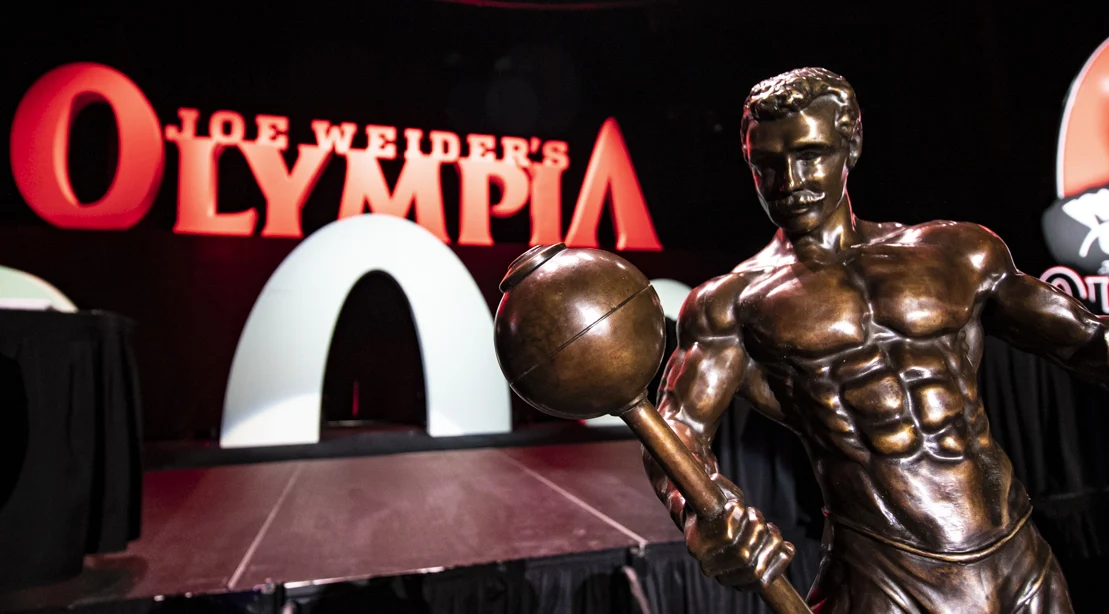
In the high-stakes world of professional bodybuilding, the road to the Mr. Olympia stage is paved with specific, non-negotiable requirements. For decades, the path has been marketed as a straightforward journey: win a professional qualifier show to secure your spot, or finish in the top three of the previous year’s Olympia to earn an automatic return ticket. For the sport’s legends, winning the Sandow trophy offers the ultimate prize: a lifetime qualification to compete at the sport’s pinnacle.
However, as the professional landscape has evolved and the concentration of former champions on the Olympia stage has increased, these seemingly "simple" rules have begun to intersect in ways that baffle fans and competitors alike. The 2025 Mr. Olympia results provided a perfect, albeit frustrating, case study in how these regulatory intersections create a "qualification void," leaving many in the community wondering if the current system is truly serving the athletes or merely creating administrative gridlock.
The Anatomy of the 2025 Olympia Conflict
To understand the confusion, one must look at the podium of the 2025 Mr. Olympia. Derek Lunsford claimed the victory, with Hadi Choopan taking second and Andrew Jacked rounding out the top three.
Under the IFBB Pro League’s current Olympia Qualification System, those three men—Lunsford, Choopan, and Jacked—should have walked away with automatic invitations to the 2026 event. Yet, the reality of the situation reveals a structural anomaly. Derek Lunsford, as a former Mr. Olympia champion, already held a lifetime pass to the big stage. Similarly, Hadi Choopan, who won the title in 2022, also possessed lifetime eligibility.
Because both Lunsford and Choopan were already "qualified for life," their top-three finishes at the 2025 event did not actually function as a mechanism to open up new slots for the rest of the field. This is the crux of the confusion: the rule states that the "top three qualify," not that "three qualification spots are generated."
The "No-Roll-Down" Policy
The most frequent question asked by observers is: "Why don’t the spots roll down to the fourth and fifth-place finishers?" If the first-place winner is already qualified, common logic suggests the benefit should cascade to the next man in line. However, the IFBB Pro League’s current policy is absolute: there is no roll-down.
If an athlete finishes in the top three, they satisfy the requirement. If they are already qualified via another means, the slot is effectively rendered redundant. Consequently, only Andrew Jacked, who had not yet secured his 2026 invitation, gained a "new" qualification spot from that specific top-three finish.
A Chronology of Confusion: From Champions to Contenders
To grasp how this issue reached a boiling point, we must track the progression of the top five finishers at the 2025 Olympia and their respective status:
- 1st Place (Derek Lunsford): Already qualified via lifetime champion status.
- 2nd Place (Hadi Choopan): Already qualified via lifetime champion status (though currently sidelined by visa complications).
- 3rd Place (Andrew Jacked): Secured a new, automatic qualification for 2026.
- 4th Place (Samson Dauda): Already qualified via his 2024 Mr. Olympia victory.
- 5th Place (Martin Fitzwater): Finished in a position that, in previous eras or different rule structures, might have been considered "on the bubble," but under current regulations, he left the stage with no automatic qualification, forcing him to compete in regional pro shows to earn his way back.
This sequence highlights the absurdity of the current setup. In this scenario, four of the top five men were either already qualified for life or were the sole beneficiaries of the "top-three" rule. The fifth-place athlete, despite performing at an elite level, found themselves in the same position as a newcomer who finished at the bottom of the rankings.
Supporting Data: Why the System Stays Rigid
Critics of the current system often call for a "roll-down" mechanism, arguing that it would reward the most consistent athletes and incentivize higher placements. However, industry insiders and league officials have long pointed to the inherent volatility of such a system.
If the IFBB Pro League were to implement a roll-down policy, the qualification landscape would become a chaotic, moving target. Consider the potential for a "cascading qualification":
- If the top three are already qualified, the spots would move to 4th, 5th, and 6th.
- If those individuals are also qualified, the eligibility would have to jump to 7th, 8th, and 9th.
- This would make it nearly impossible for athletes and promoters to know who is actually qualified until weeks after the event, complicating the scheduling of the following year’s regional shows.
By maintaining a "hard line" at the top three, the organization ensures that the qualification process remains predictable, even if it feels unfair to those sitting in the 4th or 5th spots. The rule is intended to be a filter, not a redistribution mechanism.
Official Stances and the "Olympia Champions" Factor
The IFBB Pro League has maintained that the status of "Mr. Olympia" is intended to be a permanent, elite designation. The lifetime qualification is a hallmark of this status, designed to ensure that the sport’s history remains visible on the stage.
However, the recent surge in the number of active former champions creates a logistical challenge. We are currently living in an era where multiple Sandow winners are competing simultaneously. When these men occupy the top spots, they effectively "block" the advancement of new talent under the current rule set.
While the league has occasionally adjusted rules to address competitive balance, they have remained steadfast on the "no-roll-down" policy. Their stance is rooted in the belief that the qualification process is a test of an athlete’s ability to win on any given weekend. If an athlete relies on a roll-down, the logic follows that they haven’t "proven" their worth as effectively as someone who wins a pro show outright.
Implications for the Future of Bodybuilding
The implications of these rules are significant, particularly for the sport’s rising stars.
1. The Pressure on Regional Shows
Because top-five finishers at the Olympia—other than the top three—now have no safety net, the pressure to perform at mid-season pro shows has intensified. Athletes like Martin Fitzwater are forced to continue dieting, training, and traveling to secure their place, rather than resting on the laurels of a near-podium finish.
2. Strategic Competition
Top-tier athletes may begin to choose their competition schedules more strategically. If an athlete knows they are likely to place in the top five but not the top three, they might opt to skip certain shows to manage their health, knowing that they will have to win a qualifier anyway.
3. The "Visa" Variable
The situation is further complicated by external factors, such as the travel and visa issues that have recently sidelined stars like Hadi Choopan. When a former champion is forced to withdraw, their presence is missed, and their "lifetime qualification" sits idle. This creates a scenario where a prime spot on the Olympia stage is essentially vacant, yet unavailable to the hungry pack of pros climbing the ranks.
Conclusion: Balancing Tradition and Utility
The Olympia qualification rules represent a delicate balance between honoring the history of the sport—represented by the lifetime eligibility of its champions—and maintaining the competitive fire of the current professional circuit.
While the current system is undoubtedly a source of confusion and frustration for those who feel the "top-three" rule should provide more flexibility, it serves a clear purpose: it keeps the qualification path objective and prevents a ripple effect of administrative uncertainty.
As the sport moves toward the 2026 season and beyond, the IFBB Pro League will likely continue to face pressure to refine these regulations. Whether or not they move toward a more flexible system, one thing remains certain: in the world of professional bodybuilding, the only way to be absolutely certain of your place on the Olympia stage is to win, and to keep winning, regardless of what the rulebook says. The path is simple, even if the math behind it is anything but.
 Nana
Nana
 Iffa Jayyana
 Reynand Wu
