

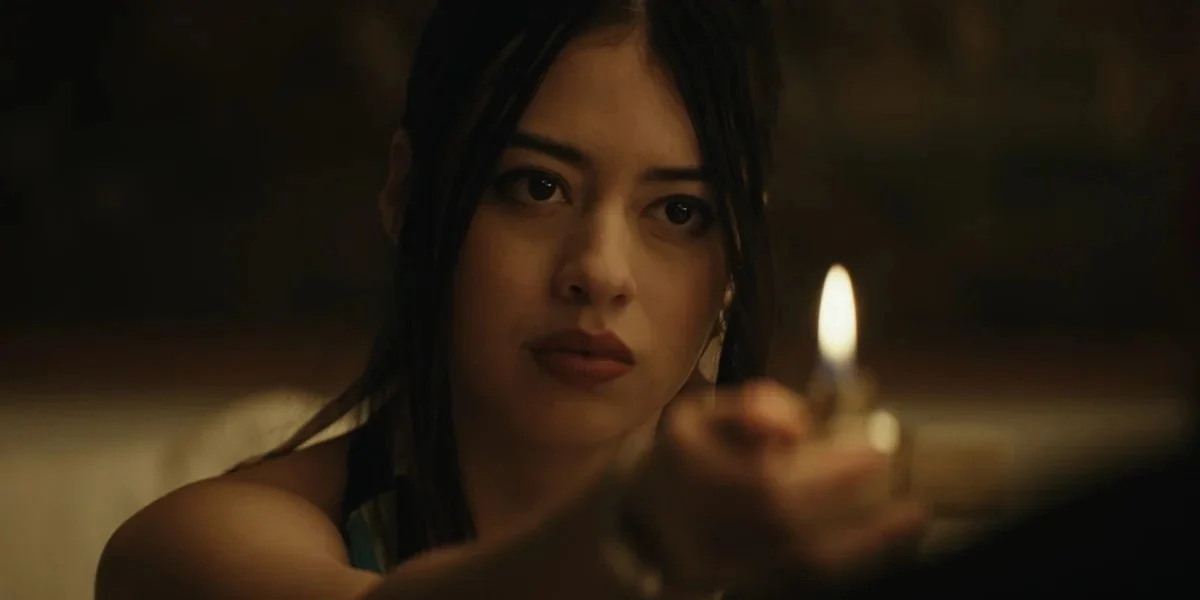
In her latest cinematic endeavor, How We Stand, writer-director Marie Clements continues her vital work of excavating the erased, violent, and often suppressed chapters of Indigenous history. Following the success of her generational epic Bones of Crows—which unflinchingly examined the harrowing legacy of Canada’s residential school system—Clements turns her lens toward the United States. How We Stand is an ambitious, multifaceted drama that weaves together the disparate lives of three sisters, using their personal trauma as a microcosm for the systemic failures and state-sponsored violence inflicted upon Native Americans throughout the 20th century.
Premiering at the Toronto International Film Festival (TIFF), the film is currently seeking U.S. distribution. It stands as a profound, if occasionally didactic, meditation on the long-term psychological toll of displacement, medical abuse, and the dehumanizing power of Hollywood’s historical misrepresentation.
A Chronology of Dispossession
The narrative of How We Stand is anchored in the mid-20th century, a pivotal era for federal policy toward Indigenous populations. Clements structures the film across two primary timelines: the post-Dust Bowl landscape of 1950s Oklahoma and the gritty, volatile atmosphere of 1973 Los Angeles.
The story begins with the promise of a "better life." Angela, portrayed with fierce vulnerability by Cara Jade Myers, is a widowed mother struggling to keep her three young daughters—Jessie, Miranda, and Janey—afloat. Driven by the lure of the federally backed Indian Relocation Act of 1956, which marketed urban centers as hubs of economic opportunity, the family migrates to California.
The reality, however, is a stark indictment of government negligence. Upon arrival, the family is abandoned to a dilapidated shack with no employment and minimal support. The trajectory of the sisters’ lives is irrevocably shattered during a community gathering beneath the L.A. River—a scene that serves as the film’s inciting tragedy. A violent police raid leads to the death of their mother, separating the girls and scattering them into the foster care system, where they grow up isolated from their roots and one another.

The Tripartite Experience of 1973
When the film rejoins the sisters in 1973, they are navigating the treacherous waters of a country that seeks to consume, misinterpret, or ignore them.
- Janey (Isabel DeRoy-Olson): Having been a mere infant during the trauma of her mother’s death, the youngest sister suffers from the most acute psychological fracturing. Her journey is marked by disorientation and medical trauma, leading to an encounter with a police psychiatrist (Gil Billows). Her story brings the film’s magical realism to the forefront as she grapples with the physical and metaphorical weight of the "Vanishing Indian" trope.
- Miranda (Alyssa Wapanatâhk): The middle sister has emerged as a firebrand activist. Her narrative arc centers on an audition for a Hollywood western. Her interactions with director Bob Stills (Eric Johnson) serve as a scathing critique of the film industry’s obsession with the "Noble Savage" archetype, highlighting how white creators have historically commodified Native culture while simultaneously dehumanizing the people behind it.
- Jessie (Amber Midthunder): Adopted by a white Canadian couple, Jessie represents the struggle of assimilation. A doctor working at a free clinic alongside her husband, she attempts to exist within the structures of white privilege. However, her "teflon" exterior begins to erode when confronted by the casual, biting racism of her in-laws and the systemic bias embedded in her own workplace.
Supporting Data: The Reality Behind the Fiction
Clements does not rely solely on narrative invention; the film is deeply grounded in documented historical abuses that have historically been sidelined in mainstream American discourse.
The Indian Relocation Act of 1956
The Act was ostensibly designed to facilitate the transition of Native Americans from reservations to urban areas. In practice, it was a policy of cultural erosion, stripping families of their community support systems and land ties. Participants were often promised housing and jobs that never materialized, leaving them isolated in urban poverty.
The Mass Sterilization Crisis (1970–1976)
Perhaps the most harrowing element of How We Stand is its focus on the forced sterilization of Native American women. Research indicates that during the early 1970s, thousands of Indigenous women were sterilized by federally funded health clinics, often without their informed consent. This period of reproductive violence is echoed in the film through the experiences of the sisters, specifically the medical trauma inflicted upon Janey.
Hollywood’s Role in Dehumanization
The film’s portrayal of Bob Stills and his "cowboy" movies serves as a meta-commentary on the power of media to shape public perception. By contrasting the director’s fetishization of "playing Indian" with the lived reality of the sisters, Clements illustrates how Western cinema functioned as an arm of colonial propaganda, casting Native people as props in a narrative of manifest destiny.

Official Responses and Sociopolitical Implications
While the characters in How We Stand are fictional, their experiences mirror the testimonies of countless Indigenous families. The psychiatrist’s "Indian room," filled with looted artifacts, serves as a chilling symbol of how white society "collects" Indigenous history while refusing to acknowledge contemporary Indigenous existence.
The implications of the film are clear: the "violence in the room" is not just a relic of the 19th-century Indian Wars; it is a living, breathing component of modern American institutions. The film’s dialogue, though at times heavy-handed, succeeds in forcing the audience to confront the passive racism of those who consider themselves "allies" but remain complicit in the preservation of colonial structures.
A Climax of Reclamation
As the three storylines converge, Clements shifts the tone into the realm of magical realism. The dioramas within the psychiatrist’s collection come to life, allowing the sisters to physically and symbolically reclaim their agency. The return to the L.A. River—a site of foundational trauma—serves as a cathartic cleansing.
By utilizing a cinematic space that has been traditionally used to portray urban decay and isolation (as seen in films like Drive), Clements reclaims the geography. The final act suggests that healing is not found in assimilation, but in the reunification of family and the rejection of the narratives imposed by outsiders.
Critical Assessment
Marie Clements has crafted a film that is as essential as it is difficult to watch. While the plotting occasionally dips into melodrama—particularly in the resolution of Janey’s story—the performances are uniformly excellent. Amber Midthunder, in particular, delivers a masterclass in subtlety; her eyes communicate the agonizing weight of a woman who has spent her life trying to "pass" in a world that never truly accepted her.

How We Stand is a vital addition to the growing body of work that seeks to decolonize the screen. It is an uncomfortable, necessary reminder that history is not a static list of dates, but a living, breathing force that continues to shape the identities of those who have been forced to survive it.
Grade: B+
 Lina Hope
 Azzam Bilal Chamdy
 Pevita Pearce
