

Chris Rock is currently enjoying a career apex that few in the entertainment industry ever reach, let alone sustain. Following a triumphant debut of his latest directorial venture, Misty Green, at the 2026 Toronto International Film Festival (TIFF), the legendary comedian finds himself at the center of critical acclaim and serious Oscar buzz. Yet, in a characteristically candid display of humility and New York pride, Rock maintains that his current state of professional euphoria is merely the cherry on top of a year defined by the New York Knicks’ historic NBA championship.
"If Misty Green were to die a miserable death tomorrow, the fact that the Knicks won the title means I’d still look back and say, ‘Oh, what a great year!’" Rock joked during a career-spanning retrospective at the TIFF Lightbox. It is an era of immense personal and public satisfaction for the icon, who spent an hour reflecting on a trajectory that has taken him from the gritty stand-up clubs of New York to the prestigious halls of international cinema.

The Evolution of an Auteur: A Chronology of Success
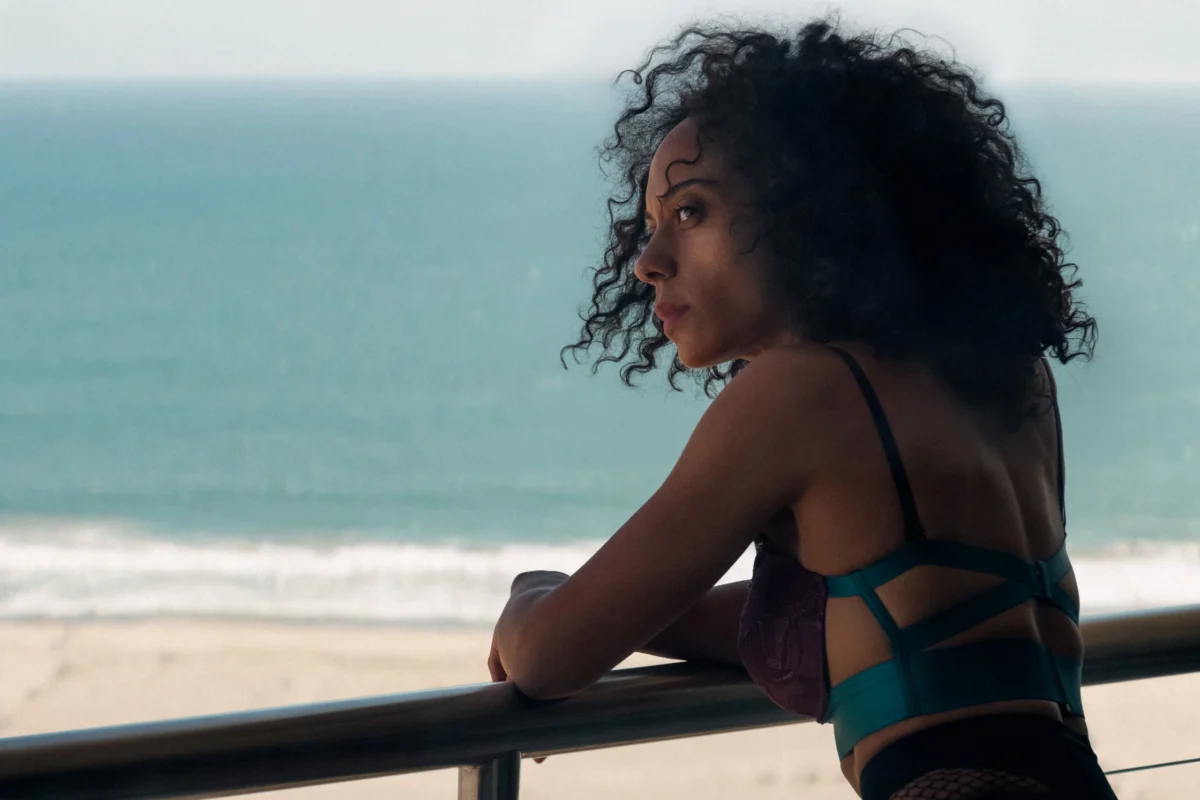
To understand the weight of Misty Green, one must examine the path Rock carved out for himself. The film, which features a powerhouse performance by Slow Horses star Rosalind Eleazar, serves as a poignant, fictionalized examination of Hollywood’s treatment of Black women. Supported by a stellar ensemble including Adam Driver, Daniel Kaluuya, Anna Kendrick, and Topher Grace, the film has solidified Rock’s reputation as a director with a unique, empathetic vision.
However, Rock’s journey behind the camera was not an overnight transition. It was seeded during his early years in the orbit of legends. During his conversation in Toronto, he recalled a pivotal moment as a young comic hanging around Eddie Murphy. It was the mid-80s, and the group went to see Spike Lee’s groundbreaking She’s Gotta Have It.

"I was like the kid in A Bronx Tale," Rock recounted. "I got to hang around the gangsters and watch how they worked. I saw Spike—a guy who looked like me, wearing sneakers—selling his own shirts outside the theater. He wrote the movie, he directed it. That was the moment I realized, ‘Maybe I can do something like that.’"
This early realization eventually led to his 2003 directorial debut, Head of State. Looking back, Rock admits that his early attempts at filmmaking were heavily influenced by his desire to emulate the massive, broad-appeal success of his peers, Adam Sandler and Eddie Murphy. "I was chasing Eddie. I was chasing Adam," he confessed. It wasn’t until he allowed himself to embrace his own artistic sensibilities—finding inspiration in the works of Woody Allen and Mike Leigh—that he began to produce projects that truly resonated with his personal creative voice, ultimately leading to the success of Top Five in 2014.

Supporting Data: The Craft Behind the Comedy
Rock’s career is defined by a unique ability to bridge the gap between high-concept comedy and grounded human observation. His 2009 documentary Good Hair remains a touchstone of his career, earning a Special Jury Prize at Sundance. When asked about the potential for future documentary work, Rock offered a stark look at the modern industry’s constraints.
"Every time I go pitch a documentary now, they want the whole thing done, and they want to know exactly what the ending is," he noted. "I don’t believe in making a documentary like that. I believe a documentary is an investigation."

His creative process is equally unorthodox. Remarkably, he wrote his critically acclaimed film Top Five while on the set of the broad comedy Grown Ups 2. "Being number three or four on the call sheet of a ginormous movie means you have a lot of days off," he explained. "So, what am I going to do with that time? I wrote the movie." He also credited the late, disgraced producer Scott Rudin for providing the "hard coaching" he needed, noting that while many prefer a collaborative, soft touch, he often thrives under the direction of a "general."
The depth of his creative philosophy is perhaps best illustrated by his relationship with the late musical genius Prince. "We would break down my comedy sets as if they were songs," Rock revealed. "A good joke has a chorus you come back to. It has a verse, and sometimes it even has a bridge. We’re all writing music—we just write it in different ways."

Political Aspirations and the Reality of Fame
Perhaps the most surprising revelation from the TIFF retrospective was Rock’s admission that he once harbored serious ambitions to be the President of the United States. "This sounds so egotistical, but I really wanted to be the president," he said. "I told my mother that, and she said, ‘No, you’re going to get shot.’ I took that to heart, and now I do this."
He backed this theory with a sharp observation on the nature of fame versus public office. "My theory is it’s harder to be Tom Cruise than it is to be the president," he mused. "There’s no system designed so that every four years we’re going to have a Tom Cruise. When the president is the president, there’s this crazy motorcade. When they’re not the president, they have one Secret Service guy. Kevin Hart has so much more security than Obama right now."

Implications: The Dearth of Roles for Black Women
The thematic heart of Misty Green is not accidental; it is a direct response to a systemic issue Rock observed throughout his career. While reviewing studio budget sheets in his earlier years, he noticed a recurring trend: Black women were consistently assigned the lowest pay scales in the industry.
"Whenever one of my friends is having a hard time casting a part, I always say, ‘Get a Black woman,’" Rock shared. "’You can get the most famous one you want. She’s probably available.’ There’s a much better chance of her being available than chasing some white boy for a part."

By casting Rosalind Eleazar as the lead in Misty Green, Rock is not only telling a story about a fading actress—he is forcing the industry to reckon with the talent that it frequently overlooks. The film stands as a testament to his maturity as a filmmaker, one who now uses his platform to highlight the very inequities he witnessed during his rise to stardom.
The Path Forward
As Misty Green continues to generate awards-season momentum, Chris Rock’s retrospective serves as a reminder of the resilience required to survive three decades in the public eye. Whether he is analyzing his comedy through the lens of music theory or challenging studio executives to be more adventurous with their documentary investments, Rock is operating with a level of clarity and confidence that marks the finest period of his professional life.

For an artist who once feared the danger of the political arena, he has found a different kind of influence: the power to shape the cultural conversation. With his long-time friends by his side and a critically lauded film under his belt, the industry can expect even more boundary-pushing work from the comedian-turned-auteur. As he looks toward the future, one thing is certain: Chris Rock is no longer chasing the success of others. He is busy setting the standard himself.
 Asep Darmawan
 Reynand Wu
 Layla Zulfa
