

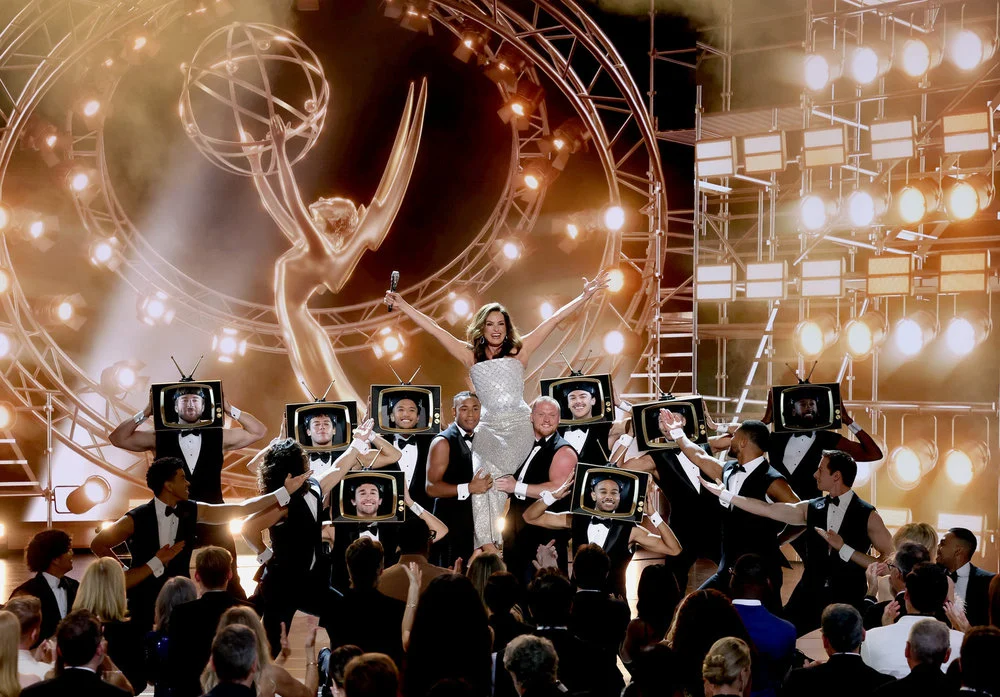
The 78th Primetime Emmy Awards, held on September 14, 2026, at the Peacock Theater in Los Angeles, were supposed to be a celebration of television’s golden era. Instead, the three-hour telecast produced by Jesse Collins Entertainment transformed into a cautionary tale about the perils of poor pacing, misaligned priorities, and the suffocating weight of corporate filler. While the night boasted a lineup of genuinely deserving winners—ranging from industry veterans to breakthrough stars—the broadcast itself was a disjointed, frustrating experience that frequently worked against the very people it was meant to honor.
Ultimately, the 2026 Emmys will be remembered not for the excellence of the programs it celebrated, but for the unprecedented incompetence of its final act: a broadcast that, rather than climaxing with the prestige of its top awards, found itself with significant time to kill, forcing producers to resort to bizarre improvisations and repetitive recaps.
The Chronology of a Broadcast Collapse
The descent into chaos began early, but it became glaringly apparent as the night wore on. The ceremony’s structural integrity was compromised long before the cameras went live. By choosing to shunt several major categories—including Best Supporting Actor and Actress in a Limited Series—to the Creative Arts ceremony the week prior, producers robbed the main telecast of the emotional core that typically anchors an awards show.
By the time the broadcast reached its final segments, the lack of content became a technical emergency. Host Mariska Hargitay, who had navigated a mixed-bag opening monologue and a series of hit-or-miss sketches, was forced into the role of a desperate filler-maker. After an impromptu recap of the night’s "highlights"—a sequence that felt more like a frantic attempt to pad the runtime than a celebratory look-back—the show hit a wall.

Presenters Woody Harrelson and Matthew McConaughey, tasked with introducing the final and most prestigious award of the night, Best Comedy Series, were left to "filibuster." Their banter, which veered into uncomfortable anecdotes about their parents, underscored the lack of substance in the show’s final hour. Even after Hargitay returned to the stage to offer yet more verbal padding, the production was still short on time. In a move that signaled a complete breakdown of the show’s rhythm, the producers resorted to a second, silent recap of the night’s highlights, leaving viewers to wonder if the broadcast had simply forgotten that the audience had already seen these moments less than an hour prior.
Supporting Data: When the "Winners" Were the Only Bright Spot
Despite the technical failings of the production, the 2026 Emmy winners provided the humanity that the telecast so desperately lacked. The victories of Sally Field and Allison Janney served as reminders of the enduring power of veteran acting talent. Similarly, the double-win for Matthew Rhys and the triumphant moment for Rhea Seehorn—who accepted her award for Pluribus with a heartfelt speech—offered the emotional resonance that viewers crave.
The speeches were, for the most part, the only moments where the show felt alive. Katie Dippold, creator of Widow’s Bay, delivered a standout moment for Best Writing in a Comedy, providing a refreshing mix of self-deprecating humor and genuine artistic pride. She noted her plan to build a "system of mirrors" at home just to keep her Emmy in sight at all times—a charming, humanizing touch that stood in stark contrast to the sterile, corporate-mandated "bits" that filled the rest of the night.
However, these moments were fleeting. Producers consistently rushed winners off the stage, cutting short the very speeches that give an awards show its narrative weight. When Jean Smart attempted to reflect on the long "ride" she has taken with the hit series Hacks, she was played off before she could fully capture the sentiment. This prioritization of time-management over emotional connection proved to be the night’s most egregious error.

Host Performance: The Mariska Hargitay Challenge
Mariska Hargitay’s performance as host was a study in resilience against a weak script. While she demonstrated charisma and an ability to handle the spotlight, the material provided to her often veered into the nonsensical. Her opening musical number, "I Love TV Screens" (a riff on Joan Jett’s "I Love Rock and Roll"), was bogged down by heavy-handed product placement and awkward lyrics.
Her monologue contained a fatal strategic error: the invocation of absent, beloved hosts Tina Fey and Amy Poehler. Producers immediately capitalized on this by bringing Poehler out to present, effectively highlighting the void left by the absence of the duo’s razor-sharp comedic timing. While Hargitay had moments of genuine wit—such as her self-aware joke about never having a "finale" and her meta-reenactment of Nicole Kidman’s famous AMC Theaters speech—she was ultimately sabotaged by a show that didn’t know how to play to her strengths.
Implications for the Industry
The 2026 Emmys highlight a growing disconnect between the production of awards shows and the audience’s expectations. The industry has become increasingly reliant on "moments" and cameos—such as the appearance of Taylor Swift or the forced reunions of legacy casts—rather than focusing on the craft of television.
The blatant cross-promotion of upcoming Apple TV+ content during the ceremony, particularly when placed immediately before the announcement of the Best Comedy Series, felt less like a celebration of the medium and more like an infomercial. This corporatization of the ceremony strips away the prestige. When a broadcast treats its own awards as secondary to the commercial breaks, it devalues the artistic achievements of the nominees.

Furthermore, the decision to cut emotional categories from the live show, only to struggle to fill time at the end, suggests a profound lack of oversight in the producer’s room. The "pulse" of an awards show—the raw, unscripted reaction of a winner, the tearful thank you to family, the genuine shock of an upset—is what keeps viewers tuned in. By choosing to replace these moments with static montages and awkward celebrity banter, the 78th Emmys alienated the very base of TV enthusiasts who view these actors as members of their own extended families.
Conclusion: A Grade of C-
The 78th Primetime Emmy Awards were not a catastrophe, but they were a significant missed opportunity. There was enough talent in the room to make for a memorable evening, but the production team’s inability to manage the flow of the night resulted in a broadcast that felt empty and, at times, insulting to its participants.
The producers of the 2026 Emmys should have known better. They had the talent, the prestige, and the history of the medium to draw upon. Instead, they opted for a hollowed-out version of the event that left the audience checking their watches rather than cheering for their favorite stars. Looking back, the failure to curate a meaningful, well-paced show meant that the Emmys didn’t just kill time in the final moments; they killed the potential for a truly celebratory night from the very first minute.
Final Grade: C-

The 78th Emmy Awards were held on Monday, September 14, at the Peacock Theater in downtown Los Angeles. The ceremony was broadcast on NBC and streamed on Peacock.
 Lina Hope
 Azzam Bilal Chamdy
 Pevita Pearce
