

Across the United States, a high-stakes ideological and physical battle is unfolding over the infrastructure powering the artificial intelligence revolution. While major tech companies, real estate developers, and corporate energy consumers pitch AI data centers as engines of local job creation and unprecedented economic revitalization, this optimistic narrative is failing to win over the American public. Recent polling indicates that a solid majority of Americans now oppose the construction of data centers in their local areas, driven by mounting anxieties over resource depletion, noise pollution, and environmental degradation.
For community organizers like Shawmar Pitts, these warnings are far from hypothetical. Having spent his life living in the literal shadow of heavy industry, Pitts understands the heavy human cost of corporate expansion. As the tech industry embarks on an aggressive nationwide land grab to secure power and space for energy-hungry server farms, communities that have historically borne the brunt of American industrial pollution are mobilizing to ensure history does not repeat itself in the digital age.
Main Facts: The Battlegrounds of the AI Infrastructure Boom
The national friction between technological progress and community self-preservation has crystallized in cities like Philadelphia, where municipal planners have identified potential sites for data center development. Although no formal construction proposals have been officially submitted for the city, officials have floated two primary locations: one in Northeast Philadelphia and another in the historically overburdened Grays Ferry neighborhood of Southwest Philadelphia.
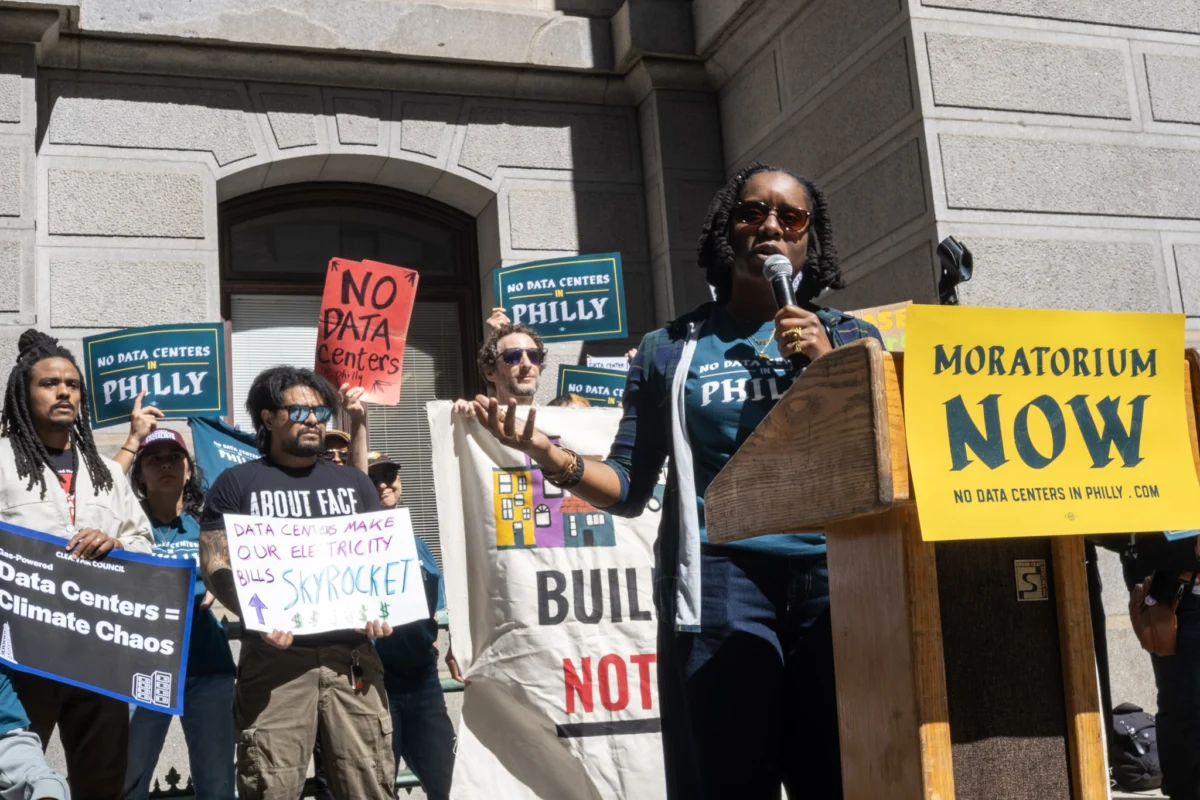
In response, local advocacy groups have launched proactive campaigns to head off development before it gains momentum. More than 100 residents gathered outside Philadelphia’s City Hall for the kick-off rally of the "No Data Centers in Philly" campaign, raising chants loud enough to echo inside municipal offices. Led by grassroots organizations like Philly Thrive, community members are demanding a complete data center moratorium, mirroring a broader wave of skepticism and legislative pushback sweeping across the country.

From New York to Nevada, municipal and state governments are beginning to pump the brakes on the digital land rush. New York Governor Kathy Hochul signed a high-profile executive order temporarily halting state permit approvals for large-scale data centers. Meanwhile, cities including Denver, Indianapolis, Asheville, Charlotte, and Reno have enacted official data center moratoriums or temporary zoning pauses. These legislative actions are designed to buy local leaders time to study the intensive resource demands of modern computing infrastructure—specifically their voracious appetite for water and electricity—before committing their communities to long-term liabilities.
Chronology: From Industrial Fallout to Digital Defiance
To understand why communities like Grays Ferry are fiercely resistant to new industrial neighbors, one must look at the neighborhood’s complex historical relationship with heavy industry.
- Pre-2019: For decades, residents of Grays Ferry lived directly adjacent to the Philadelphia Energy Solutions (PES) oil refinery, which stood as the largest oil refinery on the East Coast. At its peak, the facility processed up to 335,000 barrels of crude oil daily, blanketing the surrounding neighborhoods in industrial emissions and particulate matter.
- June 2019: A catastrophic series of explosions ripped through the PES refinery, sending massive fireballs into the Philadelphia skyline and releasing toxic hydrofluoric acid into the air. The disaster ultimately forced the facility to permanently shut down its operations, setting off a years-long debate over the future use of the massive industrial tract.
- 2018–2020: Prior to and following the explosion, environmental justice groups like Philly Thrive engaged in neighborhood outreach, educating residents on the cumulative health impacts of living next to heavy industry. Local residents began drawing grim connections between industrial emissions and the chronic health conditions—ranging from respiratory illnesses to rare cancers—rife among their families and neighbors. Sonya Sanders’ husband, a lifelong Grays Ferry resident, passed away from a rare bone cancer in 2020, a tragedy she directly attributes to lifelong exposure to refinery pollution.
- July 2026: The Philadelphia Planning Commission releases preliminary real estate and zoning studies identifying potential locations for future data center development, including sites within the former refinery footprint (known as the Bellwether District) and Northeast Philadelphia.
- September 2026: Philly Thrive, alongside allied environmental groups such as the Clean Air Council, officially launches the "No Data Centers in Philly" campaign with a mass demonstration at City Hall, demanding an immediate moratorium on all municipal data center approvals.
Supporting Data: The Hidden Footprint of the AI Revolution
The public resistance to data centers is anchored in hard data concerning energy consumption, carbon footprints, and grid reliability. While artificial intelligence is often marketed as a clean, immaterial cloud-based technology, its physical infrastructure demands vast amounts of real-world resources.
The international race to dominate the generative AI landscape has accelerated energy projections to staggering degrees. According to updated forecasts from BloombergNEF, U.S. data centers are projected to consume more natural gas than Germany and Japan combined by the year 2035—nearly doubling the firm’s projections made just nine months prior.

While natural gas burns cleaner than crude oil, it is far from environmentally benign. The combustion of a single cubic foot of natural gas releases approximately 60 grams of carbon dioxide. Furthermore, the surging energy demand required to power and cool millions of new AI servers is expected to generate an additional one million metric tons of greenhouse gas emissions every single day—representing roughly 12% of total present-day U.S. greenhouse gas emissions.
These emissions carry profound public health consequences. Landmark research published by Harvard University in 2021 revealed that fossil fuel-derived air pollution is responsible for roughly one in every five deaths worldwide. In the context of AI infrastructure expansion, this mortality burden is poised to escalate.
Environmental advocates point out that data centers are not passive consumers of electricity; they are active threats to local air quality. "A typical data center planned in Pennsylvania has hundreds of diesel engines that spew air pollution," explained Clean Air Council attorney Annie Fox during the Philadelphia rally. "And even if they’re supposedly reserved for emergencies, the government has already said that the data center should use those rather than drawing from an overstressed electrical grid during some heat waves." Fox warned that as climate change intensifies, fossil fuel-reliant data centers will only exacerbate the very heatwaves that strain the grid in the first place.
Official Responses and Perspectives
The debate over AI data centers exposes a deep philosophical divide between tech-sector proponents who view rapid infrastructure expansion as an economic imperative and community stakeholders who prioritize public health and environmental justice.

The Community Perspective: Protection Over Profit
Grassroots leaders argue that the economic promises made by data center developers—frequently touted as a boon for local tax bases and job creation—are hollow.
"We don’t want data centers," Philly Thrive Board President Sonya Sanders declared passionately during the City Hall rally. "We don’t want the pollution, we don’t want the noise, and we know they’re not going to bring us more jobs." Reflecting on the loss of her husband to cancer, Sanders added, "In my eyes, they killed him. The pollution killed him. I believe he would be here today if he wasn’t silently murdered, because it was the pursuit of profit that killed him."
For residents like Donna Greenberg, the concerns extend beyond air quality to encompass resource allocation and digital privacy. "I’m worried about pollution," Greenberg told reporters. "I’m worried about surveillance and the fact that they’re going to have access to information they have no business knowing, and I’m concerned that they’re going to be using water and electricity that takes away from the people and the neighborhoods who need it."
The Municipal and State Response: Pressing Pause
Elected officials are increasingly finding themselves caught between the immense lobbying power of the tech industry and the visceral anger of constituents. Governors and mayors enacting moratoriums are attempting to reclaim regulatory control.

When signing New York’s executive order halting large-scale data center permits, Governor Kathy Hochul emphasized a shifting political calculus: "Progress shouldn’t arrive with a higher utility bill, deleted water supply, or noise pollution. These data centers can only be built, should only be built in places that want them."
In cities like Denver, Indianapolis, Charlotte, and Reno, temporary moratoriums serve as a political cooling-off period, allowing local governments to update zoning codes, mandate environmental impact assessments, and negotiate community benefit agreements that protect municipal utility grids from brownouts and surging residential utility rates.
Implications: The Future of AI and American Communities
The friction over data center siting has profound implications for the trajectory of both the artificial intelligence industry and American urban planning.
- Grid Instability and Energy Transition: As data centers increasingly lean on fossil-fueled generation and emergency diesel backup generators to bypass congested electrical grids, local utility customers face heightened risks of blackouts, rolling brownouts, and escalating monthly electricity bills. This dynamic threatens to turn public sentiment against the broader green energy transition if grid capacity is disproportionately siphoned off to feed corporate data centers.
- The Rise of Environmental Justice Mobilization: The coalition-building observed in Philadelphia demonstrates that communities historically impacted by heavy industry are uniquely positioned to spearhead technological resistance movements. Armed with historical trauma from oil refineries and chemical plants, these neighborhood groups possess sophisticated organizing frameworks that can effectively challenge multi-trillion-dollar tech enterprises.
- Decentralization and Siting Crises: As major metropolitan areas and progressive municipalities enact strict moratoriums, tech companies will be forced to look toward rural cooperatives or laxly regulated jurisdictions. However, this shift risks replicating environmental justice conflicts in smaller towns that lack the municipal legal resources to negotiate safety protections.
Ultimately, the grassroots uprising against AI infrastructure serves as a stark reminder to tech developers and policymakers alike: the digital cloud rests upon very physical foundations. Until tech companies can definitively prove that their server farms will not degrade local air quality, drain municipal water supplies, or strain public power grids, communities across America will continue to stand their ground—demanding that the true costs of the AI revolution are not paid by the lungs and lives of local residents.
 rifanmuazin
 Nana Muazin
