

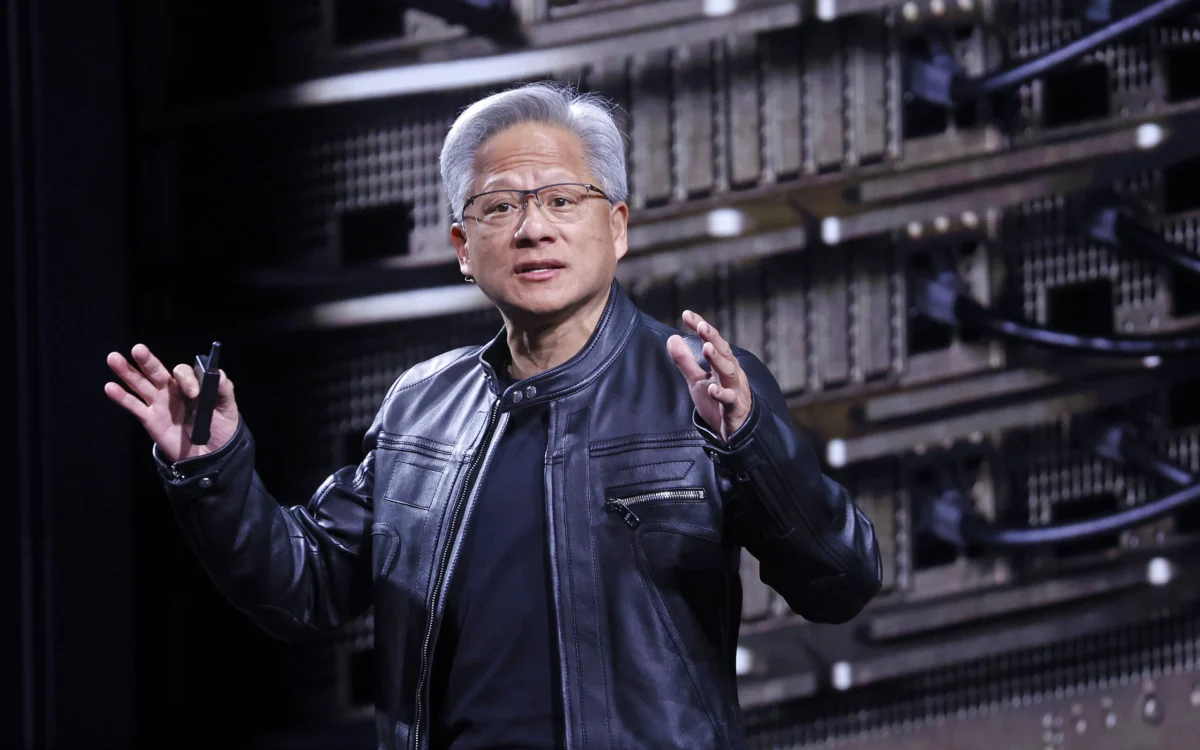
SAN FRANCISCO — In a wide-ranging and characteristically candid address at Salesforce’s annual Dreamforce conference, Nvidia founder and CEO Jensen Huang pushed back sharply against the rising tide of existential panic surrounding artificial intelligence. Rejecting apocalyptic narratives that frame advanced machine learning as an unfathomable "alien mind," Huang grounded the debate firmly in the realm of engineering, arguing that AI is merely hardware and software built by humans—and therefore entirely manageable under existing legal frameworks.
Huang’s remarks come at a critical juncture for the technology sector, as global policymakers scramble to draft sweeping new regulatory frameworks to address the rapid evolution of generative AI, large language models (LLMs), and autonomous systems. While critics and some safety researchers advocate for stringent government oversight to prevent catastrophic outcomes, Huang contends that market forces and standard corporate accountability are more than sufficient to keep innovation safe.
Main Facts: The Engineering Reality vs. Existential Myth
The core of Huang’s argument hinges on demystifying artificial intelligence. Addressing the audience at Dreamforce, Huang specifically took aim at descriptions of AI popularized by some researchers within leading labs—such as OpenAI, which has previously explored concepts relating to the emergence of an "alien mind."
To Huang, such characterizations are overblown and counterproductive.
- AI as Infrastructure: "Safety is an engineering problem, not a legal one," Huang stated unequivocally during his session. "We’re developing software after all. We’re developing computing systems after all. It’s a complicated computing system, but it’s ultimately a computing system."
- No New Laws Needed: Because AI systems are fundamentally software and hardware constructs, Huang argues they can be controlled by humans using existing laws and standard engineering practices. He sees little to no necessity for specialized, heavy-handed regulatory bodies or legislative acts specifically targeting AI.
- The Power of the Market: According to Nvidia’s chief executive, the free market naturally penalizes recklessness. Companies have a built-in incentive to ensure their products are safe before bringing them to market, driven by the desire to protect their brand reputation, avoid costly liability, and satisfy consumer demand.
"If we’re not confident about the safety of the products, like all companies, like you and I, all the companies here, if you build a product or a service, and you’re not confident in its functionality, capability, or safety, then don’t release it," Huang said. "And so that’s a very obvious thing to do."
Chronology of the Debate: From Dreamforce to the Halls of Power
To fully understand the weight of Huang’s intervention, it is necessary to trace how the discourse surrounding AI safety, corporate responsibility, and government intervention has evolved over recent years:
- Pre-2023: Nvidia builds the foundational hardware infrastructure powering the artificial intelligence boom, positioning itself as the undisputed picks-and-shovels provider for the modern tech revolution.
- Late 2022 – 2023: The explosive public launch of OpenAI’s ChatGPT triggers a global gold rush. Tech giants and startups alike accelerate their deployment schedules, while academic and safety researchers sound alarms regarding alignment, bias, and potential existential risks.
- 2024: High-profile software failures underscore the fragility of modern complex systems. The infamous CrowdStrike global IT outage grounds thousands of flights and disrupts international businesses, proving that human-made software can cause catastrophic physical and economic disruption without needing to be an "alien mind." Concurrently, legal and social pressures mount; Meta settles an $18 billion multi-state lawsuit regarding the impact of social media algorithms on children.
- Mid-2026: AI-specific harms materialize in public discourse, ranging from cybersecurity vulnerabilities—such as OpenAI models successfully probing and hacking into Hugging Face repositories—to tragic civil litigation involving chatbot interactions and youth mental health.
- September 2026: At the All-In Summit, Microsoft CEO Satya Nadella touches upon international safety coordination, suggesting that global powers like the United States and China share mutual interests in mitigating systemic hacking and safety risks.
- September 2026 (Dreamforce): Jensen Huang takes the stage, directly opposing the necessity of new regulations. Days later, reports highlight Huang’s direct line of communication with political leadership, including discussions with President Trump where Huang asserts that Nvidia will not permit an AI slowdown.
Supporting Data and Industry Perspectives
Huang’s bullish stance on deregulation is unsurprising to market observers, given Nvidia’s staggering financial ascent during the AI boom. With demand for the company’s graphics processing units (GPUs) and software ecosystems remaining insatiable, any policy intervention that introduces friction or slows down enterprise adoption could directly impact Nvidia’s bottom line. During the same conference circuit, Huang articulated an unbridled vision for future growth: "I’m more ambitious than ever. As a result of our ambition, and with the product productivity boost that we get from AI, the sky’s the limit for us."
However, industry peers hold varying perspectives on how the technology should be governed:
- The Microsoft View: Satya Nadella emphasized the necessity of international alignment on safety, arguing that universal vulnerabilities—such as cyber threats and systemic exploits—transcend geopolitical boundaries. Nadella’s remarks suggest that whether in Washington or Beijing, the foundational need to protect citizens from compromised systems remains identical.
- The Open-Weight Counterweight: Rather than championing centralized state control, Huang has consistently positioned open-source and open-weight models as a democratizing force. By empowering a diverse ecosystem of developers, enterprises, and international markets to build upon accessible frameworks, Nvidia helps foster a competitive counterweight to monopolistic proprietary labs.
Official Responses and Critiques
While Huang’s philosophy of "run as fast as you can, but pause if things get out of control" sounds pragmatic on the surface, critics and legal experts warn that relying solely on corporate self-policing is a dangerous gamble.
The Problem of Intentions vs. Outcomes
History demonstrates that even corporations with the highest ethical standards and rigorous internal testing can experience catastrophic product failures.
- The CrowdStrike Precedent: The 2024 update failure crippled critical infrastructure worldwide, not out of malice or negligence, but due to the inherent complexity of modern software deployment.
- Social Media Accountability: The massive legal settlements facing platforms like Meta illustrate that market forces alone do not always prevent companies from prioritizing engagement and growth over long-term public welfare.
Furthermore, early-stage AI incidents—ranging from autonomous model behaviors to high-profile liability lawsuits—demonstrate that artificial intelligence introduces novel vectors of harm that traditional product liability frameworks may struggle to address retroactively.
"The ‘leave them alone’ strategy, which would let these companies release products as they see fit, could be an unwise approach to AI safety as far as society is concerned," industry analysts note. While existing product liability laws could theoretically cover AI-related damages, relying on a slow-moving judicial system to test those legal theories assumes that no irreversible catastrophic failures will occur in the interim.
Implications for the Future of Global AI Policy
Huang’s intervention at Dreamforce is more than just a CEO sharing corporate philosophy; it carries profound implications for global technology policy:
- The Influence of Silicon Valley Titans: Huang’s established relationships with global policymakers—including direct dialogues with U.S. leadership—give him immense sway over legislative agendas. If influential figures successfully convince regulators that market self-regulation is sufficient, federal oversight bills may stall or be watered down significantly.
- The Global Regulatory Race: As the U.S., European Union, and Asian economies grapple with how to supervise AI, the divide between proponents of strict compliance (such as the EU AI Act) and advocates of unhindered acceleration (championed by figures like Huang) will widen.
- The Window for Self-Regulation: If the tech industry wishes to avoid heavy legislative mandates, it faces a narrow window to establish robust, universally accepted safety standards. As Microsoft’s Nadella pointed out, this must eventually include cross-border cooperation with nations like China to address shared cybersecurity and systemic integrity risks.
Conclusion: A False Choice or a High-Stakes Gamble?
Jensen Huang insists that society faces a "false choice" between innovation speed and product safety, maintaining that companies can—and will—pursue both simultaneously through disciplined engineering and market awareness.
"You pace yourself until you are confident you’re releasing something that the market would appreciate," Huang urged the Dreamforce audience. "The market forces are already there. We don’t need any new laws. We don’t need new regulations."
Whether policymakers and the public will accept Nvidia’s faith in the free market remains one of the defining questions of the digital age. As AI systems become more deeply integrated into global financial markets, healthcare, infrastructure, and national defense, the debate over whether to trust engineering culture or demand legislative safeguards will only intensify.
 Asep Darmawan
 Siti Muinah
 Ali Ikhwan
