

Main Facts
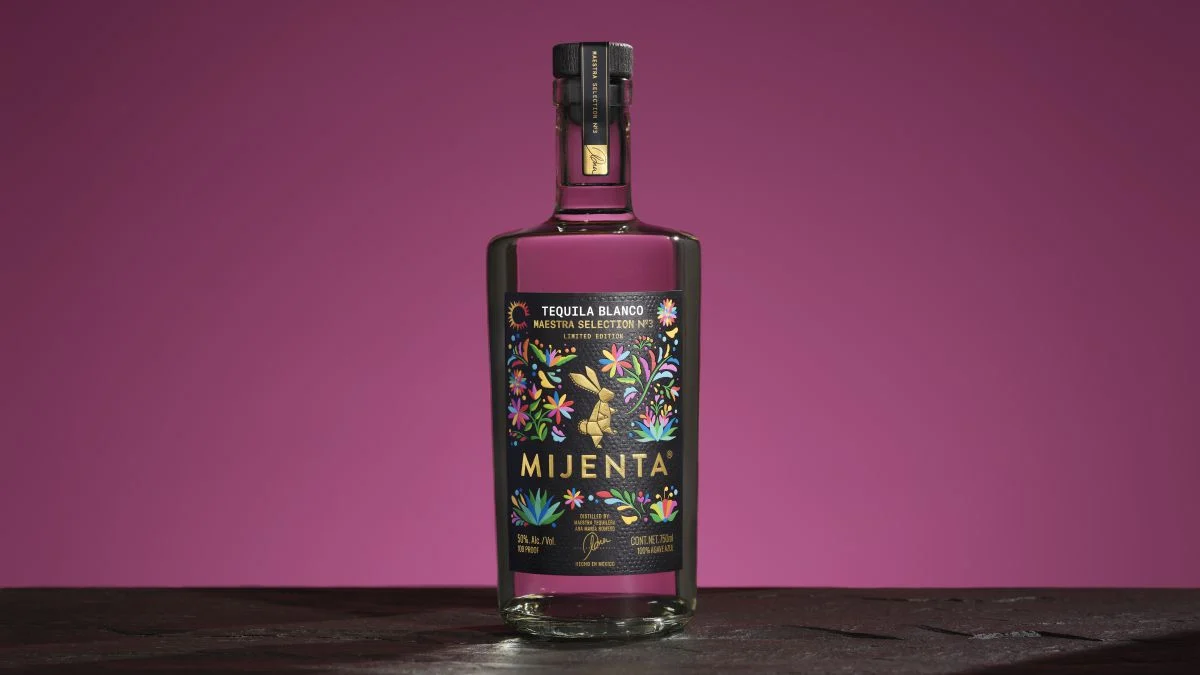
In the contemporary landscape of high-end agave spirits, few brands have captured the attention of connoisseurs quite like Mijenta. Celebrated for its commitment to both aged and un-aged expressions that proudly eschew artificial additives—despite strict regulatory constraints by Mexico’s governing bodies that prohibit explicitly advertising this distinction—Mijenta has firmly established itself as a beacon of quality. Now, the brand is expanding its critically acclaimed portfolio with the launch of its latest masterpiece: Mijenta Maestra Selection No. 3.
Priced at a suggested retail price (SRP) of $100 and available nationwide at select fine spirits retailers as well as directly through the brand’s official website, this new blanco tequila is an uncompromising celebration of heritage, patience, and meticulous production techniques. Crafted under the watchful eye of Maestra Tequilera Ana Maria Romero, Maestra Selection No. 3 is a limited-release blanco that leverages rare agricultural practices and ancient distillation methods. It stands as a testament to what is possible when modern luxury meets centuries-old craftsmanship.
What sets this expression apart immediately is its uncompromising production journey. Utilizing rare, eight-year-old agaves de semilla—plants grown from seed rather than the conventional method of propagating clones—harvested exclusively in Jamay, Jalisco, this blanco offers a flavor profile that is as complex as it is vibrant. The piñas were slow-cooked in traditional masonry ovens constructed from volcanic stone sourced from Popocatépetl, the active stratovolcano near Mexico City. Following the cook, the agave was crushed using a tahona, a massive volcanic stone wheel, rather than modern mechanical shredders.
Fermentation took place naturally in open-air wooden tanks alongside the fibrous agave material, introducing wild environmental yeasts and deeply authentic textures. The liquid was then twice-distilled in traditional copper pot stills and, crucially, rested for 15 days in porous clay pots. This brief period of clay-vessel aging allows the spirit to breathe, gently aerating while imparting subtle, distinct mineral qualities before it is finally bottled at strength. Adorning the bottle is a bespoke piece of art entitled “Tapestry of Dreams,” designed by acclaimed Mexico City-based artist Sophia Castellanos, making Maestra Selection No. 3 as visually striking as it is gustatory.
Chronology
To fully understand the significance of Mijenta Maestra Selection No. 3, one must look back at the deliberate and thoughtful trajectory of the brand since its inception.
2020: The Genesis of Mijenta
Mijenta was founded in 2020 by an industry powerhouse trio: Juan Coronado, a renowned hospitality expert and mixologist; Elise Som, an expert in sustainable luxury branding; and Mike Dolan, the former CEO of Bacardi. From day one, the collective vision was to create a luxury tequila brand that not only prioritized exceptional flavor profiles and additive-free production but also championed environmental sustainability, biodiversity, and community support in Jalisco. To guide the liquid’s evolution, they brought on board Ana Maria Romero, one of the most respected maestras tequileras in the entire industry, whose stewardship has defined Mijenta’s core lineup of Blanco, Reposado, and Añejo expressions, alongside its innovative Cristalino and barrel-finished releases.
The Evolution of the Maestra Selection Series
The Maestra Selection was conceived as an experimental playground for Romero—a series designed to push the boundaries of tequila production by isolating specific agricultural and craft variables.
- Maestra Selection No. 1: The inaugural release focused heavily on agricultural innovation. It was crafted entirely from agaves de semilla (seed-grown agaves). By moving away from the industry-standard cloning process (where offshoots, or hijuelos, of mature agaves are replanted), Romero explored the genetic diversity and distinct flavor profiles that seed cultivation yields, setting a high bar for artisanal experimentation.
- Maestra Selection No. 2: The second chapter pivoted toward terroir. For this expression, Romero sourced agaves from all five Mexican states legally permitted to produce tequila under the Denomination of Origin (DOT): Jalisco, Guanajuato, Michoacán, Nayarit, and Tamaulipas. The resulting blend was an unprecedented cartography of Mexican agave landscapes, capturing the varied climates, soils, and elevations of the broader agave-growing regions.
- Maestra Selection No. 3 (The Present Day): Having explored agricultural methods (No. 1) and regional terroir (No. 2), Romero turned her attention to holistic craftsmanship. Selection No. 3 synthesizes multiple traditional, labor-intensive production methodologies into a single, cohesive blanco expression that showcases the entirety of her craft.
Supporting Data
The pedigree of Mijenta Maestra Selection No. 3 is backed by rigorous agricultural metrics, traditional processing data, and sensory evaluation.
Agricultural and Sourcing Data
- Agave Maturity: Harvested at peak maturity after eight years in the rich, iron-rich soils of Jamay, Jalisco.
- Agave Type: Agaves de semilla (grown from seed, fostering greater genetic diversity and complex sugar profiles compared to standard clonal propagation).
- Volcanic Masonry: Ovens built using authentic volcanic stones from Popocatépetl, ensuring optimal thermal retention and even cooking of the piñas over extended periods.
Production and Resting Metrics
- Crushing Mechanism: The tahona, a multi-ton volcanic stone wheel driven in a circular pit, ensuring gentle extraction that preserves delicate agave esters without over-extracting bitter wood or harsh green notes from the fibers.
- Fermentation Environment: Open-top wooden tanks utilizing natural airborne yeasts in the presence of the agave bagasse (fibers), maximizing mouthfeel and aromatic complexity.
- Distillation: Small-batch double distillation in traditional copper pot stills.
- Aeration/Finishing: 15 days of resting in porous clay pots (tinajas), allowing for micro-oxygenation and the absorption of unique subterranean mineral notes without acquiring the color or heavy wood tannins characteristic of barrel aging.
Sensory Profile and Tasting Notes
Upon sampling Maestra Selection No. 3, the spirit reveals a remarkably sophisticated architecture:
- Nose: Crisp, inviting aromas of fresh rain on warm earth, sweet roasted agave, and bright citrus zest.
- Palate: An initial wave of luscious sweetness gracefully gives way to layers of fresh-cut grass, earthy cooked agave, and vibrant white and black peppercorn spice.
- Finish: Long, warming, and remarkably nuanced, leaving lingering hints of dark cacao and toasted almonds that fade into a clean, mineral-driven climax.
Packaging and Pricing Specifications
- Artistic Collaboration: Featuring label artwork titled "Tapestry of Dreams" by Mexico City visual artist Sophia Castellanos.
- Retail Availability: Available nationwide at select premium spirits boutiques and online via the official Mijenta Tequila website.
- Suggested Retail Price (SRP): $100.00 USD per 750ml bottle.
Official Responses
The philosophy and ambition behind Maestra Selection No. 3 are best understood through the words of the master craftspeople who brought it to life.

Ana Maria Romero, the guiding force behind Mijenta’s liquid portfolio, emphasized the holistic nature of this release compared to its predecessors. In an official statement accompanying the launch, Romero noted:
"Every part of the production process plays a vital role in shaping the final taste profile of a tequila. For this expression, I wanted to explore this impact more deeply and in a way that honors the origins and craftsmanship of tequila."
Elaborating on how this expression differs from the rest of the Maestra series, Romero explained:
"While previous expressions in this series have explored a single variable at a time—first agave cultivation methods, then terroir—this release takes a broader view of the entire craft. The result is a tequila that is both unmistakably Mijenta and a unique spirit shaped by production methods not used in our core expressions."
The brand’s leadership team, including co-founders Juan Coronado and Elise Som, has consistently echoed these sentiments across Mijenta’s product lifecycle. Their foundational ethos has always centered on transparency, sustainability, and absolute reverence for the ejidatarios (agave farmers) and jimadores who labor in the fields of Jalisco. By granting Romero complete creative autonomy through the Maestra Selection, Mijenta reinforces its commitment to being not just a commercial brand, but a cultural custodian of Mexico’s most iconic spirit.
Implications
The launch of Mijenta Maestra Selection No. 3 carries significant implications for the broader ultra-premium tequila market, consumer education trends, and the ongoing dialogue surrounding additives and authenticity in the spirits industry.
1. Elevating the Status of Blanco Tequila
For decades, consumer misconception often dictated that aging equated to quality—that Reposados, Añejos, and Extra Añejo expressions were inherently superior to Blancos (or Plata) due to the influence of oak barrels. The Maestra Selection series directly challenges this hierarchy. By showcasing that a clear, un-aged blanco can possess immense complexity, nuance, and age-worthy agricultural depth, Mijenta elevates the status of the blanco category. Selection No. 3 proves that when extraordinary raw materials are paired with ancient, painstaking production techniques, a blanco tequila can offer a tasting experience as profound as any heavily aged spirit.
2. The Movement Toward Radical Transparency and Additive-Free Awareness
While Mexican regulations strictly govern what can be printed on commercial labels—making it difficult for brands to explicitly market themselves as "additive-free" without navigating complex bureaucratic hurdles—consumer demand for transparency has never been higher. Independent advocacy groups and digital communities have made additive-free tequila a primary purchasing criterion for enthusiasts. Mijenta’s quiet confidence in letting its production methods (stone ovens, tahona crushing, clay pot resting, and seed-grown agaves) speak for themselves sets a gold standard for the industry. It educates consumers on how to read a bottle and understand the labor involved behind the scenes.
3. The Intersection of Art, Luxury, and Sustainability
Mijenta has consistently positioned its products at the intersection of high-end luxury and ecological responsibility—securing B-Corp certification and utilizing eco-friendly packaging made from agave waste fibers. With Maestra Selection No. 3, the brand further cements the cultural value of the spirit by collaborating with contemporary Mexican artists like Sophia Castellanos. This holistic approach—where agricultural sustainability, heritage craftsmanship, and fine art converge—transforms a bottle of tequila from a consumable commodity into a collectible cultural artifact.
Conclusion
As the ultra-premium spirits market continues to mature, discerning drinkers are increasingly seeking out brands that tell authentic stories, respect tradition, and refuse to cut corners in the pursuit of mass production. With Maestra Selection No. 3, Mijenta and Ana Maria Romero have delivered a masterclass in modern artisanal distillation. For collectors, mixologists, and agave aficionados alike, hunting down a bottle of this exceptional blanco is not merely an acquisition—it is an investment in the living history and future evolution of true Mexican craftsmanship.
 Sagoh
Sagoh
 Reynand Wu
 Siti Muinah
