

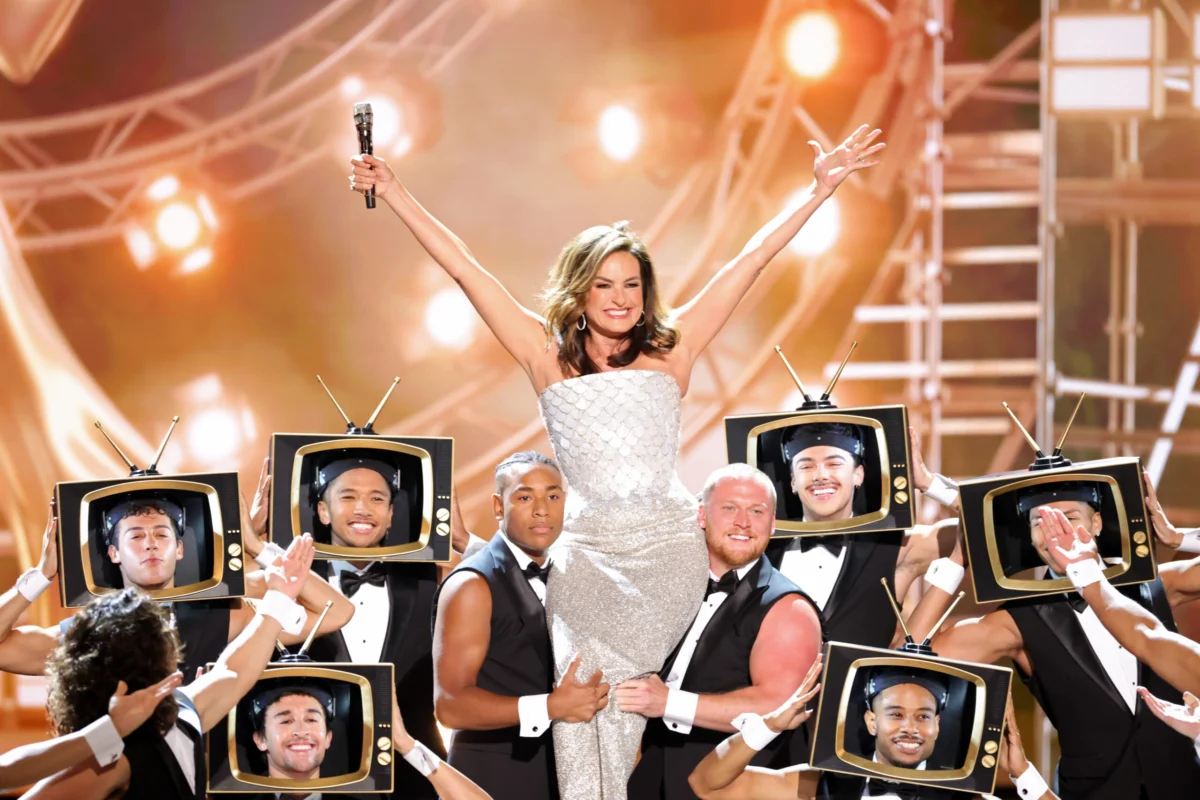
The 78th Primetime Emmy Awards arrived with a dual narrative: one defined by the historic, record-shattering dominance of the series Widow’s Bay, and another underscored by the sobering reality of a shifting media landscape. While the artistic accolades celebrated the pinnacle of television excellence, the evening’s viewership metrics provided a stark reminder that the traditional broadcast model is facing an existential reckoning.
As the curtains fell on a ceremony marked by a truncated pace, a charismatic turn by host Mariska Hargitay, and a final, impromptu bit of banter between Woody Harrelson and Matthew McConaughey, the industry was left to parse a set of numbers that reflect a broader, decade-long migration of audiences away from linear television.
The Numbers: A Mixed Bag of Metrics
The preliminary viewership figures for the 78th Primetime Emmy Awards, broadcast live on NBC and simulcast on the streaming platform Peacock, settled at 6.7 million viewers. To the casual observer, the headline is one of decline: this figure represents a significant, 9% drop compared to the previous year’s ceremony, which aired on CBS.
However, in the volatile world of modern television ratings, context is everything. While a 9% year-over-year decrease is objectively disappointing for a marquee event, the narrative is not entirely one of failure. When viewed through the lens of recent history, the 78th Emmys actually outperformed several predecessors. For instance, the 2024 ceremony, which aired on Fox, struggled to reach an audience of 4.4 million. Furthermore, the 2026 performance marks an improvement over NBC’s own 2022 broadcast, which drew 5.9 million viewers.
These figures highlight a persistent trend in the industry: the "event television" model is no longer the guaranteed ratings juggernaut it once was. As viewers increasingly favor on-demand consumption and social media clips—the very "meme-worthy" moments that now dominate the cultural conversation—the traditional broadcast audience continues to fragment.
Chronology of a Broadcast: From Widow’s Bay to the Final Curtain
The evening was, by most accounts, a technical and artistic success. Widow’s Bay swept through the major categories, setting new benchmarks for creative achievement and solidifying its place in the pantheon of television history. The production values were sharp, and host Mariska Hargitay provided a steady, professional hand at the helm, managing the tight pacing that the show’s producers had prioritized.
As the night progressed, the ceremony moved with an efficiency that was clearly designed to keep a modern, distracted audience engaged. However, the final moments of the broadcast revealed the inherent unpredictability of live television. With the show’s allotted time running thin, presenters Woody Harrelson and Matthew McConaughey engaged in an unscripted, sprawling bit of "vamping." While their comedic chemistry provided a moment of levity and genuine human connection, it also served as a metaphor for the evening: a classic, old-school Hollywood dynamic attempting to bridge the gap between traditional broadcast sensibilities and a modern audience that has already moved on to the next digital trend.

The End of the "Broadcast Wheel"
Perhaps the most significant development of the 78th Emmy Awards was not who won, but the uncertainty surrounding where the show will live in the future. For 31 years, the Television Academy operated under a "broadcast wheel"—a licensing agreement that rotated the ceremony among the major networks (NBC, CBS, ABC, and Fox). The 78th installment marked the final turn of that wheel.
This expiration of the long-standing agreement signals the end of an era. The Television Academy now stands at a crossroads, with the broadcast industry’s traditional gatekeepers no longer the only entities capable of hosting such a massive production.
The Shift Toward Streaming
According to recent reporting from Variety, the Academy is currently in high-level discussions with Amazon’s Prime Video to potentially host the 79th ceremony. Should this deal materialize, it would represent a seismic shift in how the Emmys are distributed. This move would mirror broader industry trends; the Academy Awards have already begun exploring YouTube-centric distribution, while the SAG-AFTRA Actor Awards have found a new home on Netflix.
The rationale is clear: by moving to a major streaming platform, the Academy can reach the global, cord-cutting demographic that is increasingly absent from linear television ratings.
Implications for the Future of Award Shows
The decline in live viewership for the Emmys is not merely a reflection of the show’s content, but a reflection of a fundamental shift in the television ecosystem. The competition for eyeballs is fiercer than ever, with prestige dramas, reality television, and social media platforms all vying for the same finite amount of viewer attention.
The "Meme-Obsessed" Demographic
The article notes that the current viewership numbers are likely to delight the "meme-obsessed" younger generation. This is a crucial observation. In the digital age, the success of an award show is often measured less by the number of people watching live, and more by the "social footprint" it leaves behind. A 30-second clip of a celebrity interaction or a viral monologue can reach tens of millions of people on TikTok, Instagram, and X (formerly Twitter) long after the broadcast has ended. For the Television Academy, the challenge is to balance the prestige of a live, linear ceremony with the digital-first habits of a younger generation that does not consume television in the way their parents did.
The Economic Reality
Financially, the transition from broadcast to streaming is a necessity. As linear advertising revenue continues to shrink, streaming platforms offer the potential for deeper data integration, global reach, and a more sustainable model for long-term growth. However, this transition comes with risks. The prestige of an Emmy broadcast on a network like NBC carries a certain cultural weight that is difficult to replicate on a platform that offers millions of other options.

Official Responses and Industry Outlook
While the Television Academy has not issued a formal statement regarding the specific viewership numbers, insiders suggest that the organization is pleased with the show’s creative reception. The focus for the Academy now shifts to the negotiation table.
The potential move to Prime Video or another major streamer will be a litmus test for the industry. If the Emmys can successfully pivot to a digital-first model while maintaining the glamour and prestige of the event, it could set a blueprint for every other major awards show to follow. Conversely, if the move leads to further fragmentation of the audience, the industry may be forced to rethink the very format of the awards show entirely.
Conclusion: A New Chapter for the Emmys
The 78th Primetime Emmy Awards will be remembered for the historic win of Widow’s Bay, but its legacy may ultimately be defined by its place in history as the last of the "broadcast wheel" era. As the dust settles on the viewership figures and the industry looks toward the 79th ceremony, one thing is clear: the television industry is undergoing a transformation as radical as the invention of television itself.
The Emmys are no longer just a broadcast event; they are a global media property struggling to define its place in an on-demand world. Whether the ceremony eventually finds its permanent home on Prime Video, YouTube, or continues to experiment with a hybrid approach, the goal remains the same: to honor the best of television while ensuring that the medium itself remains vibrant, relevant, and capable of capturing the imagination of a global audience.
As Woody Harrelson and Matthew McConaughey proved on stage, the charm of live performance is timeless. But as the 6.7 million viewership number confirms, the way we experience that charm is changing—and the industry must change with it to survive.
 Asep Darmawan
 Reynand Wu
 Layla Zulfa
