

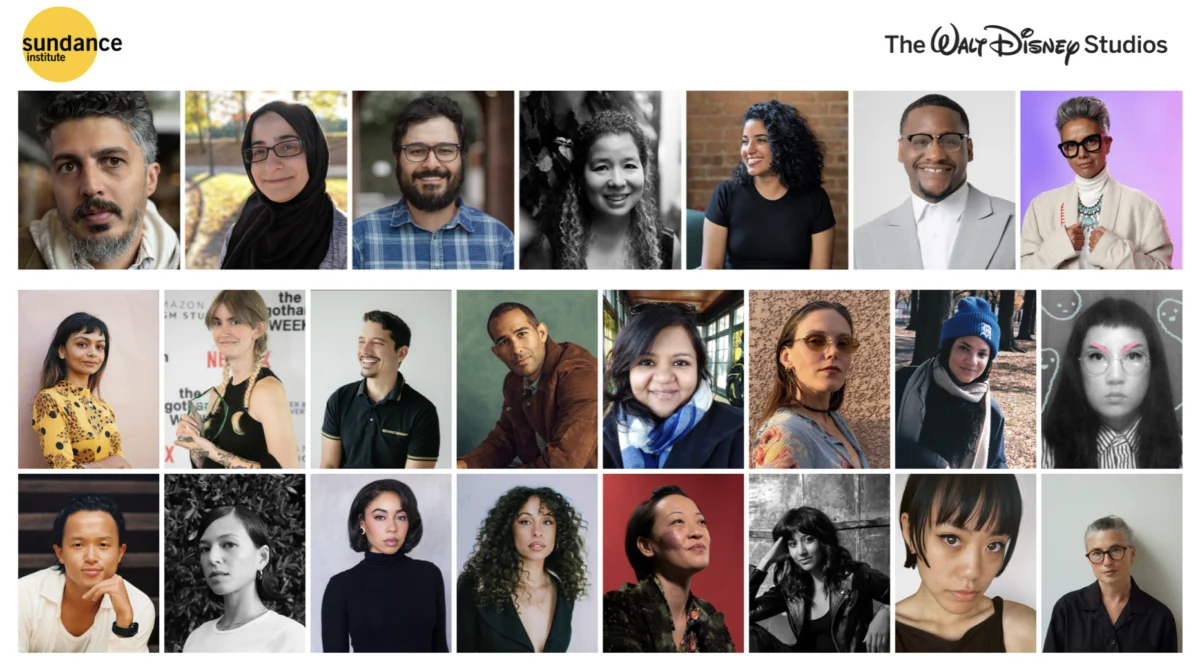
In an ongoing effort to bridge the gap between burgeoning creative talent and the resources necessary to bring vision to life, The Walt Disney Studios and the Sundance Institute have announced the expansion of their strategic partnership. By unveiling the recipients for the second and third cycles of their joint grant initiatives, the two industry titans have reinforced their commitment to fostering diversity, innovation, and long-term sustainability for 24 emerging filmmakers.
The collaboration, which was first established in November 2023, is designed to provide both financial relief and professional development to creators navigating the precarious early stages of their careers. Through the Project Advancement and Completion Fund and the Artist Fellowship, the partnership addresses two of the most significant hurdles in independent filmmaking: the scarcity of capital for technical completion and the lack of professional infrastructure to sustain a career in the arts.
The Pillars of Support: Grants and Fellowships
The core of this initiative lies in two distinct funding streams, each tailored to solve specific pain points within the creative lifecycle.
The Project Advancement and Completion Fund provides $25,000 grants to filmmakers whose projects are currently in the post-production or final development stages. For many independent directors, the "finishing funds" phase is where the most ambitious projects stall due to budget shortfalls. By providing targeted capital, Disney and Sundance enable these creators to finalize their films, ensure technical quality, and ultimately prepare their work for the festival circuit and global distribution.
Complementing this is the Artist Fellowship, which offers $15,000 grants. Unlike the completion funds, which are tethered to a specific film, these fellowships are designed to invest in the individual creator. This funding is intended to help filmmakers dedicate time to writing, research, and networking, providing them with the financial stability to develop their next project and cultivate a sustainable creative trajectory.
A Chronology of Collaboration
The partnership’s roots trace back to late 2023, when the inaugural cycle of grants was distributed. That initial launch served as a pilot program to test the efficacy of combining Disney’s massive industry reach with the Sundance Institute’s peerless reputation for independent discovery. Following the positive reception of that first round, the institutions moved quickly to institutionalize the process.
The recent announcement covers the second and third cycles of funding. These cycles represent a significant expansion, bringing the total number of supported filmmakers to a substantial cohort. The inclusion of high-profile emerging talent—such as Josephine director Beth de Araújo—highlights the program’s focus on directors who have already begun to make waves in the critical landscape. By identifying these creators at the "breakout" moment, the partnership seeks to provide the necessary momentum to propel them into the mainstream.

The Impact: A Full List of Recipients
The breadth of talent recognized in these latest cycles is expansive, representing a diverse array of perspectives and narratives.
Project Advancement and Completion Fund
Cycle Two Recipients:
- Urvashi Pathania – Skin
- Jane Casey Modderno – Here for the Weekend
- Jesus Celaya – Chalino
- Andrew Reid – Asia A
- Sushma Khadepaun – Anita
- Hanna Gray Organschi – Rubber Hut
- Beth de Araújo – Josephine
- Tij D’oyen – Lollygag
Cycle Three Recipients:
- Haley Elizabeth Anderson – Coyote Boys
- Kate Tsang – Sprout
- Chheangkea – Little Phnom Penh
- Alexandra Qin – Thirstygirl
- Andrea Ellsworth and Kasey Elise Walker – The Dispute
- Liz Sargent – Take Me Home
- Sonejuhi Sinha – Seven Days in Rome
- Courtney Loo – Bangbang Teahouse
- Ayşe Altınok – Headlock
Artist Fellowship
Cycle Two Recipients:
- Sofian Khan – Karachi Sky
- Huda Razzak – Home of the Birds
- Rebin Zangana – Qareen
- Fawzia Mirza – Heirloom
Cycle Three Recipients:
- Jessica Kingdon – Untitled Animal Project
- Maryam Mir – Sapna (Dream)
- David Fritz Fortune – SUMMA
Official Responses: Institutional Alignment
The partnership is viewed as a win-win for both the commercial film sector and the independent arts community.
Hajnal Molnar-Szakacs, director of the Artist Accelerator & Women @ Sundance Institute, emphasized the tactical importance of this support. "We are grateful for the collaboration with The Walt Disney Studios, which enables us to provide critical financial and tactical support to talented filmmakers," Molnar-Szakacs stated. "Empowering them to advance their films and cultivate sustainable creative careers is a core tenet of our mission. We are proud to champion these filmmakers as they continue to refine their voices and share their unique perspectives with the world."

From the studio perspective, the initiative is a long-term investment in the pipeline of future talent. Mahita Simpson, head of Creative Talent Pathways for The Walt Disney Studios, noted the historical significance of the partnership. "Sundance Institute has an incredible track record of finding and nurturing breakout talent," Simpson remarked. "We are thrilled to continue our collaboration with the Institute to champion this next generation of filmmakers and provide meaningful support as they continue developing their craft and careers."
Implications for the Industry
The collaboration between a corporate giant like Disney and a nonprofit powerhouse like Sundance signals a shifting trend in Hollywood’s approach to talent development. In an era where the cost of entry for independent filmmaking continues to rise, traditional funding models—such as self-financing or traditional production company grants—are increasingly insufficient.
1. Sustaining Independent Voices
By providing $15,000 in career-development grants, the fellowship program acknowledges that film is not just about the final product; it is about the person behind the lens. Providing the financial bandwidth for artists to focus on their creative process—rather than scrambling for part-time work—is essential for the development of high-quality, thought-provoking cinema.
2. Diversifying the Pipeline
A common critique of the entertainment industry is the barrier to entry for marginalized creators. By partnering with the Sundance Institute, which has spent decades curating diverse voices, Disney is effectively outsourcing the scouting process to an organization that specializes in equity and inclusion. This ensures that the capital provided reaches a wide demographic of filmmakers, which in turn fosters a more inclusive film culture.
3. Creating a "Bridge" to Major Studios
For the recipients of these grants, the association with both Sundance and Disney provides a unique "stamp of approval." This recognition can be instrumental in securing agents, finding distribution partners, and gaining credibility in pitch meetings. The partnership effectively acts as a bridge, allowing independent filmmakers to retain their artistic autonomy while gaining access to the resources and visibility that only a studio of Disney’s size can offer.
4. Setting a New Standard for Corporate Philanthropy
This partnership serves as a potential blueprint for other major studios. As the industry faces existential questions about the future of theatrical exhibition and content consumption, investing in the creators rather than just the projects offers a more resilient long-term strategy. If other studios follow suit, it could create a healthier ecosystem where the distinction between "indie" and "studio" film is less about budget and more about the evolution of the artist’s journey.
Conclusion
The expansion of the Disney and Sundance Institute partnership is more than just a press release about grant funding; it is a vital intervention in the creative economy. As the recipients of cycles two and three embark on the next phase of their careers, the industry will be watching to see how these supported projects manifest. With the financial weight of Disney and the curatorial expertise of Sundance behind them, these 24 filmmakers are now better positioned than ever to challenge the status quo, tell stories that matter, and define the future of the silver screen.
 Lina Hope
 Azzam Bilal Chamdy
 Pevita Pearce
