

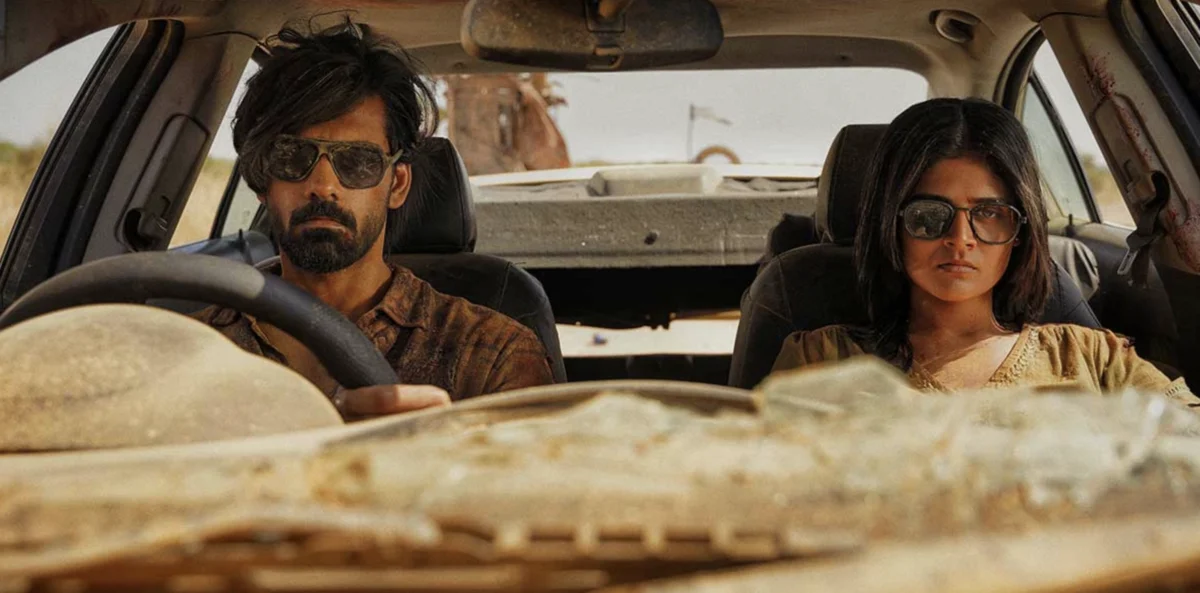
The landscape of modern Indian cinema has long been defined by its grand musical spectacles and sweeping melodramas. However, director Samjad’s latest Malayalam-language feature, Half, represents a stark, bloody departure from those conventions. Premiering at the 2026 Toronto International Film Festival, Half is a lean, mean, and unapologetically violent vampire-western hybrid that turns the arid, desolate stretches of a desert roadway into a theater of unrelenting carnage.
Starring Ranjith Sajeev and Aishwarya Raj as the invulnerable, sunlight-sensitive twins Ethan and Ivy, the film is a streamlined revenge thriller that manages to be as socio-politically charged as it is physically punishing. While the film occasionally stumbles under the weight of its own repetitive action cycles, it stands as a unique, grisly anomaly in the current Indian cinematic landscape, signaling a bold new direction for regional genre experimentation.
The Genesis of the Hunt: A Chronology of Chaos
The narrative architecture of Half is deceptively simple. It opens with a nostalgic, melancholic prologue—a childhood memory of a mother’s desperate plea for her children to protect one another. This emotional tether serves as the only backstory provided for the twins, a deliberate choice that leaves the audience to decipher the lore of their hybrid, vampiric lineage.
When we catch up with Ethan and Ivy years later, they are the embodiment of "vampire chic": driving a sleek car through sun-drenched hills, sporting dark glasses, and flashing sharp incisors. Their dynamic is established quickly through non-verbal communication; the silent Ivy and the stoic Ethan share a bond tested by their shared sensitivity to the world around them.
The inciting incident occurs when the twins are run off the road by a syndicate of ruthless highway bandits. This gang, which operates with clockwork cruelty, is established as a formidable, albeit one-dimensional, force of evil. They have made a practice of baiting travelers, stripping their vehicles, and leaving nothing but ash in their wake. When they target the twins, they attempt to humiliate and dispose of them—a fatal error in judgment.
What follows is a relentless, 96-minute spiral of vengeance. As Ethan and Ivy emerge from the wreckage, the film transitions from a road-trip drama into a methodical, high-octane hunt. The twins track the dozen perpetrators across the rural landscape, systematically dismantling the gang in a series of visceral encounters that prioritize kinetic, practical-effect-driven violence over traditional dialogue.
Anatomy of the Action: The Choreography of Gore
Central to the film’s appeal is the contribution of fight choreographer Very Tri Yulisman, whose work on The Raid 2 is legendary. Under Yulisman’s guidance, Half transcends typical "vigilante justice" tropes, transforming every encounter into a masterclass of inventive mayhem.

The action is not merely decorative; it is visceral. The film features an array of gruesome set pieces, from bare-hand scalpings to the use of improvised, environmental weaponry. There is a raw, almost sadistic delight in how these fights are framed—a departure from the polished, slow-motion aesthetic often found in mainstream action films.
One particular sequence, which sees the protagonists deploying professional wrestling-style maneuvers against their foes, underscores the film’s willingness to embrace the absurd alongside the horrific. This "morbid delight" is what keeps the viewer engaged even when the narrative begins to sag. The film understands that its audience is there for the spectacle of the supernatural meeting the mundane, and it rarely pulls its punches.
Socio-Political Undercurrents and the Weight of Trauma
Perhaps the most challenging aspect of Half is its heavy-handed use of socio-political imagery. The film does not shy away from the darker realities of modern India, specifically the pervasive specter of sexual violence.
In one of the film’s most harrowing sequences, the villains utilize an iron rod to assault Ivy. The imagery is unmistakable, serving as a dark mirror to the real-world 2012 Nirbhaya case that ignited widespread protests against rape culture in India. By grounding its fantasy-revenge plot in this specific, painful cultural reality, the film attempts to provide a "righteous" catharsis for the viewer.
However, this choice is double-edged. While it infuses the revenge mission with a sense of moral urgency, it also leads to the film’s most contentious narrative decision: the sidelining of Ivy. Despite her being a primary protagonist with equal agency, the narrative occasionally pivots to focus on Ethan’s perspective, diminishing Ivy’s role in her own reclamation of power. This creates a friction between the film’s progressive intent and its execution, leaving the viewer to wonder if the "oppressive cinematic machismo" the film seeks to challenge is something it has accidentally internalized.
Supporting Data: Production and Distribution
As a low-budget, high-concept production, Half relies heavily on visual storytelling and practical effects to compensate for its lack of massive scale. The production design utilizes the harsh, unforgiving nature of the Indian desert to create a sense of isolation that mirrors the twins’ own experiences as outcasts.
- Runtime: 96 minutes.
- Genre: Action / Horror / Western.
- Language: Malayalam.
- Director: Samjad.
- Lead Cast: Ranjith Sajeev, Aishwarya Raj.
- Status: Seeking U.S. Distribution following a successful TIFF premiere.
The critical reception at the Toronto International Film Festival has been largely positive regarding the film’s technical audacity, though reviewers have noted the repetitive nature of the second act. The film’s ability to "keep the course" despite these lulls is a testament to the strength of its visual identity and the lead performances, which convey significant depth through minimal dialogue.

Implications for the Future of Genre Cinema
The existence of Half suggests a broader shift in Indian regional cinema. For decades, the industry was dominated by a binary of "art-house" social dramas and "masala" blockbusters. Half resides in the middle ground—a genre-focused, technically proficient film that aims for global, rather than just domestic, appeal.
The implication for distributors and studios is clear: there is a growing appetite for stories that lean into sub-genres like the "vampire western." By blending local cultural trauma with international action sensibilities, Samjad has created a film that is difficult to categorize, and therefore, highly memorable.
However, the film also serves as a warning for emerging filmmakers. The reliance on repetitive action sequences, even when they are beautifully choreographed, can lead to audience fatigue. Future projects in this vein would benefit from a more balanced screenplay that treats its characters—especially female protagonists—with the same care it gives its stunt work.
Final Assessment: A B-grade Triumph
Half is an imperfect but vital piece of filmmaking. It is a film of "bare minimums" in terms of plot, yet it executes those minimums with a visual verve that is rare in contemporary cinema. It does not reinvent the wheel, but it certainly paints it red.
For those looking for a clean, cohesive, and deeply atmospheric experience, Half delivers. It is a singular, martial arts-inspired, horror-laden road movie that goes for the jugular, and in doing so, cements itself as a noteworthy debut for Samjad. Whether it will find the broader U.S. distribution it seeks remains to be seen, but it has already succeeded in doing the hardest thing any film can do: it has left a mark.
Grade: B-
 Lina Hope
 Azzam Bilal Chamdy
 Pevita Pearce
