


By Paulo Kawanishi
Published September 18, 2026
Main Facts: Redefining Relationships in Fortune’s Weave
For decades, Intelligent Systems and Nintendo’s acclaimed Fire Emblem franchise has thrived on tactical combat blended heavily with social simulation elements. Since the breakout success of Fire Emblem Awakening and its refined continuation in Fire Emblem: Three Houses, player-driven matchmaking, marriage, and second-generation offspring mechanics have become defining pillars of the series’ identity. Fans have grown accustomed to cultivating deep emotional bonds on the battlefield, ultimately culminating in iconic S-Rank confessions and paired endings.
However, with the 2026 release of Fire Emblem: Fortune’s Weave, the developers have charted a distinct path. Fortune’s Weave does not feature a traditional romance system comparable to the matchmaking grid seen in Three Houses.
This design choice has sparked widespread debate among long-time tacticians and newcomers alike. While players can still heavily influence relationship dynamics through the game’s returning support level mechanic—built by fighting side-by-side and interacting within the central hub city—the ultimate endpoint of these relationships is more nuanced. Rather than explicit marriage proposals or universally romantic S-Rank pairings, Fortune’s Weave emphasizes deep camaraderie, ideological alignment, and emotional closure.
Crucially, the game does feature high-level "paired endings" centered around the protagonist, Eshmel, but these conclusions lean into profound companionship and shared futures rather than traditional romance. For players diving into the sprawling continent of Fortune’s Weave, understanding how these mechanical shifts impact character arcs is essential for navigating the campaign.
Chronology of the Relationship System: From C-Rank to the Obelisk Chamber
To understand how connections develop in Fire Emblem: Fortune’s Weave, players must trace the progression of the support system from the early hours of the campaign through to the post-game credits.

Phase 1: Early-Game Bonding and Hub Exploration
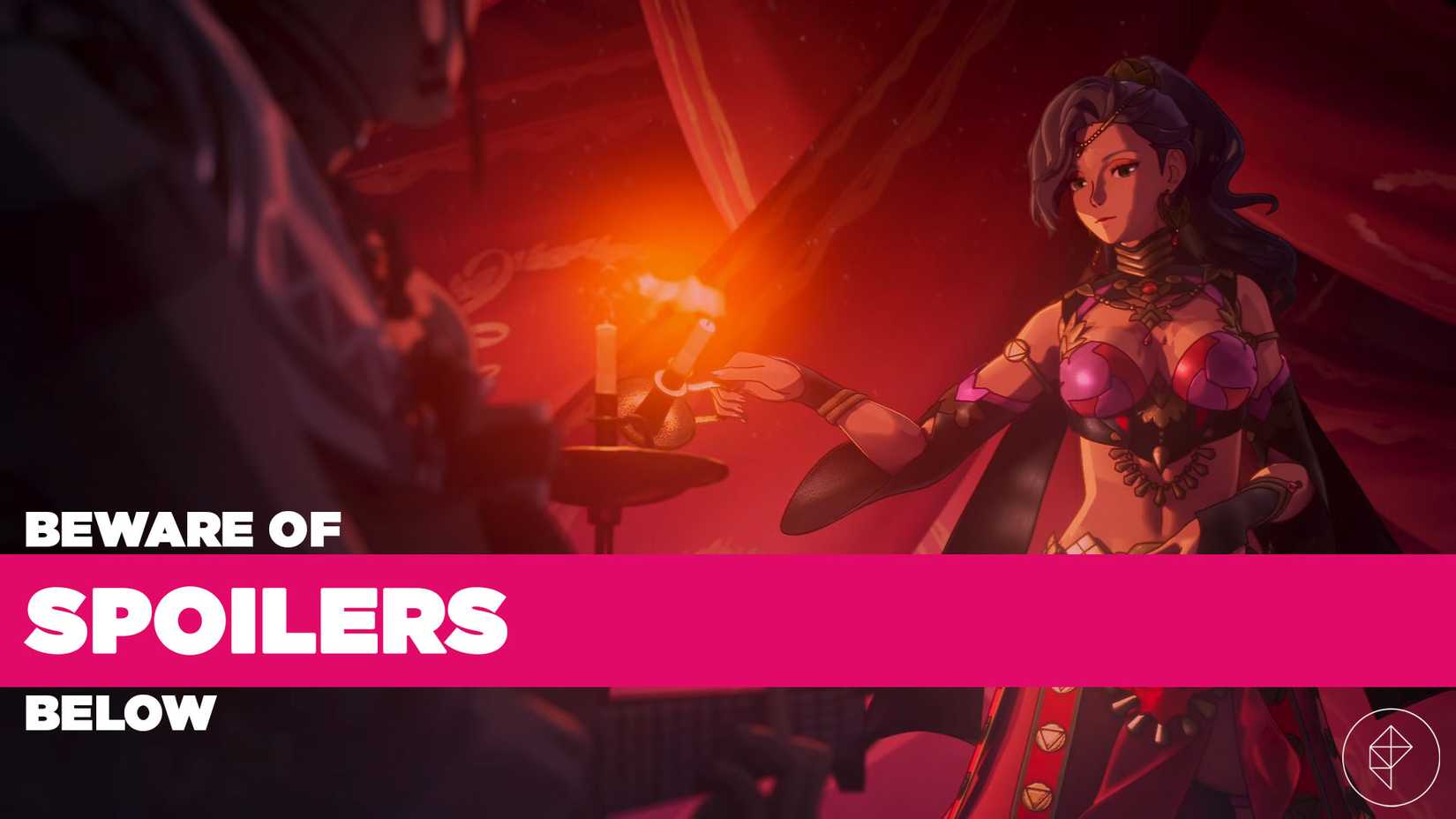
From the very opening chapters, Fortune’s Weave establishes that characters possess distinct social circles and preexisting emotional investments. Unlike titles where the protagonist acts as a blank slate for every romanceable unit, characters within Fortune’s Weave display autonomous romantic or affectionate inclinations independent of player input. For instance, characters like Esmeralda openly display their devotion to Dietrich right from the start of the narrative, embedding romance into the fabric of the main script rather than leaving it entirely to player agency.
As players recruit units and deploy them together in skirmishes or allow them to unwind in the city, hidden relationship meters begin to tick upward.
Phase 2: Unlocking Support Conversations (Ranks C, B, and A)
As units grow closer, players unlock progressive support conversations. These interactions are split into three traditional tiers:
- Rank C: Introduces characters, establishing their baseline dynamics, ideological clashes, or mutual respects.
- Rank B: Deepens the lore, often revealing personal vulnerabilities, past traumas, or shared motivations.
- Rank A: Reaches the peak standard support tier, showcasing a profound level of trust.
Within these dialogues, players will witness characters express open affection, flirtation, or intense loyalty. However, reaching Rank A is no longer a guaranteed gateway to marriage.
Phase 3: The Post-Game and the Shrine of Causality
The true structural divergence of Fortune’s Weave occurs after the final battle. Once the dust settles on the campaign’s climax, players are granted the ability to teleport the protagonist, Eshmel, to the exact location of a specific companion.
This action is contingent upon achieving a specialized Support Level 5 with that specific character. Selecting a unit triggers a high-tier S-Rank support conversation. Crucially, these scenes can be rewatched at any time using the Shrine of Causality located within the Obelisk Chamber.

However, rather than culminating in a wedding or romantic declaration, these S-Rank conversations frequently resolve as deeply emotional heart-to-hearts about survival, shared burdens, and plans for the rebuilding of a fractured world. When the credits roll, the epilogue summaries explicitly detail the futures of the recruited cast—confirming that while Eshmel may remain permanently by a companion’s side (such as the Siren of the Six-String, Leda), their bond is frequently portrayed through a lens of profound partnership rather than romantic coupling.
Supporting Data: Navigating the Mechanics of Fortune’s Weave
For tactical commanders looking to optimize their playthroughs while navigating the complex web of causality in Fortune’s Weave, managing character relationships is only one piece of a much larger puzzle. The game’s intricate design requires players to balance social downtime with punishing tactical choices.
Key Gameplay Considerations:
- Support Progression Rate: Support points scale based on shared combat actions (such as adjacency bonuses, healing, and rescue maneuvers) and shared downtime activities within the hub city.
- Support Level Caps: Standard gameplay restricts relationships to Rank A, while the post-game unlocks the specialized Level 5 threshold required for Eshmel’s final companion choice.
- Alternative Systems: Players looking to tailor their campaign difficulty can choose between Classic and Casual modes, mirroring staple franchise mechanics.
- Resource and Time Management: Between Heroic Games matches, players must strategically allocate free-time resources, unlock early Boons of Salvation, and participate in micro-activities like "Bird Time" at the Perch to maximize unit efficiency.
| Feature / System | Fire Emblem: Three Houses | Fire Emblem: Fortune’s Weave |
|---|---|---|
| Romance System | Dedicated S-Rank marriage/partnership system | Absent; focused on deep companionship |
| Protagonist Pairings | Extensive choice of marriage partners for Byleth | Post-game level 5 support teleports with Eshmel |
| Character Autonomy | Limited outside of predetermined paired endings | Characters display independent romance in main script |
| Support Tiers | C, B, A, S | C, B, A, and Post-Game Level 5 |
Official Responses and Developer Intent
While Nintendo and Intelligent Systems have largely allowed the game to speak for itself upon release, pre-launch promotional materials and developer deep-dives hinted at a pivot in narrative philosophy.
In past retrospective interviews regarding the Fire Emblem series, directors have noted the immense challenge of balancing a sprawling, multi-route narrative with the logistical nightmare of writing dozens of unique romantic S-Rank endings and second-generation character variations. With Fortune’s Weave, the development team sought to refocus the narrative lens on collective grief, geopolitical restoration, and the overarching threads of causality rather than personal matchmaking.
By embedding romance directly into specific character arcs within the script—such as Esmeralda and Dietrich—the writers reclaimed narrative control over character chemistry. This ensures that relationships feel organic to the world’s lore rather than artificially shoehorned into player-choice matrices. The inclusion of Eshmel’s non-romantic, highly loyal companion endings reflects an intentional creative choice to honor deep platonic and professional bonds that match the gravity of an epic fantasy war story.
Implications: What This Means for the Future of the Franchise
The absence of a traditional, all-encompassing romance system in Fire Emblem: Fortune’s Weave carries significant implications for the future direction of the franchise.
1. A Shift Back to Classical Narrative Gravity
For purists who felt that modern Fire Emblem titles leaned too heavily into "dating simulator" mechanics at the expense of serious war-drama pacing, Fortune’s Weave represents a welcome return to form. By tightening the narrative focus and avoiding the narrative contortions required to make every single character romantically compatible with the protagonist, the writers have delivered a sharper, more cohesive storyline.
2. Redefining Player Agency
Modern RPG audiences deeply value self-expression and the ability to roleplay specific relationships. The removal of traditional S-Rank player marriages has drawn minor critiques from fans who enjoy matchmaking simulations. However, the compromise—allowing players to choose a dedicated lifelong companion for Eshmel through the Shrine of Causality—strikes a balance between player choice and narrative integrity.
3. Replayability and Exploration
Because support conversations and character endings in Fortune’s Weave are no longer universally bound to romantic outcomes, players are encouraged to view the cast through a broader sociological lens. The game shifts replay value away from "seeing every marriage combination" toward exploring alternate route choices, managing complex causality paths, and uncovering the deep hidden lore of the continent.
Ultimately, Fire Emblem: Fortune’s Weave proves that the franchise does not need a marriage altar on every battlefield to deliver emotionally resonant storytelling. By prioritizing the quiet strength of loyalty, shared trauma, and unyielding companionship, Intelligent Systems has forged a memorable new chapter in tactical role-playing history.
 Lina Irawan
 Azzam Bilal Chamdy
