

By Josh Broadwell
Published September 18, 2026
Main Facts
For tactical role-playing game enthusiasts diving into Intelligent Systems and Nintendo’s latest massive release, Fire Emblem: Fortune’s Weave, navigating the campaign’s structural milestones is critical to long-term success. One of the most consequential choices players face arrives at the conclusion of Act 1, when interacting with the enigmatic Strife Obelisk as any of the Flame Lords. This landmark opens up a tempting, game-altering shortcut: the option to completely skip the War Arc (Act 2).
While bypassing Act 2 is entirely feasible, doing so carries distinct gameplay ramifications. If a player chooses to ignore the obelisk and proceed straight to the campaign’s door instead, they forfeit the ability to bring their secondary units into the final campaign. Conversely, interacting with the Strife Obelisk grants the choice to bypass the entirety of the War Arc.
For first-time players, developers and veteran critics strongly advise against skipping this central pillar of the narrative and progression mechanics. However, for returning veterans, players looking to fast-track alternate playthroughs, or those testing out tweaked Act 1 character configurations, the skip function serves as a remarkably flexible, albeit strategically limiting, tool.
Chronology: Understanding the Path to the Strife Obelisk
To fully understand the weight of the War Arc skip, players must examine how Fire Emblem: Fortune’s Weave structures its sprawling narrative milestones.
Act 1: Laying the Foundation
The journey begins with the selection of a Flame Lord and the navigation of the early-game chapters. During this phase, players recruit units, build support levels, manage free time, and establish baseline tactical preferences—such as choosing between Classic and Casual modes. This opening act serves as the foundational crucible where armies are born.
The Turning Point: The Strife Obelisk
Upon concluding Act 1, players are confronted with the Strife Obelisk. This monumental structure acts as a temporal and narrative gatekeeper. Interacting with it triggers the transition into Act 2, commonly known as the War Arc.
Act 2: The War Arc
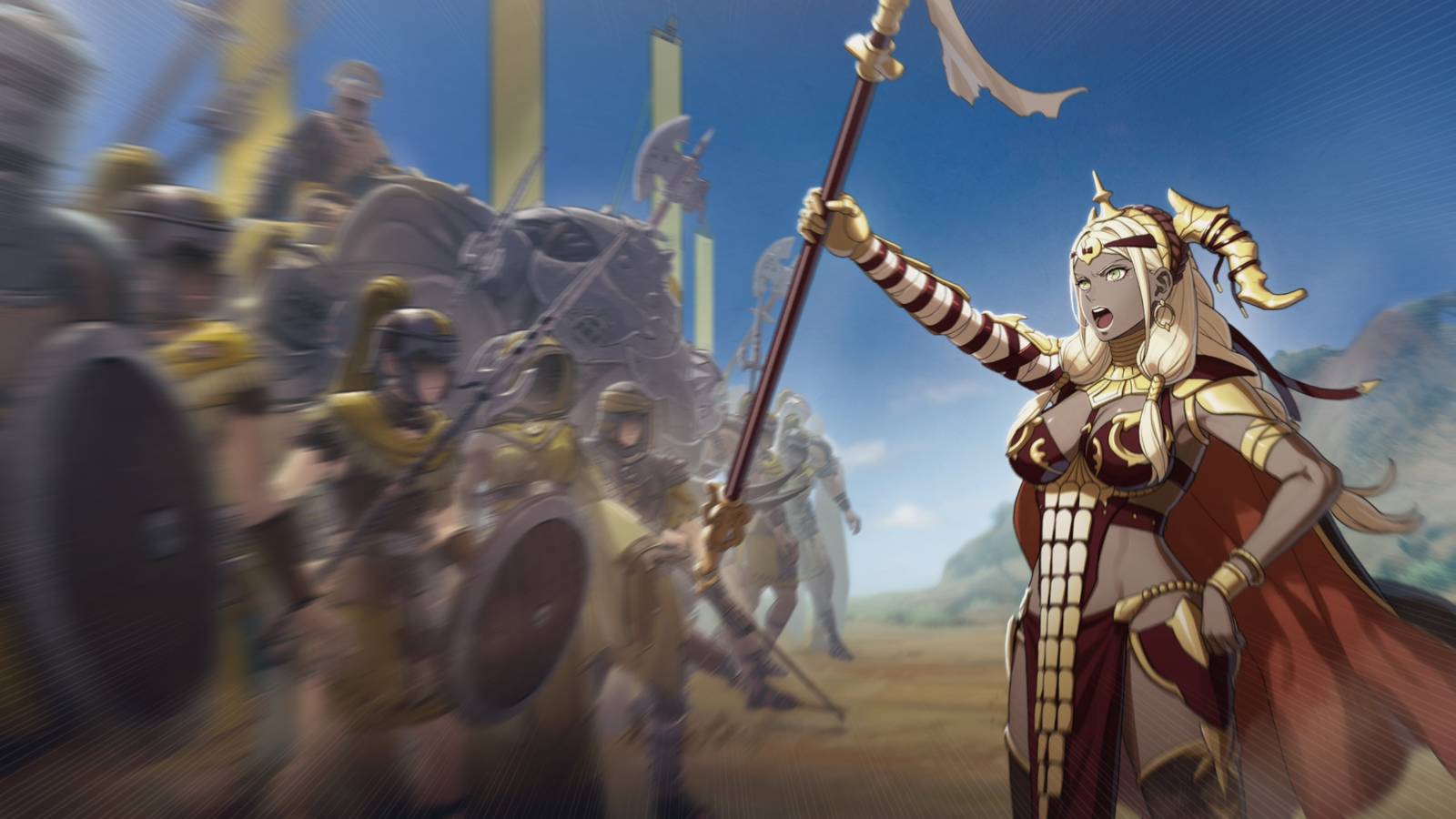
Historically, the War Arc functions as a narrative and mechanical bridge connecting the formative events of Act 1 to the punishing crescendo of Act 3. Interestingly, the maps and overarching narrative beats in Act 2 remain largely uniform regardless of which initial character route a player chooses, save for unique introductory and concluding cutscenes.
Act 3: The Final Campaign
The ultimate destination of the campaign, Act 3 introduces significantly steeper difficulty spikes, larger-scale battlefields, and demanding tactical checks that punish unprepared players. It is here that the consequences of how one navigated (or bypassed) the War Arc come home to roost.
Supporting Data and Mechanics: What Happens When You Skip?
Choosing to skip the War Arc is not merely a narrative truncation; it fundamentally alters the state of your roster and resource economy. Below is a breakdown of the mechanical impacts triggered by activating the skip via the Strife Obelisk:
- Automatic Level Adjustments: When a player opts to skip Act 2, the game automatically elevates every character in the roster to Level 45. This ensures that your army immediately meets the bare-minimum recommended threshold required to survive the initial onslaught of Act 3.
- Narrative Efficiency: Because the core map layouts and story events of Act 2 do not radically diverge based on character choice, skipping the arc ensures players do not miss unique character-specific narrative arcs during the middle phase of the game.
- The Replayability Factor: If a player has previously completed a campaign and returns to replay specific Act 1 chapters—perhaps to optimize stats, experiment with new builds, or recruit characters missed on an initial run—skipping the War Arc provides an expedited highway back to the fresh content of Act 3. Furthermore, players can technically choose to skip at various checkpoints during Act 2, returning later if they wish.
The Downsides of Bypassing Act 2
Despite the obvious allure of time-saving convenience, skipping the War Arc introduces notable strategic penalties:
- Stunted Stat Growth: Playing through the War Arc manually allows diligent tacticians to aggressively farm experience, routing enemy reinforcements to push their primary characters up to Level 50 or higher. Skipping caps this early growth, forcing characters into Act 3 at a baseline level rather than an over-leveled advantage.
- Loss of Granular Customization: Act 2 is an invaluable sandbox for running drills, swapping character classes, and grinding weapon and skill ranks. Manual progression grants players meticulous control over army development. Bypassing the arc shifts the burden to early Act 3, demanding heavier squad management right when the game’s difficulty spikes.
Official Developer Guidance and Strategic Recommendations
Intelligent Systems has designed Fortune’s Weave to accommodate a wide spectrum of playstyles, ranging from newcomers seeking a cinematic narrative experience to hardcore veterans looking for rigorous tactical optimization.
For Beginners
If this is your maiden voyage through Fortune’s Weave, developers and guides strongly recommend engaging with the War Arc organically. Beyond the narrative cohesion it provides, the gradual difficulty curve of Act 2 is specifically engineered to school players in the advanced mechanics, positioning strategies, and resource allocation models mandatory for surviving Act 3. Skipping this phase can leave rookie commanders feeling overwhelmed by the abrupt tactical jump of the final act.
For Speedrunners and Tweakers
Conversely, players executing subsequent playthroughs—such as those testing alternative routes or verifying newly unlocked support conversations—are given the green light to utilize the skip. If your primary objective is to evaluate how a minor adjustment made in an optimized Act 1 run impacts the late-game meta, the skip function acts as a welcome quality-of-life feature.

Broader Implications for the Fire Emblem Franchise
The inclusion of a systemic "arc skip" in Fortune’s Weave represents a fascinating evolution in modern tactical game design. Historically, Japanese role-playing games and strategy titles have rigidly enforced linear progression, requiring players to grind through every designed map regardless of replay count.
By introducing the Strife Obelisk mechanic, Intelligent Systems acknowledges a modern gaming reality: time-constrained players often want to experience branching narratives and varied character builds without being forced to replay identical mid-game tactical puzzles. This design philosophy mirrors broader industry trends toward respect for player time, allowing core gameplay loops to remain robust while removing administrative friction from secondary and tertiary playthroughs.
At the same time, the penalty system attached to the skip—lower character levels and fewer skill-rank opportunities—ensures that the choice remains a meaningful strategic decision rather than a simple "cheat code." Players must weigh the currency of real-world time against the in-game currency of character stats and tactical mastery.
Navigating the Broader World of Fortune’s Weave
For those embarking on or returning to the massive world of Fortune’s Weave, mastering the campaign requires far more than just deciding the fate of the War Arc. New players must grapple with intricate systems of causality, route planning, and interpersonal bonding:
- Choosing Your Path: Deciding which character route to tackle first sets the tone for your entire campaign, impacting ally availability and narrative perspective.
- Managing Heroes and Modes: Understanding how to fluidly change heroes and selecting between the unforgiving stakes of Classic mode and the forgiving nature of Casual mode helps tailor the experience to your personal comfort level.
- Free Time Optimization: Between massive military engagements, players must efficiently utilize their free time to unlock Boons of Salvation, recruit specialized characters across support tiers, and engage in lighter diversions—such as taking a quick "Bird Time" session at the Perch.
Ultimately, whether you choose to march through the grueling battles of the War Arc or utilize the Strife Obelisk to leap straight into the fires of Act 3, Fortune’s Weave offers a deeply customizable tactical sandbox where every choice leaves a permanent imprint on your campaign’s final tapestry.
 Layla Zulfa
 Basiran
 Dwi Wanna
