

Published: September 18, 2026
By: Automotive Correspondent
Main Facts
In the rarefied atmosphere of ultra-luxury bespoke manufacturing, Rolls-Royce continues to stand in a league of its own. Demonstrating once again that the boundaries of personalization are defined only by human imagination, the storied British marque has unveiled its latest masterpiece: the Rolls-Royce Phantom Hummingbird.
Commissioned through the automaker’s exclusive Dubai Private Office as a profound and deeply personal tribute to the client’s wife, this one-off extended-wheelbase saloon merges traditional British automotive craftsmanship with natural artistry. The vehicle draws its thematic inspiration from the agile, jewel-toned hummingbird, celebrating the intricate wonders of the natural world through groundbreaking applications of rare materials—most notably, the historic integration of genuine abalone shells into automotive marquetry.
While the Phantom Hummingbird remains a singular, privately owned commission, its creation signals a watershed moment in interior design for the Goodwood-based manufacturer. The project required nine months of intensive development, followed by meticulous handcrafting that pushes the envelope of what is possible inside a motorized carriage.

Chronology of Creation
The realization of the Phantom Hummingbird was not a swift endeavor; it represents a multi-month journey of artistic exploration, engineering validation, and meticulous hand assembly orchestrated by the world’s leading artisans.
- Phase I: Conception and Commissioning (Late 2025): The project originated via the Dubai Private Office, a specialized concierge service designed to cater to Rolls-Royce’s most discerning clientele in the Middle East. Tasked with creating an eternal tribute to his wife, the client envisioned a theme centered around the grace, speed, and vibrant iridescence of the hummingbird.
- Phase II: Material Research and Development (Early 2026): Tasked with capturing the shimmering plumage of a hummingbird, Rolls-Royce artisans turned to unusual mediums. While mother-of-pearl is occasionally utilized in high-end automotive accents, the team chose abalone shell for the first time in the marque’s history due to its shifting, multi-colored pearlescence. Developing the precise cuts, structural integrity, and lacquer treatments required a nine-month R&D cycle.
- Phase III: Assembly and Marquetry (Mid 2026): Once the material parameters were established, the physical crafting began. The intricate rear cabin marquetry required fitting wafer-thin pieces of abalone and mother-of-pearl directly into fine wood veneers. Each hummingbird motif required 53 distinct pieces, while the central botanical artwork demanded 84 individual segments. Combined, the marquetry elements required 45 hours of uninterrupted, microscopic hand-assembly.
- Phase IV: Global Unveiling (September 18, 2026): Rolls-Royce officially showcased the Phantom Hummingbird to the public, offering a glimpse into the sophisticated capabilities of its Bespoke division and cementing the vehicle’s status as a modern collectible.
Supporting Data and Design Specifications
To truly understand the Phantom Hummingbird, one must examine the staggering level of detail woven into every square inch of its chassis and cabin.
Exterior Styling
On the outside, the Phantom Hummingbird adopts a deceptively understated aesthetic, preferring quiet elegance over ostentatious flash.
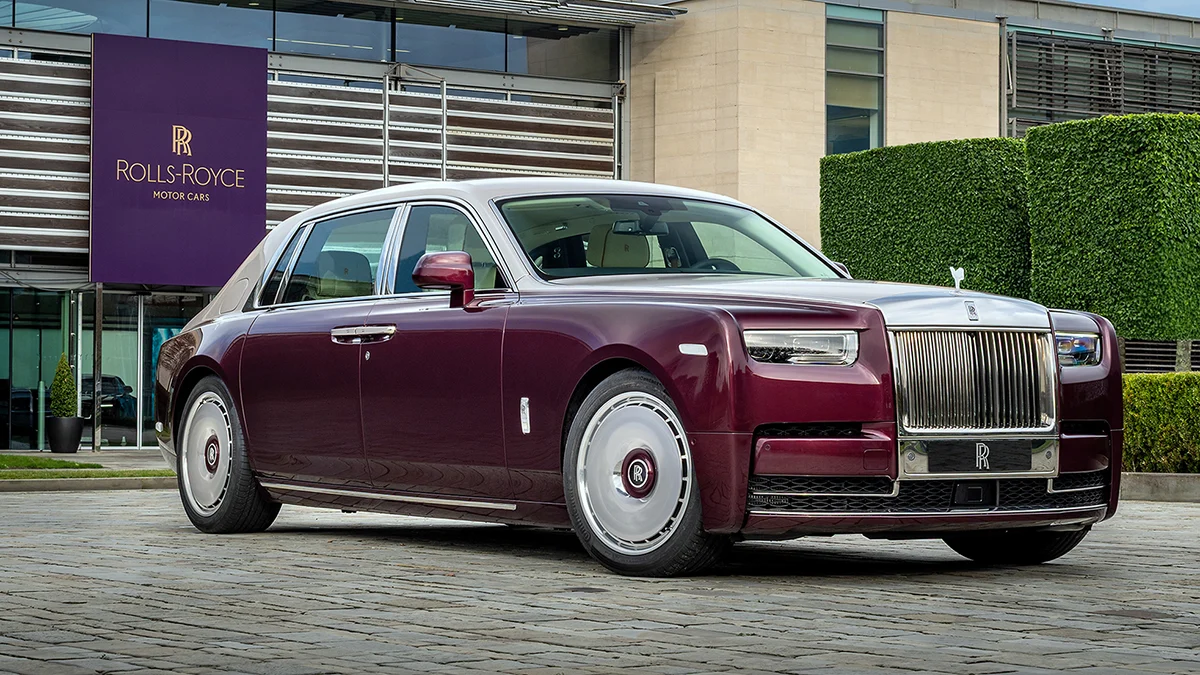
- Two-Tone Paint Scheme: The extended-wheelbase body is split gracefully, featuring a rich, deep Wildberry finish on the lower portions, contrasted against a serene, pale White Sands on the upper surfaces.
- The Coachline: Adding a subtle narrative touch, the signature hand-painted coachline—applied entirely by hand using a specialized ox-hair brush—features a delicate miniature illustration of a hummingbird feeding on a blossoming flower, positioned artfully just above the rear wheel arch.
Interior Artistry and Marquetry
The cabin is where the hummingbird theme takes center stage, functioning as a rolling art gallery.

- First-Ever Abalone Marquetry: Handcrafted wood veneer features avian and floral marquetry across three primary locations: the rear center waterfall console and the picnic tables mounted on the backs of both front seats.
- Piece Counts: Each individual hummingbird design is meticulously constructed from 53 separate pieces of shell and pearl, while the adjoining botanical motif between the rear passengers consists of 84 distinct pieces.
- Dashboard and Accents: The dashboard fascia incorporates delicate abalone cutouts framing the analog clock, creating a cohesive visual language from front to back.
- Palette and Textures: The interior is swathed in Crème Light premium leather, accented by Moccasin and Tan stitching and piping. The wooden architecture relies on warm Ash Burr and Silver Birch veneers. Underfoot, the vehicle features plush, bespoke shell-colored carpeting, while overhead, the iconic fiber-optic Starlight Headliner mimics a clear, starlit night sky.
Financial Estimates
Rolls-Royce maintains a strict policy of never disclosing the precise financial figures for its bespoke one-off commissions. However, industry analysts note that the baseline price for a standard Rolls-Royce Phantom Extended sits at approximately $632,000. Given the nine-month development timeline, pioneering material usage (abalone shell), and exhaustive man-hours required for the interior marquetry, the final invoice for the Phantom Hummingbird is widely believed to eclipse $1 million.
Official Responses and Perspectives
While Rolls-Royce has kept the identity of the commissioning collector private—as is customary for ultra-high-net-worth commissions handled through regional private offices—spokespersons and master artisans from the marque have shared insights into the philosophy behind the build.
Representatives from the Goodwood manufacturing plant emphasized that the Phantom Hummingbird serves as a testament to the versatility of the Bespoke collective. Designers noted that working with abalone shell presented significant technical hurdles, primarily due to the natural brittleness of the material. Traditional cutting tools risked shattering the iridescent layers, requiring bespoke laser-cutting techniques paired with painstaking hand-shaping to ensure seamless integration into the wood veneers.
"This vehicle demonstrates that luxury is not merely about expensive materials, but about the emotional resonance those materials carry," a Rolls-Royce design spokesperson noted during the briefing. "By capturing the fleeting iridescence of nature within a timeless machine, our artisans have created something that transcends transportation—it is a personal heirloom."

Implications for the Ultra-Luxury Automotive Market
The introduction of the Phantom Hummingbird carries several noteworthy implications for the upper echelon of the global automotive landscape and the future of bespoke coachbuilding.
1. The Expansion of Regional Private Offices
By channeling this commission through its Dubai Private Office, Rolls-Royce highlights the growing importance of localized, hyper-personalized luxury hubs. Rather than requiring clients to travel exclusively to Goodwood, England, regional private offices allow ultra-high-net-worth individuals in the Middle East, Asia, and the Americas to collaborate face-to-face with designers in culturally resonant environments. This localized concierge model is rapidly becoming the gold standard for ultra-luxury marques seeking to capture elite clientele.
2. Redefining Automotive Materials
The successful integration of abalone shell into wood marquetry breaks new ground for interior trim possibilities. For decades, automotive interior customization was largely confined to variations of leather, carbon fiber, brushed metals, and conventional wood veneers. The Phantom Hummingbird proves that marine-derived organic materials can be safely and durably engineered to withstand automotive environments, opening the floodgates for future commissions featuring pearls, semi-precious stones, and complex organic mosaics.
3. The Shift Toward Sentimental Storytelling
Modern ultra-luxury is increasingly defined by narrative rather than raw performance metrics. In an era where 600-plus horsepower is readily accessible across various vehicle classes, buyers of multi-million-dollar rolling sculptures are searching for emotional permanence. Commissions like the Phantom Hummingbird—built as an eternal love letter to a spouse—demonstrate that cars are increasingly viewed as mobile canvases for personal legacy, family history, and emotional storytelling.

For those inspired by the Phantom Hummingbird, Rolls-Royce has indicated that while this specific vehicle will never be replicated, its artisans stand ready to explore similarly avant-garde techniques for future clients willing to push the boundaries of automotive artistry.
 Sagoh
Sagoh
 Reynand Wu
 Siti Muinah
