

Introduction and Main Facts
Pop superstar Ed Sheeran candidly addressed a turbulent week of live-music politics, tour fallout, and personal apprehension during his high-profile return to the stage in Philadelphia on Saturday night. Performing in front of a tense and deeply scrutinizing crowd, the British singer-songwriter admitted to altering his traditional concert architecture due to acute security concerns. Most notably, Sheeran scrapped his signature "B-stage"—a secondary platform typically positioned directly in the center of the crowd to allow for intimate, 360-degree acoustic performances.
The drastic change in production was driven by underlying anxieties regarding potential public hostility. Speaking openly to the arena, Sheeran confessed that he was entirely unsure of how the Philadelphia audience would receive him in the wake of the fallout surrounding former tour support act Macklemore.
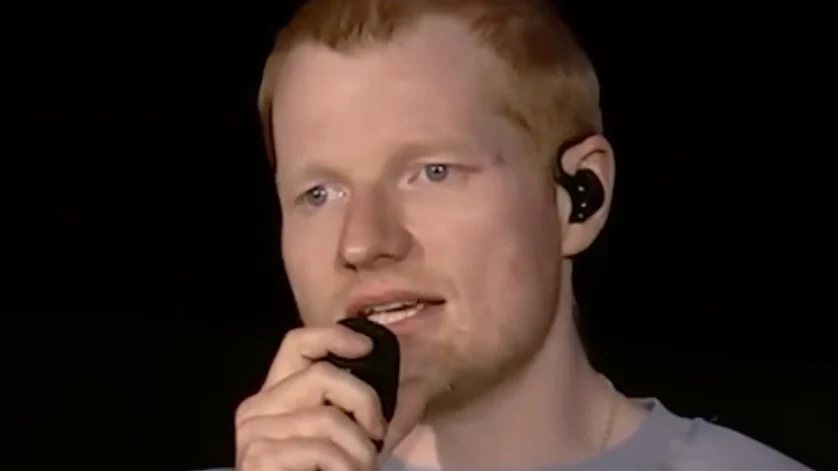
"I’m gonna be totally honest with you: I didn’t know what this audience would be like tonight. I didn’t know if I would have things thrown at me," Sheeran told the crowd from the main stage. "I took the B-stage out because I was afraid of what might happen if I stood in the middle, and I will admit that."
Saturday’s concert represented a pivotal stress test for Sheeran’s touring apparatus. Beyond modifying his physical stage layout, the Grammy-winning artist was forced to scramble and assemble an entirely new live backing band on a mere three days’ notice. The emergency reshuffle occurred after traditional Irish folk group Beoga withdrew from the tour in solidarity with Macklemore, leaving Sheeran with a massive instrumental void just days before a major arena date.
Despite the high-stakes pressure and the swirling controversies regarding venue politics and international geopolitics, Sheeran pushed forward, leaning into radical transparency with his fans as he navigated one of the most precarious moments of his touring career.
Chronology of Events: From Tour Support to Sudden Fallout
To fully understand the charged atmosphere at the Philadelphia concert, it is necessary to examine the sequence of events that transformed a routine arena trek into a geopolitical and cultural flashpoint.
The Original Lineup and Initial Tour Launch
Ed Sheeran’s latest tour had been progressing under standard industry parameters, featuring a diverse roster of supporting acts designed to appeal to broad demographics. Among them was American rapper Macklemore, whose inclusion was intended to bring an energetic hip-hop dynamic to the stadium and arena dates.
The Catalyst: Macklemore’s Removal
The stability of the tour fractured rapidly following escalating controversies involving Macklemore’s public commentary and subsequent removal from the bill. While details surrounding the precise pressures exerted by promoters, venue executives—such as New England Patriots owner Robert Kraft—and management teams continue to unfold, the decision to drop Macklemore as a support act sent immediate shockwaves through the touring camp. The removal was not viewed universally as a standard business decision; rather, it ignited fierce debates concerning artistic freedom, corporate censorship, and the boundaries of political speech on major commercial stages.
Solidarity and Desertion
The fallout deepened when traditional folk band Beoga, who had maintained a long and celebrated collaborative history with Sheeran, abruptly announced their withdrawal from the tour. Beoga’s decision was explicitly framed as an act of solidarity with Macklemore, leaving Sheeran’s live production severely understaffed and critically exposed just days before the Philadelphia engagement.
The Emergency Call to Action
Facing an immediate operational crisis, Sheeran turned to his inner circle of trusted musical collaborators. He reached out to longtime violinist and arranger Alicia Enstrom. With only 72 hours until showtime, Enstrom coordinated an emergency roster of professional musicians willing to step into the fire. These artists agreed to learn Sheeran’s extensive catalog from scratch while fully aware of the hostile public climate surrounding the tour.
Saturday Night in Philadelphia
The culmination of this frantic three-day turnaround arrived on Saturday night in Philadelphia. Rather than attempting to bypass the elephant in the room, Sheeran opened the evening by directly addressing the audience. He contextualized the empty spaces on stage, the absence of his former collaborators, and his own personal stance on the complex issues involving Israel, Palestine, and the broader debate over artists’ rights to free expression.
Supporting Data and Behind-the-Scenes Logistics
The logistical hurdles overcome prior to the Philadelphia concert highlight the immense fragility and complexity of modern stadium-level touring. When a tour encounters ideological or political friction, the downstream operational impacts can jeopardize millions of dollars in production and contractual obligations.
The Anatomy of the B-Stage Scrapping
In modern pop and rock tours, the B-stage is a vital component of audience engagement. It breaks up the monotony of distant stadium seating, bringing the artist feet away from fans in the back or center of the floor. However, the open-air vulnerability of a B-stage requires absolute trust between the artist and the audience.
By removing the B-stage, Sheeran’s production team forfeited a core element of the evening’s programmed choreography. Security assessments indicated that stationing an artist at the focal point of a potentially polarized crowd without physical barriers or directional control presented an unacceptable risk. Opting to remain exclusively on the main stage allowed security personnel to maintain a controlled perimeter and monitor crowd dynamics effectively.
The 72-Hour Musical Miracle
The rapid assembly of a replacement backing band under such compressed timelines is virtually unprecedented in major touring logistics. Typically, arena-level acts require weeks—if not months—of pre-production, technical rehearsals, and soundchecks to integrate new instrumentalists.
Sheeran publicly lauded the bravery and professionalism of the musicians recruited by Alicia Enstrom, emphasizing the personal and professional risks they undertook by aligning themselves with him during a PR crisis.
"They’ve had three days to learn these songs. Three days to learn these songs!" Sheeran told the audience, visibly moved. "And I just want to say, before they come on stage: they said yes to being on stage with the knowledge that the world thought I was a certain type of person. They said yes with the knowledge that the world may hate them, too, for standing on stage with me. And I am so grateful."
The financial and reputational stakes for these session musicians were considerable. Stepping into a high-visibility tour during an active controversy means inheriting the vitriol directed at the headliner, making their willingness to perform a notable display of professional loyalty.
Official Responses and Public Statements
The tour controversy has drawn commentary from various corners of the entertainment industry, intersecting issues of corporate management, venue ownership, and artistic autonomy.
Ed Sheeran’s Direct Address
Rather than issuing guarded statements through public relations firms, Sheeran has chosen an unfiltered approach, utilizing his live platform to speak directly to ticket holders. His willingness to admit fear—specifically noting his worry that "things might be thrown" at him—humanized a global superstar while acknowledging the deep polarization of his fan base.
By addressing the controversies head-on—touching upon venue restrictions on speech, the removal of Macklemore, and his own perspectives on the Israeli-Palestinian conflict—Sheeran attempted to reclaim the narrative. His remarks underscored a growing industry-wide anxiety regarding the suppression of political discourse among touring musicians.
The Silence and Reactions of Departed Acts
While Macklemore’s removal sparked widespread debate across social media and digital music publications, the rapper’s camp and representatives for Beoga have largely let their initial actions speak for themselves. Beoga’s choice to exit the tour in solidarity represents a rare instance of support acts turning down lucrative stadium exposure on principle, setting a precedent that other touring musicians are currently monitoring closely.
Promoter and Venue Perspectives
While explicit statements from venue executives, including Robert Kraft’s camp, have remained largely shielded behind corporate policy and standard promoter guidelines, the underlying reality is clear: major venues are increasingly exercising oversight regarding the political commentary and guest rosters of the artists they host. The intersection of live entertainment and geopolitical sensitivity has turned modern arenas into high-liability zones where corporate risk management often supersedes creative latitude.
Broader Implications for the Live Music Industry
The events surrounding Ed Sheeran’s Philadelphia concert extend far beyond a single tour’s logistical headaches. They signal a shifting paradigm within the global live entertainment industry, raising critical questions about the future of free expression on concert stages.
The Shrinking Space for Political and Social Discourse
For decades, popular music has served as a primary vehicle for social commentary, protest, and cross-cultural dialogue. However, the increasing corporate consolidation of venue ownership, coupled with the hyper-polarized nature of modern geopolitical discourse, has created a chilling effect.
When artists face sudden removal from tours or experience intense pressure to self-censor regarding international conflicts—such as the situation involving Israel and Palestine—it establishes a precarious precedent. The message sent to the broader artistic community is that controversial stances can result in immediate economic and professional exile.
Fan Base Polarization and Security Realities
Sheeran’s confession that he feared physical objects being thrown at him illustrates a darker reality of contemporary concertgoing. The erosion of civil discourse in the digital sphere has occasionally bled into physical spaces, turning live events into unpredictable environments where artists must factor personal safety into their staging and choreography.
The decision to scrap the B-stage may become a template for other artists navigating politically charged tours. When safety cannot be guaranteed due to intense public division, production values are routinely scaled back to protect both the performer and the audience.
Solidarity, Loyalty, and the Touring Ecosystem
Finally, the rapid disbanding and reformation of Sheeran’s backing band highlight the fragility of touring labor. Session musicians, folk ensembles, and support acts operate in a delicate economic ecosystem. When ideological disputes force sudden line-up changes, it tests the bonds of professional solidarity within the industry.
As Sheeran continues his tour dates following the crucible of Philadelphia, the music world will be watching closely to see whether this new iteration of his band can stabilize the production, and whether other artists will find themselves similarly compelled to navigate the treacherous waters where pop music meets global politics.
 Nana Wu
 Siti Muinah
