

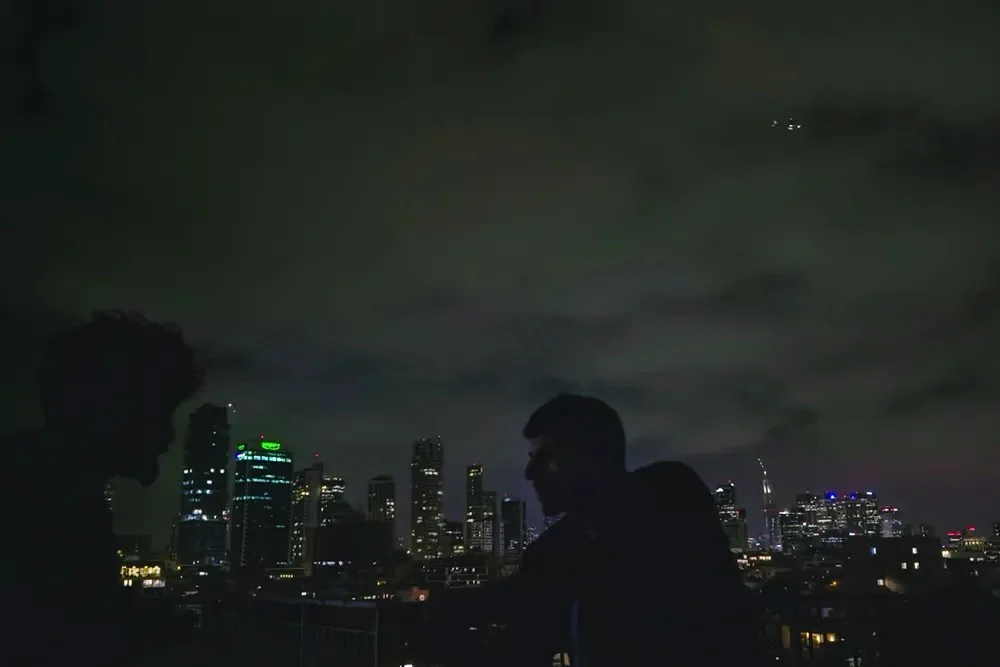
One of the most consequential and fiercely debated cinematic projects to emerge from this year’s fall film festival circuit is set to make its North American theatrical debut next month. "NAZA," a harrowing documentary directed by Yuval Abraham and Rachel Szor, is bypassing the traditional studio distribution apparatus, opting instead for an agile, independent strategy helmed by producers The Guardian and mk2. The film, which features testimony from 24 whistleblowers regarding Israeli airstrikes in Gaza, is racing to reach audiences with an immediacy that its creators view as a moral and professional imperative.
The Chronology of a High-Stakes Release
The distribution strategy for "NAZA" is as deliberate as it is unconventional. Following a high-profile, critically acclaimed premiere at the Venice International Film Festival—where it was honored with the Special Jury Prize—the documentary is slated for an aggressive, rapid rollout in the United States.
The film will make its North American debut at the New York Film Festival on September 26. Immediately following this showcase, it will open at the IFC Center in New York City on September 30. The expansion plan is rapid, with screenings slated to hit Los Angeles and other major domestic markets starting October 9, followed by a wider national rollout.
This schedule is designed to capitalize on the momentum generated by the festival circuit while responding to the volatility of the ongoing conflict the film documents. By utilizing a bespoke team of U.S. and international partners, the production hopes to sidestep the logistical and political hurdles that often stifle independent documentaries, particularly those addressing polarizing geopolitical issues.
Directing the Lens: The Filmmakers’ Perspective
The impetus for "NAZA," according to directors Yuval Abraham and Rachel Szor, is rooted in a profound sense of journalistic and ethical obligation. In a joint statement released alongside the distribution announcement, the filmmakers clarified their intent:
"We made this film out of a sense of obligation to use our position as Israeli filmmakers and journalists to examine the systems behind the mass killing of Palestinian civilians for which our country is responsible," the statement read. "While filming members of Israel’s military on rooftops at night in Tel Aviv over the past three years, we found ourselves asking the very questions that were asked by our grandparents’ generation and throughout the 20th century: how does one group of people allow the total dehumanization of another? What do the inner workings of such a system look like?"
The project acts as an extension of investigative work already conducted by The Guardian, in collaboration with +972 Magazine and Local Call. The filmmakers emphasized that while the print reports provided the factual foundation, the documentary medium allows for an exploration of the "silence"—the unspoken motivations and systemic mechanisms that drive the war.

The Shadow of "No Other Land"
The decision to adopt a self-managed distribution model was not born of choice, but of necessity. Abraham and Szor’s previous collaboration, "No Other Land," which also navigated the complexities of the Gaza war, faced significant obstacles in reaching a broad audience. Despite critical acclaim, that film struggled to secure a traditional distributor, a common fate for documentaries that challenge established political narratives.
"NAZA" is designed to circumvent these systemic barriers. By assembling an internal team of consultants and partners, the producers aim to ensure that the film is not marginalized or "blacklisted" by distributors wary of the potential backlash. This "independent-first" approach is becoming an increasingly attractive model for documentary filmmakers who prioritize the speed and integrity of their message over the conventional financial safety nets provided by major studios.
Official Responses and Political Firestorms
The film’s subject matter—the inner workings of the Israeli military—has predictably ignited a firestorm of political opposition. Before the film even hits the wider market, it has faced extraordinary pressure from the highest levels of the Israeli government.
IDF Chief of Staff Eyal Zamir has publicly pledged to use "every tool at our disposal" to halt the film’s release. The severity of this stance is matched by reports that Prime Minister Benjamin Netanyahu has explored legal avenues to potentially strip the film’s Israeli interview subjects of their citizenship, alleging that they shared classified information. These threats represent an unprecedented attempt to use state power to suppress a work of journalism and documentary art.
For the filmmakers, these threats are not merely hurdles; they are further validation of the necessity of the project. "It is up to all of us to break that silence," the directors stated, underscoring their commitment to the whistleblowers who put their safety on the line to expose the realities depicted in the film.
Implications for Documentary Journalism
The release of "NAZA" serves as a case study in the evolving relationship between journalism and independent film. As major media conglomerates consolidate and often prioritize projects with lower political risk, the landscape for "investigative cinema" is shifting.
1. The Role of Institutional Backing
The partnership between a major news outlet like The Guardian and a production house like mk2 highlights a growing trend: the emergence of news-driven filmmaking. By merging the rigor of investigative journalism with the narrative reach of documentary film, these entities are creating a new distribution pipeline that bypasses the traditional, risk-averse film industry.

2. The Weaponization of Content
The reaction from the Israeli government underscores the growing power of the "independent documentary" to influence the global narrative. When a film is perceived as a threat to national security or state reputation, the state no longer relies solely on PR campaigns; it now targets the distribution infrastructure itself. This creates a dangerous precedent for censorship in the digital age, where the "truth" is contested not just through rhetoric, but through the restriction of access.
3. Ethical Challenges for Platforms
As "NAZA" prepares for its run at the IFC Center and beyond, the theater owners and streaming platforms that will eventually host the film find themselves in the crosshairs. The decision to screen such a film is an act of defiance against the political pressure currently being exerted. The success or failure of this distribution model will signal whether independent exhibitors have the capacity—and the willingness—to serve as the final bastions for controversial, necessary journalism.
Conclusion: The Silence and the Screen
"NAZA" arrives at a time when the world is exhausted by the daily churn of headlines and the overwhelming influx of information. Yet, by focusing on the intimate, often uncomfortable testimonies of those within the system, the film seeks to pierce the fog of war that has descended upon the public consciousness.
The logistical battle of distributing "NAZA" is a subplot that mirrors the struggle depicted within its frames. As the filmmakers move toward their September 30 opening at the IFC Center, they are not just releasing a film; they are initiating a public conversation about accountability, the ethics of military conduct, and the cost of silence. Whether the film reaches a wide audience will be a test of the strength of the independent distribution model in the face of intense, state-level opposition. For now, the producers and the filmmakers remain committed to their trajectory, convinced that the urgency of the subject matter outweighs the risks involved in bringing it to the light.
As the industry watches, the release of "NAZA" may well define the future of political documentary filmmaking—a future where the act of distribution itself is as much an act of protest as the content being screened.
 Lina Hope
 Pevita Pearce
