

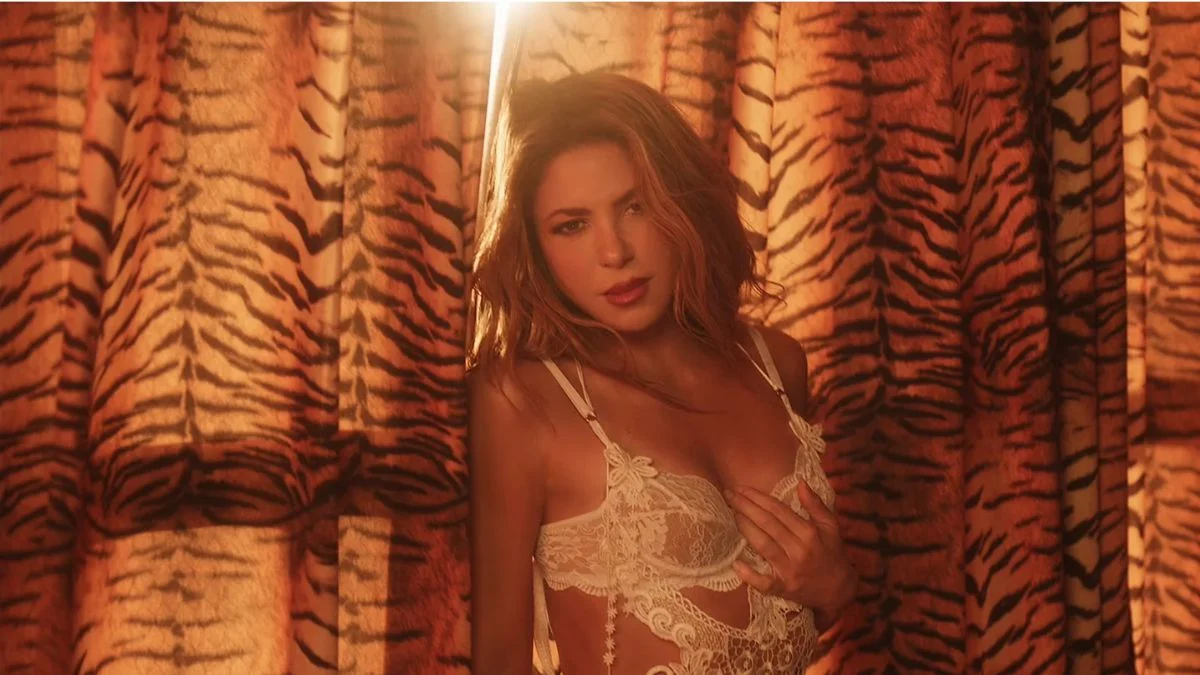
In the ever-evolving landscape of global pop culture, few artists possess the ability to command the visual medium quite like Shakira. With her latest music video collaboration alongside Colombian superstar Maluma, titled "Agua," the Barranquilla-born icon has once again proven that her influence extends far beyond the charts and into the realm of high fashion. Central to the video’s aesthetic impact is a singular, meticulously crafted garment: a fully see-through, bespoke micro-minidress by the Brazilian label The Dona. This article explores the artistry, cultural implications, and technical mastery behind one of the most talked-about fashion moments of the year.
Main Facts: The Anatomy of a Statement Piece
The ensemble in question is a masterclass in modern couture, characterized by its daring silhouette and meticulous attention to detail. Designed exclusively for Shakira, the dress serves as the visual anchor for the "Agua" music video. The garment is defined by its fully sheer base, which acts as a canvas for a complex array of guipure floral appliqués, intricate lace detailing, and daring, sculpted cutouts that traverse the bodice.
Unlike mass-produced stage wear, this piece was constructed with the precision of an atelier. The dress features asymmetrical lace panels that cascade from the skirt, creating a sense of kinetic energy as Shakira moves through the video’s amber-hued scenes. By stripping away traditional opaque fabrics, The Dona has utilized the architecture of the human form as an essential element of the design, resulting in a silhouette that is at once vulnerable, empowering, and unmistakably sultry.
Chronology: The Journey from Concept to Screen
The creation of the "Agua" look was a collaborative process that spanned weeks of intensive labor. The timeline of this fashion moment began with a creative vision for the music video that demanded a wardrobe capable of reflecting the warm, cinematic, and romantic themes of the track.
- Phase I: Conceptualization. The creative team sought a design that felt organic yet architectural. The partnership with Brazilian label The Dona was established to leverage their expertise in avant-garde lace work and body-conscious silhouettes.
- Phase II: The Crafting Process. According to the brand, every individual guipure flower and lace panel was applied by hand. This labor-intensive phase involved a team of skilled artisans who spent hundreds of hours ensuring that the placement of each cutout and floral motif would accentuate the singer’s movement during choreography.
- Phase III: The Fitting. In the days leading up to the shoot, final adjustments were made to ensure the dress maintained its structural integrity while allowing for the fluid, high-energy dancing that is a hallmark of a Shakira performance.
- Phase IV: The Reveal. The premiere of "Agua" served as the global debut of the piece. As the video hit streaming platforms, the dress immediately became a focal point of discussion among fashion critics and fans, cementing its status as a defining look for the artist’s current era.
Supporting Data: The Craftsmanship Behind the Couture
To understand why this dress has captured such significant attention, one must look at the technical specifications of the garment. In an era of "fast fashion" and digital design, The Dona’s commitment to artisanal, slow-fashion techniques stands out.
The use of "guipure" lace—a form of lace that is heavier and more structured than traditional Chantilly—allows the dress to hold its shape despite the absence of a solid foundation. The sculpted cutouts across the bodice are not merely aesthetic; they are engineered to frame the torso, drawing the eye toward the interplay between the intricate lace and the skin.
Furthermore, the styling choices were calculated to elevate the dress rather than compete with it. Shakira opted for cream-bronze platform heels with chunky block heels, providing the necessary height to complement the micro-mini hemline. Her beauty look was equally intentional: honey-toned, beachy waves styled with a sharp center part, paired with a makeup palette of warm bronzes, softly defined eyes, and a poppy-coral matte lip. This color story was specifically chosen to mirror the golden-hour lighting of the music video, creating a monochromatic visual harmony.
Official Responses and Industry Reception
The fashion community has responded with widespread acclaim, noting how the collaboration highlights the intersection of Latin American design and global pop stardom. While Shakira has not issued a formal press release regarding the dress, her choice to wear a piece from an emerging Brazilian label serves as a powerful endorsement of regional craftsmanship.
Fashion historians and critics have pointed out that this look signifies a shift in Shakira’s style evolution. Throughout her decades-long career, her stage presence has moved from bohemian-rocker aesthetics to high-glamour couture. The Dona design marks a maturation of this trajectory, leaning into a more sophisticated, "naked-dress" aesthetic that remains respectful of the artist’s dance-heavy performance style.
Social media sentiment has been overwhelmingly positive, with the Instagram reveal of the dress garnering millions of interactions. Fashion enthusiasts have praised the brand’s ability to merge "sultry" with "sculptural," noting that the dress manages to look delicate without appearing fragile—a reflection of the artist’s own public persona.
Implications: The Future of Music Video Fashion
The viral success of this ensemble carries several implications for the future of the music industry and its relationship with the fashion world.
1. The Power of the "Visual Album" Aesthetic
As the music industry continues to prioritize short-form visual content (such as Reels and TikToks), the importance of "hero pieces"—wardrobe items that can stand alone as images—has never been higher. The Dona dress is a perfect example of a piece designed to be "scroll-stopping," ensuring that the music video has a long life in the digital consciousness long after the song has finished playing.
2. Highlighting Latin American Talent
By centering a Brazilian label in a high-profile video with a global star like Maluma, Shakira is actively participating in a cultural exchange that brings regional artistry to the forefront of the global stage. This reinforces the idea that the "center" of the fashion world is no longer confined to the traditional capitals of Paris, Milan, and New York.
3. The Return of Artisanal Craft
In a post-pandemic world, there has been a resurgence in appreciation for items that are "handmade." The marketing narrative surrounding this dress—which emphasizes the hours of labor and the individual application of lace—appeals to a consumer base that is increasingly skeptical of mass-produced, disposable garments. The dress is being marketed not just as a costume, but as a work of art, which increases its cultural value and, by extension, the prestige of the music video it inhabits.
4. Setting the Standard for Performance Wear
Finally, the dress establishes a new benchmark for performance wear. Artists are increasingly moving away from restrictive, heavy costumes toward designs that offer freedom of movement while maintaining a high-fashion edge. The technical success of the dress—allowing for complex choreography while remaining fully sheer—proves that modern textiles and engineering can solve the historical conflict between fashion and function.
Conclusion: A Moment in Time
Shakira’s collaboration with The Dona for the "Agua" music video is more than just a successful wardrobe choice; it is a synthesis of art, technology, and personal brand identity. By marrying the raw, kinetic energy of her dance style with the refined, labor-intensive craft of Brazilian couture, the singer has curated a fashion moment that feels both timeless and deeply contemporary.
As we look toward the future of pop music visuals, it is clear that the standard has been raised. The era of the "unforgettable moment" relies on these kinds of deep-dive collaborations where the designer, the stylist, and the performer operate in total synchronization. Whether or not this specific look spawns a trend in red-carpet fashion remains to be seen, but its impact on the current musical zeitgeist is undeniable. Shakira remains, as she has always been, an artist who understands that in the world of global entertainment, what you wear is just as important as the melody you sing.
 Dwi Wanna
 Iffa Jayyana
