

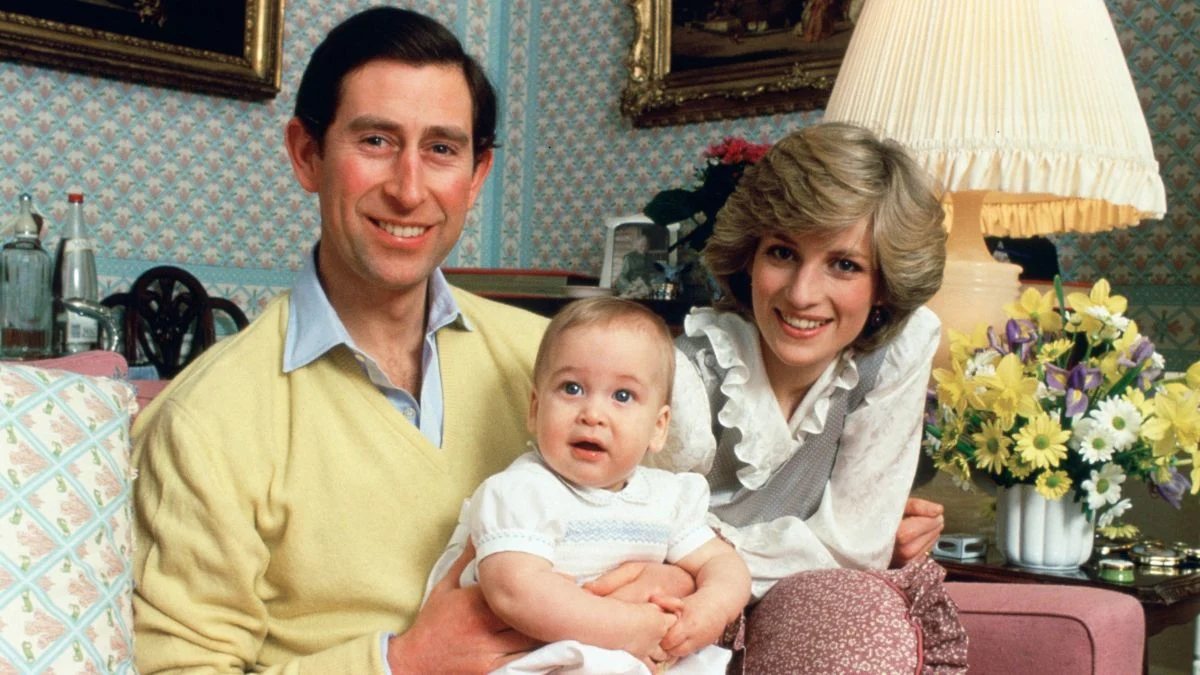
The enduring legacy of Princess Diana continues to cast a long shadow over the British Royal Family, not merely as a fashion icon or a humanitarian, but as a transformative figure who fundamentally altered the way royal children are raised. Recent revelations from royal biographers and the memoirs of those closest to the late Princess have brought renewed focus to a delicate, often strained dynamic: the relationship between King Charles III and his eldest son, Prince William.
As the monarchy navigates the modern era, new insights suggest that the rift between traditional royal expectations and the emotional needs of a child was a point of deep contention for Diana. According to royal experts and intimate accounts, the late Princess perceived a profound void in the bond between the then-Prince of Wales and his young son—a void she was determined to fill at any cost.
The Roots of the Conflict: A Legacy of Emotional Distancing
At the heart of the ongoing discourse is the argument that King Charles III was a product of an environment defined by protocol rather than personal warmth. In her book, My Mother & I, veteran royal biographer Ingrid Seward explores the systemic roots of this emotional disconnect. Seward argues that Charles, raised during a period of rigid court etiquette and immense duty, was deprived of the fundamental "early nurturing" necessary to foster emotional openness.
When Queen Elizabeth II ascended the throne in 1952, Charles was only four years old. The monumental burden of the Crown necessitated long periods of absence, leaving the young prince to be raised largely by nannies and the strict hierarchies of the royal household. This upbringing, while characteristic of the era’s aristocratic and royal standards, arguably left the King ill-equipped to express the "parental tenderness" that Diana viewed as non-negotiable for the next generation.
Seward notes that Diana’s observations of her husband were not merely critical; they were rooted in a desire to break a generational cycle. She reportedly believed that the "Firm’s" unyielding protocols were a burden that prevented Charles from being "emotionally open and honest." For Diana, who was known for her tactile, affectionate nature, the prospect of Prince William being raised in the same detached environment was unacceptable.
Chronology of a Parenting Revolution
The friction between traditional royal child-rearing and Diana’s modern approach did not happen overnight. It was a gradual assertion of her influence, marked by significant milestones that pushed the boundaries of the establishment:
- Early 1980s: Upon the birth of Prince William, Diana immediately signaled her intent to diverge from royal precedent. She insisted on taking William on the 1983 royal tour of Australia, breaking the tradition that royal infants remain at home with caregivers.
- The Mid-1980s: Diana began integrating the princes into "normal" life. Her excursions to fast-food restaurants, theme parks, and movie theaters were more than just outings; they were public statements that her children were not merely symbols of the state, but individuals with personal needs.
- The Late 1980s: By the time Prince Harry was born, Diana’s influence on the children’s daily lives was absolute. She prioritized being present at school sports days and parent-teacher meetings, ensuring her children felt grounded in the presence of a loving parent.
- Post-Divorce Era: Even as her marriage collapsed, Diana remained steadfast in her parenting style. Her determination to shield William and Harry from the "outdated royal system" became her primary focus, often putting her at direct odds with the palace bureaucracy.
Supporting Data: The Contrast in Approaches
To understand the weight of Diana’s intervention, one must look at the stark contrast in the environments provided for Charles versus those provided for William.
For King Charles, the primary figures of authority were often nannies and tutors. His correspondence and biographical accounts have historically reflected a man who learned to compartmentalize emotion to serve the public interest. The "Firm," as the royal household is colloquially known, prioritized duty above all else, often at the expense of familial closeness.
In contrast, Diana’s approach was radical. She utilized physical touch, open dialogue, and frequent public displays of affection to normalize the human experience for her sons. She "didn’t care how many people she upset or how many toes she trod on," as one source put it, to ensure that William and Harry experienced a childhood defined by empathy.
This is further supported by the current behavior of the Prince of Wales. Prince William has frequently been observed in public settings exhibiting a relaxed, hands-on style of parenting that would have been unthinkable for his father at the same age. He is frequently seen engaging with his own children—Prince George, Princess Charlotte, and Prince Louis—at eye level, with physical contact and genuine emotional responsiveness, a clear inheritance of his mother’s pedagogy.
Official Responses and Public Perception
While the Royal Family rarely addresses intimate claims regarding their upbringing directly, the shift in the institution’s public-facing behavior speaks volumes. Since the ascension of King Charles III, the monarchy has undergone a subtle, yet noticeable, evolution.
Royal commentators have noted that the King himself has become more demonstrative in his later years. The pressures of his early life, often cited as a reason for his past emotional reticence, are now viewed with a more nuanced lens by the public. Biographers like Ingrid Seward suggest that the King’s own evolution may be, in part, a response to the very standards Diana set during her lifetime.
Furthermore, the recent memoir by Charles Spencer, Swan Song: Diana, My Sister, has reignited interest in the late Princess’s perspective. While Spencer’s work focuses on the emotional landscape of their shared history, it reinforces the narrative that Diana was a woman of deep conviction who identified institutional flaws and sought to rectify them within her own family. The book serves as a reminder that the "royal" life is often a site of conflict between human desire and historical obligation.
The Implications: A New Era of Royal Parenting
The implications of Diana’s parenting style on the future of the British monarchy are profound. By successfully integrating affection into the upbringing of the heirs to the throne, Diana effectively changed the "DNA" of the royal family.
1. The Humanization of the Monarchy
The modern public expects their royals to be relatable. Prince William’s open discussions regarding mental health and his candid approach to his own parenting struggles are direct results of the foundation Diana built. She taught her sons that their worth was not tied solely to their titles, but to their humanity.
2. The End of "Stoic" Leadership
The era of the "stiff upper lip" is fading. While duty remains a cornerstone of the monarchy, it is no longer prioritized over the necessity of emotional intelligence. The transition from the mid-20th-century model to the 21st-century model is a direct result of the Princess’s influence.
3. A Lasting Legacy for the Next Generation
As fathers, both Prince William and Prince Harry have adopted the "Diana method." They stay present for the mundane, everyday moments—the school runs, the bedtimes, and the sports days—that were previously relegated to staff. This consistency ensures that the emotional cycle of deprivation, which many believe plagued the earlier generation of royals, has been decisively broken.
Conclusion
The claim that Princess Diana spotted a gap in the bond between father and son is more than just a historical footnote; it is the cornerstone of her enduring impact on the British Royal Family. By prioritizing tenderness over protocol, Diana challenged the very structure of the institution she married into.
Today, as King Charles III reigns, he does so in a monarchy that is fundamentally different from the one he was born into. The institution has become more sensitive, more empathetic, and more human—traits that are, in no small part, a testament to the Princess who refused to let her children be consumed by the cold machinery of tradition. Diana’s legacy is not just in the photos of her with her boys at theme parks; it is in the way the current generation of royals interacts with the world, proving that even in the most rigid of systems, love can, and did, find a way.
 Neng Nana
 Azzam Bilal Chamdy
 Nana
Nana
