

Since its inception in 1965, the “Olympia” name has served as the definitive benchmark for human muscularity and aesthetic perfection. It is the crucible where legends are forged, a stage that has hosted the seismic shifts of the sport—from the golden era of Arnold Schwarzenegger’s seven-consecutive title run to the modern era of unparalleled mass and conditioning. As we look ahead to the 2026 Olympia weekend, the history of this prestigious event is not merely a collection of names and dates; it is the evolving narrative of human physical potential.
To truly appreciate the magnitude of the upcoming competition in Las Vegas, one must first understand the foundation upon which it is built. Who was the first to claim the throne? When did the iconic Sandow Trophy become the standard? Which athletes have defined longevity, and who has turned the sport’s highest honors into the greatest financial rewards? Muscle & Fitness breaks down the essential facts to ensure you are fully prepared for the 2026 showdown.
The Genesis: A Coronation in Brooklyn
The history of the Mr. Olympia begins in the heart of New York City. In 1965, at the Brooklyn Academy of Music, the sport of bodybuilding underwent a radical transformation. Joe Weider, recognizing that the existing Mr. Universe competition did not adequately compensate or recognize the absolute best in the world, created a platform where professional bodybuilders could compete for cash and global recognition.
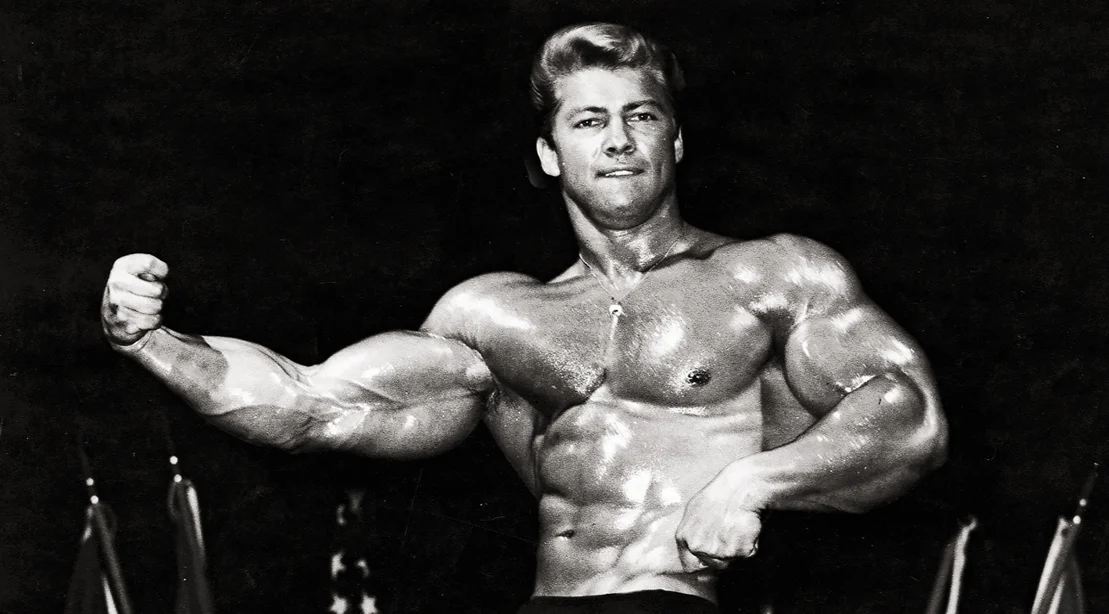
The first man to step into this spotlight and claim the title was Idaho’s own "Golden Boy," Larry Scott. Scott was a technician of the highest order, possessing the legendary arm development that set the standard for what a physique competitor should strive to achieve. Interestingly, the inaugural Mr. Olympia was not a display of bronze and gold hardware; Scott was famously presented with a crown. This coronation reflected the "king of the stage" mentality that would define the title for decades to come. Beyond the ceremonial crown, Scott secured a $1,000 prize—a modest sum by modern standards, but a significant statement in 1965.
Scott returned in 1966 to defend his crown, cementing his legacy with a second victory. This time, the crown was replaced by a commemorative silver plate. It would take over a decade for the tradition of the Sandow Trophy to become the permanent, non-negotiable symbol of Olympia victory.
The Sandow Trophy: A Symbol of Immortality
The Sandow Trophy is more than a statue; it is the Holy Grail of the iron game. Named after Eugen Sandow—a 19th-century strongman often hailed as the "Father of Modern Bodybuilding"—the trophy represents the aesthetic ideal that Sandow himself pioneered.
Sandow was a visionary who organized the world’s first major bodybuilding competition at London’s Royal Albert Hall in 1901. He recognized that the human physique was a work of art, a philosophy captured in the statuettes modeled by artist Frederick W. Pomeroy. These figurines, presented in gold, silver, and bronze, became the prototype for the modern Sandow Trophy.
While the trophy made sporadic appearances throughout the mid-20th century, it was not until 1977 that it became the permanent fixture of the Mr. Olympia stage. That year, the legendary Frank Zane hoisted the Sandow, initiating a tradition that has continued uninterrupted.
"We award the iconic Sandow Trophy to the number one bodybuilder in the world," says Olympia President Dan Solomon. "The winner of this trophy is known for the rest of his life as Mr. Olympia. It is the ultimate seal of approval in our sport."
Chronology of Champions: The Records that Define the Sport
The history of the Olympia is punctuated by eras of total dominance. While many have reached the pinnacle, only a select few have occupied the summit for extended periods.
The Era of the Eight-Time Kings
Two men stand shoulder-to-shoulder at the top of the record books, each holding eight consecutive Olympia titles:
- Lee Haney (1984–1991): Emerging from Spartanburg, South Carolina, Haney revolutionized the sport by combining massive size with an unprecedented level of structural flow and conditioning. After winning his first Teen Mr. America in 1979, he took the Olympia stage by storm in 1984, holding the title for eight years until he retired at the top of his game in 1991.
- Ronnie Coleman (1998–2005): Known simply as "The King," the former police officer from Texas took the sport into a new dimension of sheer, freakish mass. Coleman’s reign was characterized by a level of density that seemed impossible to the human eye. His dominance ended only when a resurgent Jay Cutler claimed the title in 2006, ending one of the most storied runs in professional sports history.
The Most Decorated Female Competitor
When discussing the most successful athletes across all divisions, the conversation begins and ends with Iris Kyle. With 10 Olympia titles earned between 2001 and 2014, Kyle stands as the most accomplished athlete in the history of the event. Her mastery of the Heavyweight and Open divisions spanned over a decade, a feat of consistency and discipline that remains unrivaled.
Reflecting on her legacy in a recent social media tribute, Kyle noted, "What I was able to accomplish on that Olympia stage came from within, with humility, respect, and unshakable belief. To the community that shaped me: I see you. I respect you. But when I walked that stage… I walked it as me."
Longevity and The Blade
While titles are the primary measure of greatness, longevity on the Olympia stage is a testament to an athlete’s durability. Dexter "The Blade" Jackson holds the record for the most Olympia appearances, competing in a staggering 21 finals between 1999 and 2020.
Jackson’s career is a blueprint for endurance. He competed in the event eight times before finally capturing the Sandow in 2008. By the time he retired, he had secured 16 top-six finishes—a record that highlights not just his physical longevity, but his ability to adapt to the changing aesthetics of the sport across three different decades.
The Economics of Excellence: Financial Stakes
Bodybuilding has evolved from a niche subculture into a multi-million dollar global industry. The financial rewards for the Mr. Olympia have seen exponential growth.
In 2025, Derek Lunsford secured his place in history by winning the largest prize purse ever awarded at the event, taking home $600,000. However, when looking at career earnings, "The Gift" Phil Heath remains the gold standard. With seven titles won between 2011 and 2017, Heath’s total career earnings from the Olympia are estimated to exceed $2.2 million. His era was defined by a unique combination of high-level competition and the emergence of increased sponsorship and prize money, allowing him to capitalize on his dominance more effectively than his predecessors.
Implications for the 2026 Finals
As the industry turns its gaze toward the 2026 Olympia, scheduled for September 24–27 in Las Vegas, the stakes have never been higher. The competition is no longer just about the title; it is about cementing a legacy in an era where data, nutrition, and recovery science have pushed human limits further than ever before.
The current landscape of the Olympia is defined by a shift in how athletes are judged. The judges are looking for a return to "classic" proportions combined with modern levels of muscle maturity. The 2026 event promises to be a collision of generations—the veterans looking to extend their stay at the top and the hungry newcomers looking to dethrone the current champions.
Why the 2026 Olympia Matters
- The Evolution of Judging: The criteria for the "ideal" physique continues to shift, favoring flow over raw mass.
- Global Expansion: With more international competitors than ever before, the title of "Mr. Olympia" is truly a global pursuit.
- The Digital Fanbase: With the rise of social media, the Olympia is no longer a closed-door event; it is a live-streamed, interactive experience that engages millions of fans worldwide.
For those planning to follow the 2026 festivities, it is important to remember that bodybuilding is a sport of patience. As Dexter Jackson proved, it can take nearly a decade of consistent refinement to reach the top. The athletes who step onto the stage in Las Vegas this September have dedicated their entire lives to the pursuit of the Sandow. Whether they win or lose, they represent the absolute peak of human physical development.
As we await the next chapter in this storied history, one thing is certain: the Olympia remains the ultimate test. It is the place where the temporary is forgotten and the legendary is born. Whether it’s the shadow of Larry Scott’s first win or the modern dominance of a champion like Derek Lunsford, the spirit of the Olympia remains unchanged—it is the relentless pursuit of perfection, one rep at a time.
For more information on the upcoming Olympia weekend and to stay updated on the latest news from the world of professional bodybuilding, visit mrolympia.com.
 Nana
Nana
 Iffa Jayyana
 Reynand Wu
